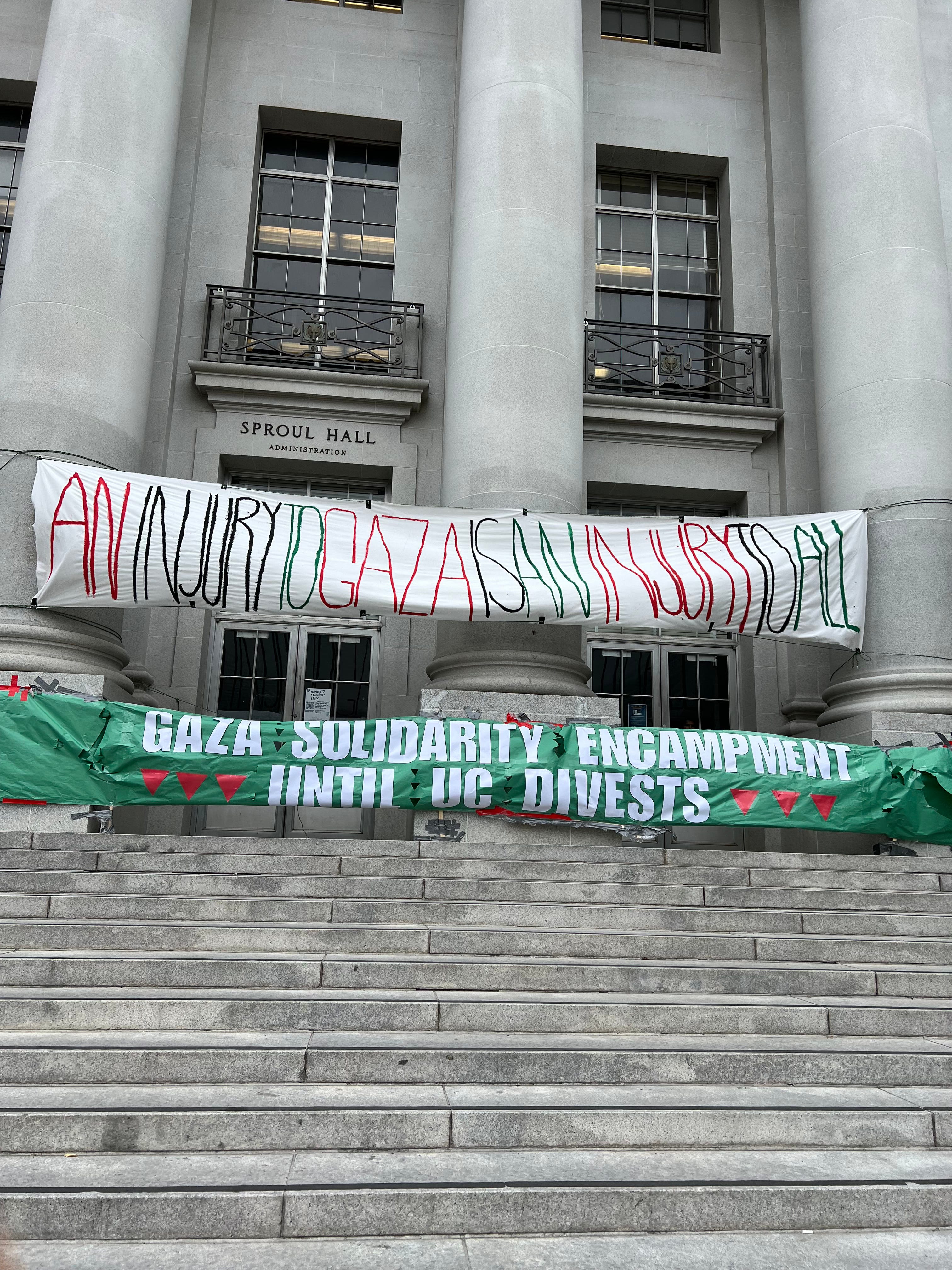
For nearly two and a half years, the world has watched Gaza burn in real time. Not through the filtered dispatches of embedded reporters or the sanitized briefings of military spokesmen, but through the phones of the besieged themselves, the child pulling a sibling from the rubble, the doctor operating by the light of a phone, the journalist filing one last report before the airstrike that would silence him or her. Never before has a people documented its own annihilation so thoroughly, and never before has the documentary record mattered so little to those with the power to stop it. The evidence is total, but the response of Western institutions, the university in particular, has been to look away and, worse, to punish those who refuse to.
I want to focus here on one institution in particular, the one to which I have given my working life and that I still believe could be otherwise, the university. The response of Western universities’ leadership to the genocide in Gaza has produced what I call symbolic and institutional genocide, a coordinated assault on the students, staff, and faculty who dared to name what Israel is doing. Confronted with mounting evidence, with the systematic destruction of every one of Gaza’s universities, with the killing of more journalists than in any war on record, with the murder of hundreds of medical workers, university professors, and leadership, they made a choice. It did not choose the victims. It chose to discipline, silence, and eliminate those who spoke for them.
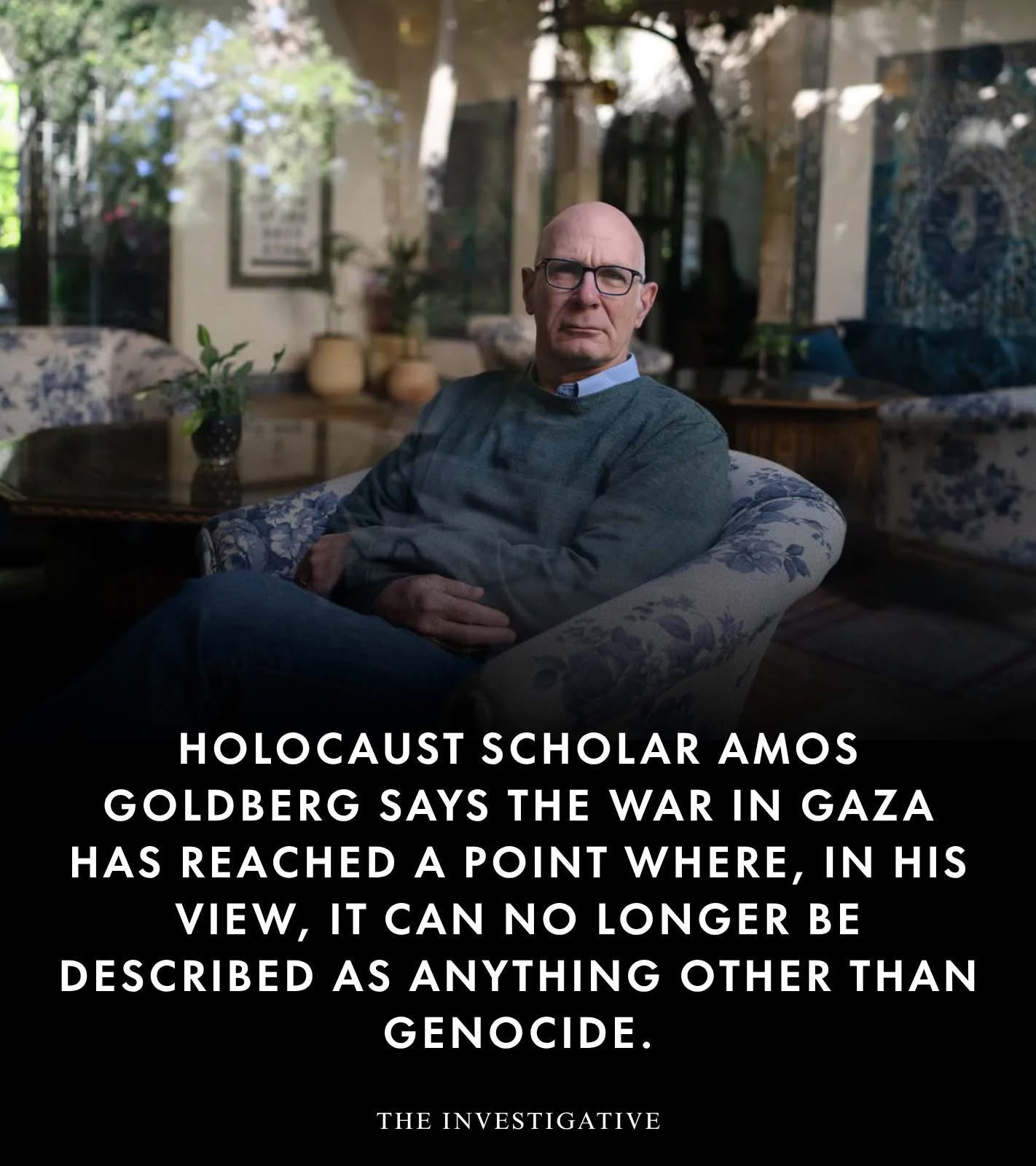
Let me be clear about why I reach for a word as heavy as genocide to describe what is happening on our campuses, because I do not use it loosely, and I do not use it to flatten the suffering of Gaza into a metaphor for academic grievance. The Palestinians of Gaza are being physically exterminated. That is the genocide, full stop. Amnesty International concluded it. The United Nations’ own Independent International Commission of Inquiry concluded it. Genocide scholars across the world, including the most prominent Israeli scholars of the field, have concluded it. What I am naming is something adjacent and parasitic; the way our institutions, rather than confronting that horror, have reproduced its underlying logic, the logic of elimination, in the symbolic and institutional registers available to them.
The settler-colonial project, as Patrick Wolfe taught us, is animated by a logic of elimination: the native must disappear so that the land may be claimed and the conscience of the claimant kept clean. That logic does not require carpet bombing to operate. It operates wherever a people’s presence, voice, and claim to existence are treated as the problem to be solved. On our campuses, the people to be made to disappear are not only the Palestinians who cannot be heard, but also those who insist on hearing them.
By symbolic genocide, I mean the assault on meaning itself, the destruction of a people’s standing in language, in recognition, in the moral community of those whose suffering is permitted to count. Edward Said called it the denial of “permission to narrate.” For Palestinians, this denial is older than the present war; their dispossession has always traveled with the insistence that it did not happen, or that it was deserved, or that to describe it is itself a form of aggression.
The university has become a primary engine of this symbolic annihilation. When a student says “genocide” and is told the word is hate speech, that is symbolic genocide. When a faculty member documents scholasticide, the deliberate obliteration of an entire educational system, every one of Gaza’s universities reduced to rubble, the last of them, Isra University, dynamited by the Israeli military, and is accused of creating a hostile environment merely by naming it, that is symbolic genocide. The machinery of euphemism, of “both-sidesism” and manufactured balance, does its quiet work, for it strips the victim of the vocabulary of his own destruction and brands the witness as the aggressor. Speaking the truth becomes the offense; remaining silent is rebranded as professionalism and rigor. This is the inversion at the heart of the symbolic order our administrators now police, an order in which the murder of more than two hundred journalists, a toll that stood at 172 when this catastrophe was already the deadliest ever recorded for the press, becomes a “contested narrative,” while the act of mourning them becomes a disciplinary matter
.
We should name the racial architecture of this erasure plainly, because it is not incidental. It is no accident that the dead whose deaths we are forbidden to grieve are Palestinian, Arab, Muslim, and Brown, nor that the students and scholars punished for grieving them are disproportionately drawn from the same communities and from the Global South. The racialization of the Muslim, Palestinian, and Arab as inherently suspect, the long, well-funded architecture of Islamophobia I have spent my career documenting, is precisely what makes their silencing appear reasonable to administrators who would never countenance the same treatment for anyone else. Some lives are grievable; some narrators are credible; the line between them has been drawn in advance, and it runs along the color line of empire.
If symbolic genocide is the war on meaning, institutional genocide is the war on the conditions of academic life itself. Here, the university stops merely framing reality and begins acting upon it, mobilizing its full apparatus to end the careers, the studies, and the very presence of those who dissent. The university, as an institution, becomes a functional desk from George Orwell’s 1984.
Consider the record, and it is a matter of public record. Columbia University suspended and expelled nearly eighty students for the crime of protest, in some cases revoking degrees already earned. Across the country, administrators summoned armed police onto their own quads to beat and arrest their own students and faculty. Scholars have been suspended, surveilled, denied tenure, and terminated. Graduate workers have lost their funding and their visas; some have been detained and moved toward deportation for the content of an op-ed. Outside the gates, blacklisting operations compile dossiers designed to follow a young person for the rest of a career, and a Congress, reprising its most shameful inquisitorial traditions, hauls presidents before its committees to demand loyalty oaths to a foreign state and against their own communities. When an administration capitulates to a government that has frozen four hundred million dollars precisely to compel that obedience, it is not defending the university. It is dismantling the university from within and calling the demolition governance.
I call this institutional genocide because its object is the destruction of a group as a group, the community of conscience within the academy, through the systematic deployment of institutional power. The careers ended, the students expelled, the scholars driven into exile or into a self-protective silence; these are not the unfortunate by-products of neutral rule-enforcement. They are the purpose, with the aim of making the cost of solidarity so total that the next cohort learns, without ever being told directly, to look away. That is the elimination of Palestinians, Arabs, and Muslims by other means, and it is carried out not with weapons but with handbooks, hearing committees, and human-resources letters.
What makes this a betrayal rather than a mere failure is that the university knows better because it has done better. These are the same institutions that, belatedly and only under enormous student pressure, divested from apartheid South Africa. These are the descendants of the campuses that rose against the war in Vietnam, that gave us the Free Speech Movement, that we are endlessly told are the natural home of fearless inquiry and the comfort of the afflicted. The university’s entire claim on public trust rests on a single promise; that here, in this one protected place, the powerful can be named and the comfortable can be disturbed by the truth.
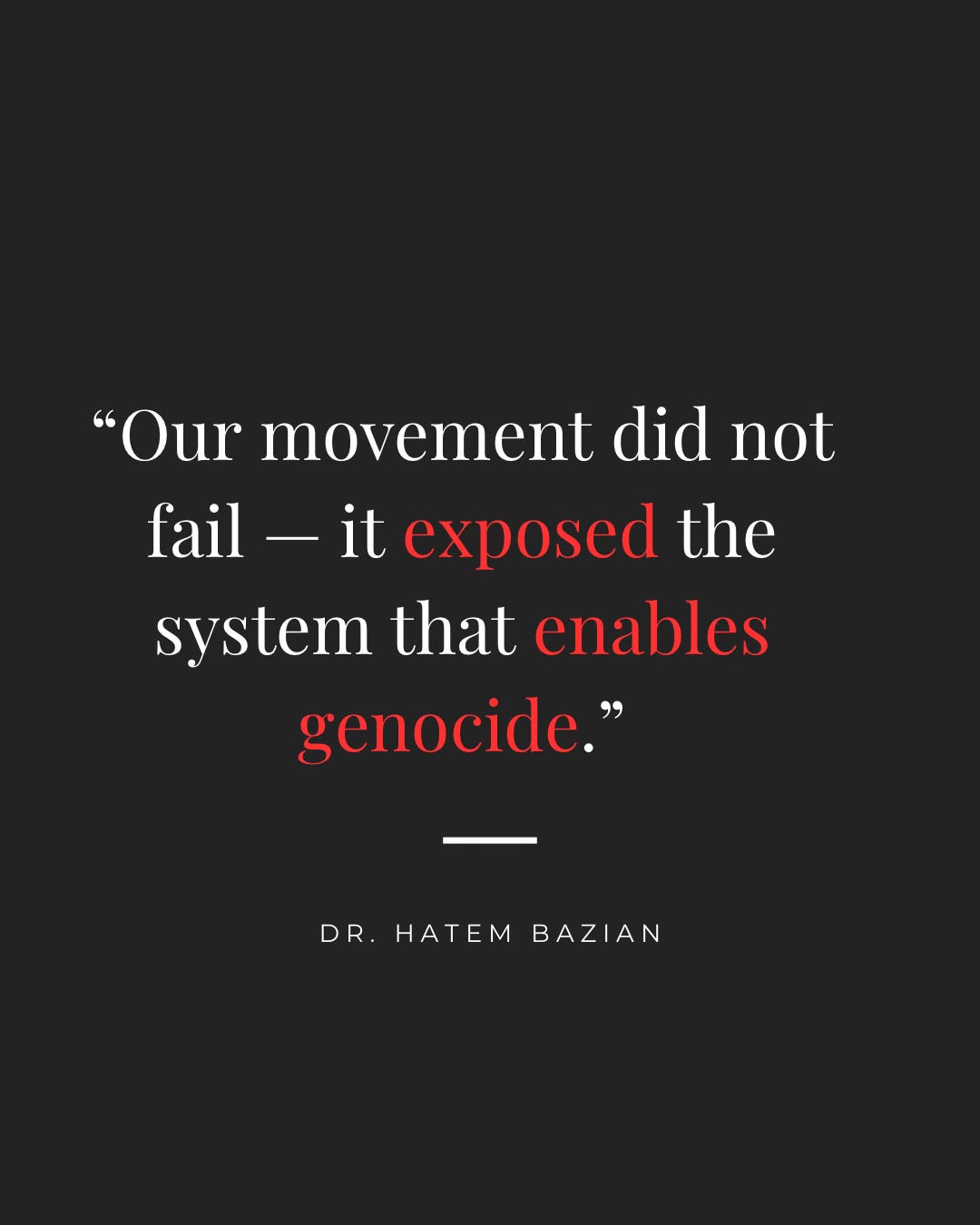
That promise has now been exposed as conditional. It holds, it turns out, only so long as the truth does not threaten the donors, the trustees, the federal funding streams, and the political consensus that underwrites them all. The neoliberal university, the university as corporation, as real-estate portfolio, as a brand to be defended in the marketplace, cannot abide a genocide in its field of vision, because to name it honestly would be to indict the very networks of power and capital that sustain the institution itself. So it does what corporations do, it manages the reputational risk by removing the people who generate it. The genocide is not the crisis to be solved; the witnesses are.
This is where the vocation of the intellectual is decided. Said insisted that the intellectual’s duty is to speak truth to power, to refuse the seductions of access and proximity. Fanon understood that the colonized are required, above all, to accept their own erasure quietly. Our administrators have chosen the side of power and proximity, and in doing so, they have asked an entire generation to accept erasure quietly. That generation has refused.
I do not write this in despair, though there is much to despair of. I write it because naming is the beginning of resistance, and because our students, who have shown more moral courage than the entire administrative class assembled above them, deserve to have their sacrifice named with precision. They saw the genocide and they refused the comfort of silence. They paid for that refusal with their education, their careers, and in some cases their freedom. History will record that it was the eighteen-year-olds, twenty-year-olds, and possibly a little older in the encampments, and not the presidents in their paneled offices, who held the line for the conscience of the university and the West.
The university can still choose to become what it claims already to be. It can refuse the loyalty oaths, reinstate the expelled, protect rather than hunt its dissenters, and divest from the machinery of death as it once divested from apartheid. But it will do so only if we make the price of complicity higher than the price of courage. Until that day, let us name what has been done inside our own institutions with the same exactness we demand of the world regarding Gaza. The genocide there has been met by a symbolic and institutional genocide here, and silence, now as in every such hour, is not neutrality; rather, it is participation.

