When Qatar hosted the World Cup in 2022, the tournament was placed on trial before the first ball was kicked. When the United States opened its own tournament in June 2026, co-hosted with Canada and Mexico, the most expensive in the competition’s history, it was waved through. Between those two receptions lies the entire architecture of the modern racial and Islamophobic order, who gets to be a defendant, who gets to be a host, and who decides which crimes are crimes.
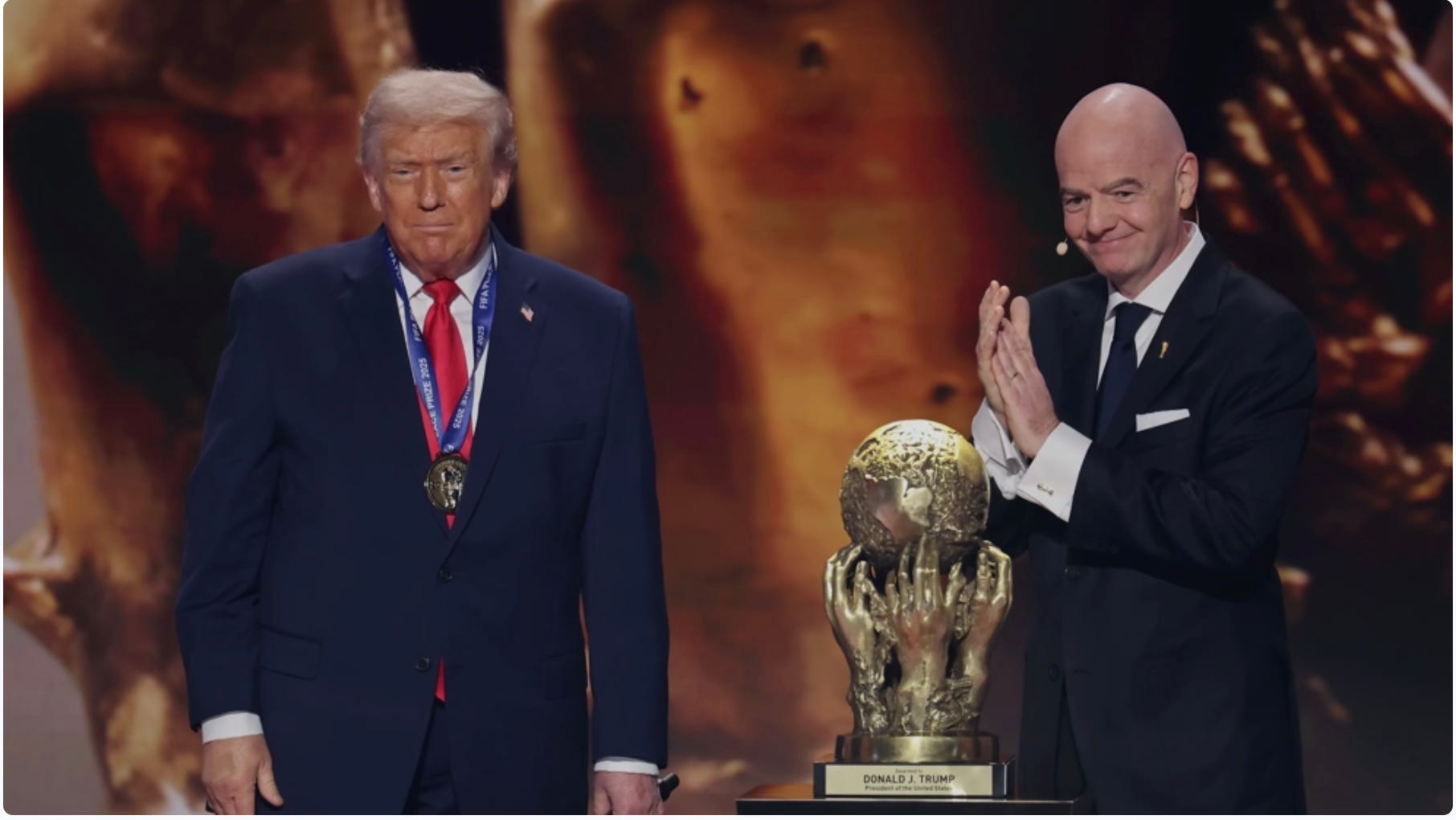
Not only did the US not receive much criticism, but FIFA also took the extraordinary step of awarding United States President Donald Trump the inaugural Peace Prize before the World Cup draw. The grotesque award was only introduced this year by FIFA president Gianni Infantino, after Trump was angry about not getting the Nobel Peace Prize, and is supposedly designated for a person who has “taken exceptional and extraordinary actions for peace” and “united people across the world,” which adds insult to injury.
I wrote ten pieces on Qatar at the time of the 2022 World Cup, not to absolve that government of its real failures and shortcomings, but because the manner of the scrutiny told a story larger than the stadiums and the tournament itself. That story is now legible to anyone willing to read it. The same institutions, federations, broadcasters, and governments that turned Qatar into a morality play have looked at a far graver set of facts on American soil and chosen silence. The silence is the argument and points to the double standard at play.
The Trial of Qatar
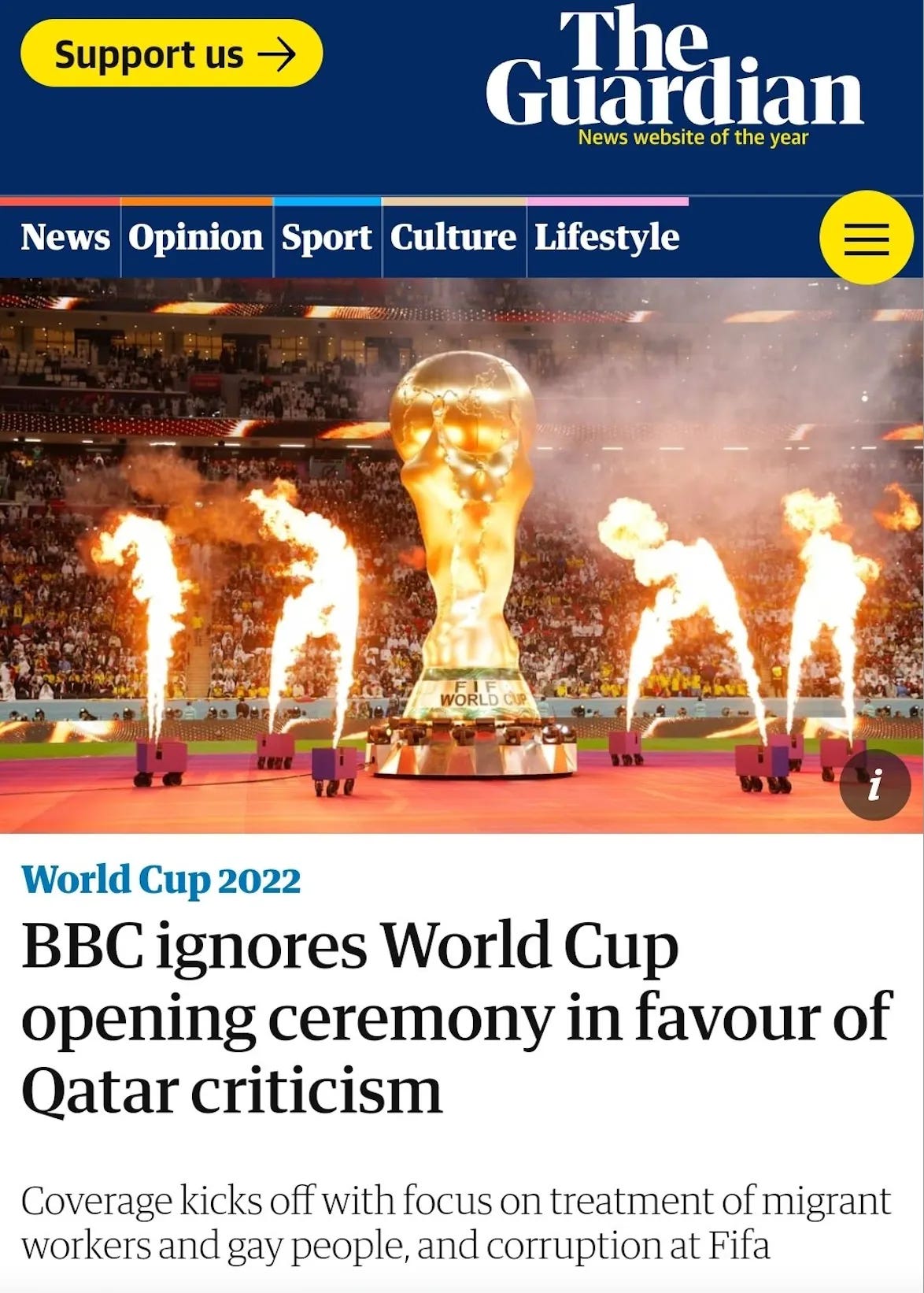
The prosecution of Qatar was relentless, coordinated, and self-congratulatory across all sectors of Western society. Amnesty International branded the event a “World Cup of shame,” while the BBC declined to broadcast the opening ceremony on its main channel, opening instead with a sweeping indictment of Qatar’s treatment of migrant workers, FIFA corruption, and the criminalization of homosexuality, a host nation condemned before kickoff. Notice, no such editorializing before the opening ceremonies in the US, and not a single cancellation.
At the Qatar World Cup, the teams joined in and were urged on by their respective country's political and media elites. Seven European federations, England, Wales, the Netherlands, Belgium, Denmark, Germany, and Switzerland, announced plans for their captains to wear “OneLove” armbands; when FIFA threatened yellow cards, the German side responded by covering their mouths in their team photograph before the match against Japan, a gesture broadcast around the world. Germany’s interior minister, Nancy Faeser, wore the armband in the stands, seated beside FIFA’s president. Denmark unveiled muted kits, including a black “mourning” jersey for the workers who died building the tournament. Australia’s players released a collective protest video.
And it was not only sport, as French cities, Paris, Marseille, Lille, Strasbourg, and Bordeaux refused to install public fan zones or big screens, citing human rights and the environment. The Canadian House of Commons passed a motion condemning FIFA’s threat against the armbands. For more than a decade, Western media sustained an investigative drumbeat on the deaths of migrant workers in the Gulf. The machinery of moral condemnation ran at full capacity, and it was praised for doing so.
I make no defense here of indentured labor or the criminalization of anyone’s existence. The point is narrower and sharper; when the host was a small Muslim nation of the Global South, the entire apparatus of conscience, captains, ministers, parliaments, broadcasters, and city halls, switched on at once. I am still waiting for their voices as hundreds of thousands are held in immigration detention centers!
Free Pass for the USA
Now let’s hold that apparatus up against 2026 and see what the mirror shows. This is a World Cup that one scholar of mega-events, Jules Boykoff, accurately called a tournament “of exclusion rather than inclusion.” The exclusions are not rumors; they are documented, name by name.
Omar Abdulkadir Artan of Somalia, the 2025 African referee of the year, set to become the first Somali official in World Cup history, was turned back at Miami despite holding a valid, State-Department-issued visa, detained, and flown to Istanbul. FIFA confirmed he would be unable to officiate. Jibril Rajoub, head of the Palestinian Football Association and a FIFA-accredited delegate, was denied visas by both the United States and Canada; he watched the opening match in Mexico City and noted that he had attended the 2018 World Cup in Russia without obstruction. Ghana’s Thomas Partey was denied a visa and missed his country’s opener. Members of the Iraqi delegation, including a team photographer, were barred or detained. Iran’s federation reported its squad would be admitted only the day before each match.
The exclusions reached the stands. More than 40 members of Moroccan supporters’ associations, semifinalists in 2022, ticket holders with hotels booked, were denied visas. Scottish and other British fans found their travel authorizations flipped overnight from “approved” to “not authorized.” This sits atop a State Department freeze on visa processing, reportedly affecting dozens of countries, and travel restrictions that fall hardest on Iran, Haiti, and several African nations.
And the players were treated as suspects on the tarmac. The Senegalese delegation was filmed being screened on an open runway, shoes off, bags turned out, footage that detonated across social media with charges of racism. Their federation offered a logistical explanation about expediting a private flight; one widely shared image of the coach later proved to be AI-generated. Strip away the disputed image and the question remains, as asked by the federation’s own footage and confirmed by France 24: would a European squad ever be searched shoeless on the asphalt before the world’s cameras? Uzbekistan’s delegation reported the same. As their coach, Fabio Cannavaro, a World Cup winner with Italy, put it, the check was only for them.
Above all of this hover the men with the badges. The Department of Homeland Security confirmed that ICE agents would be stationed at World Cup stadiums, contradicting earlier assurances to host committees, and declined to rule out arrests. A video released by a fan shows sharpshooters stationed inside the stadium. More than 120 immigrant rights organizations issued a travel warning for fans, players, and journalists. Stadium workers threatened to strike rather than labor beside the agents.
Now, place the tournament where it actually sits. It is being played while the United States prosecutes an open war against Iran (a peace deal is about to be signed), strikes that began in February 2026 and were still landing as the group stage opened, condemned across the Global South as a violation of sovereignty. It is being played months after U.S. forces seized the president of Venezuela in an overnight military operation and flew him to a New York courtroom, an act Iran’s foreign ministry called, plainly, an abduction. It is being played amid open threats to annex Greenland, fresh warnings to Cuba and Colombia, a continuing complicity in the destruction of Gaza, and a domestic landscape of mass deportation, deaths and documented rape cases in immigration detention centers, removals to third-country prisons without due process, and protesters killed in the streets, deaths grave enough that U.S. athletes broke ranks at the Winter Olympics months earlier to name them.
This is the host. And against this current host: No captain wore an armband. No team covered its mouth. No European government threatened a boycott or summoned an ambassador. No national broadcaster refused the opening ceremony or prefaced it with an indictment. No city in France or anywhere else dismantled its fan zones in protest. No parliament passed a motion of condemnation. The machinery that ran at full capacity against Doha sat dark and cold before Washington.
Naming the Mechanism
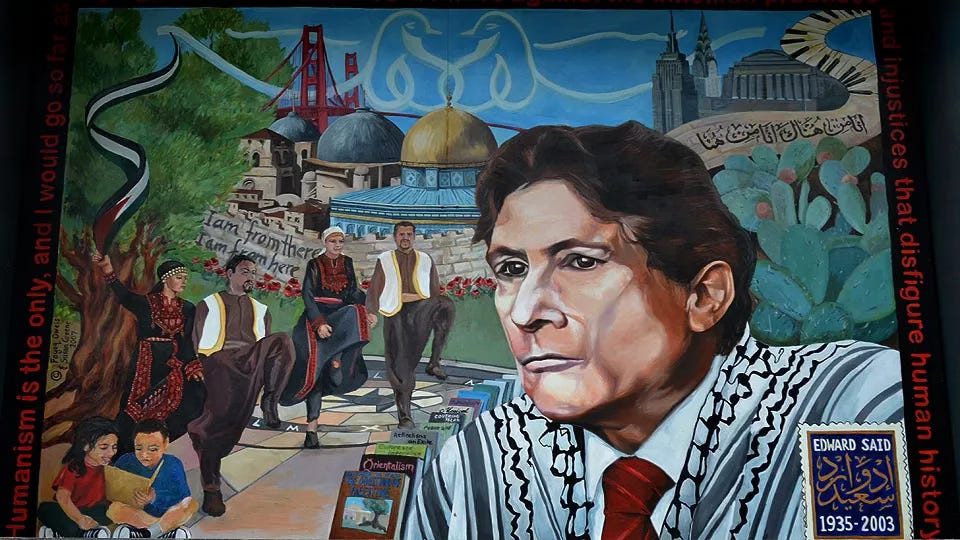
This is not an accident of news cycles. It is the structure Edward Said diagnosed half a century ago and named Orientalism, a way of dividing the world so that the same act carries opposite meanings depending on who commits it. The migrant worker who dies in the Gulf is a global scandal demanding a decade of investigation; the migrant who dies in American custody is an administrative footnote. The Muslim host is presumed guilty and must prove its innocence; the Western host is presumed innocent and need not prove anything at all.
The double standard is not hidden in the coverage; it is the coverage. The intense scrutiny aimed at Qatar and the studied quiet around the United States are the same instrument read from two ends. International institutions announce universal principles and then carve out exceptions for the powerful; the language of human rights becomes a weapon pointed exclusively downward, at the Global South, never up the chain of force. We have watched this exact operation in sanctions regimes, in the selective invocation of international law, in which invasions are called liberations and which liberations are called invasions. The World Cup simply renders it in stadium lighting.
Call the residue by its name. When a Senegalese team is searched on the runway and a Somali referee is deported with a valid visa while no European delegation faces anything of the kind, the variable is not security. It is race. The screening machinery, the visa bans, the tarmac searches, the stadium agents, they sort the world’s footballers and fans into those who belong and those who must prove they are not a threat, and the sorting runs along a color line that everyone can see, and few will say.
The Tell
Notice who did speak: human rights organizations, a handful of op-ed writers, immigrant-justice campaigners, scholars of the sporting spectacle, and a few American athletes willing to risk their standing. These are precisely the voices that were amplified and celebrated when the target was Qatar, and that are now treated as marginal, ignorable, faintly embarrassing. The same civil-society actors, making the same arguments, were validated in one case and shrugged off in the other. There is no cleaner proof that the issue was never the principle. The principle was always available; it was simply switched off when the defendant changed.
That is the indictment, and it indicts no single government. It indicts a world order that has trained itself to feel outrage on cue and to feel nothing on command, a conscience with an Orientalist geography, calibrated to the map of power. Qatar was made to stand trial for the world’s sins. The United States was handed a FIFA Peace Award, the trophy in the White House, and the silence. Between the two stands everything we still refuse to admit about whose suffering counts, whose crimes register, and who, in the end, is permitted to host the world while breaking it.

