Let us begin with a question, a question that hangs heavy in the air, thick with the smoke of pulverized concrete and the scent of blood-soaked soil in Gaza: What manner of cognitive dissonance, what profound alienation from self and community, does it take for a Muslim to don the mantle of the Zionist?
This is not an abstract theological query. It is an urgent, piercing interrogation demanded by the ongoing Nakba, live-streamed for a world that has grown numb to the spectacle of Palestinian death. As the Israeli war machine, with a chilling, bureaucratic efficiency, dismantles Gaza Street by Street, Home by Home, Family by Family, we are confronted with a grotesque spectacle: a small but amplified cohort of Muslim voices, often lavished with platforms and praise by the very structures of power that enable the genocide, performing their allegiance to the Zionist project. This essay is an attempt to dissect this phenomenon, to peel back the layers of this political and spiritual aberration, and to situate it within the broader architecture of silence and complicity that has allowed the Gaza genocide to proceed with such impunity.
The term “Muslim Zionist” is itself a contradiction in terms, a manufactured identity forged in the workshops of empire and gifted to native informants whose utility is measured by their distance from their own people. Zionism is not merely a political ideology advocating for a Jewish state; it is, in its practical and historical manifestation, a settler-colonial project predicated on the dispossession, displacement, and erasure of the indigenous Palestinian population. Its foundational act is the Nakba of 1948, a catastrophic rupture that shattered Palestinian society and planted the Jewish state atop its ruins. To be a Zionist, then, is to willfully accept, endorse, or obfuscate this original sin and its continuous, violent enactment.
What is Muslim Zionism? Muslim Zionism refers to normalization steps taken by Muslim individuals and states that seek to build relations with Israel and the Zionist settler colonial project in Palestine or abroad while clothing it in an Islamic epistemological, legal, or theological cloak. A ready cadre is marshaled to offer soothing Qur’anic or selected Prophetic statements (all are quoted out of context, but this does not stop them from deploying them in their discourses) to sanction that which is beyond the pale, settler colonialism in Palestine.
The Muslim Zionists are individuals who engage and center their relationships with Israel and Zionism, while silencing, ignoring, demonizing, and blaming Palestinians for the ongoing conditions in Palestine. Blaming the victims of settler colonialism, the Palestinians, is offered as evidence of their “sophistication” and “intelligence” in developing relations with Zionism. Muslim Zionism locates its agency, upward mobility, and access in circles of influence on the proximity and through the engagement with Jewish Zionism in the West and never misses an opportunity to use “Israel speak” to explain its actions when challenged. Some hide behind a facade of not knowing what is going on and are only focused on promoting tolerance and a positive image of Islam, no matter who is present.
For a Muslim to align with this is not an act of interfaith dialogue or peaceful coexistence. It is a profound betrayal of core Islamic principles. The Quranic imperative of justice (‘adl) is not a passive suggestion; it is a divine command that resonates over 300 times in the sacred text. “O you who have believed, be persistently standing firm in justice, witnesses for Allah, even if it be against yourselves or parents and relatives” (Quran 4:135). This verse does not offer an exemption for when injustice is perpetrated by a powerful state against one’s own coreligionists. It demands a stand, especially then.
The theology of the Muslim Zionist, therefore, is not a theology at all. It is a political posture, a performance of exceptionalism or self-constructed identity designed to curry favor with power. It is the ultimate internalization of the oppressor’s logic, a desperate attempt to secure a seat at the master’s table by handing him the knife to be used on one’s own kin. These individuals construct a hollowed-out Islam, stripped of its revolutionary spirit of justice, neutered of its command to oppose oppression (zulm), and repackaged as a placid, spiritualized identity that is perfectly compatible with the neoliberal world order and its violent outposts. Their Islam is one that prays towards Mecca but crawls around the White House before the dictates of Washington, D.C., and Tel Aviv.
But let us be clear: the phenomenon of the Muslim Zionist is not the central problem. It is a symptom, a disturbing signifier of a much deeper and more pervasive sickness within the global body politic and, tragically, within segments of the Muslim ummah itself. Their voices are amplified precisely because they are useful. They provide the necessary cover, the “diversity” credential for a genocide that is otherwise naked in its brutality. They are the “good Muslims,” the model minorities who validate the Zionist narrative of self-defense against Palestinian “savagery,” thereby providing a moral alibi for the wholesale slaughter of children.
The real crime, the overwhelming sin that engulfs us all, is not merely the actions of these few collaborators. It is the deafening, devastating silence of the many. It is the complicity of inaction. It is the Muslim leadership—both political and religious—across the globe whose responses range from muted, diplomatic whispers to an outright criminal facilitation and direct material support (with documented exceptions).
Where are the voices that should be shaking the foundations of palaces and state departments? Where is the unified, unyielding demand for an immediate and permanent cessation of this slaughter? We see instead a paralysis born of political expediency, a calculus that weighs Palestinian lives against geopolitical alliances, worthless theological debates, and economic interests. The rulers of Muslim-majority nations, many of them clients of the very Western powers that arm Israel, are engaged in a macabre dance of condemnation without consequence. They issue statements, they express “deep concern,” they call for “restraint”—all while maintaining diplomatic and, in some cases, economic ties with the genocidal state. This is not diplomacy; it is complicity dressed in the garb of realpolitik.
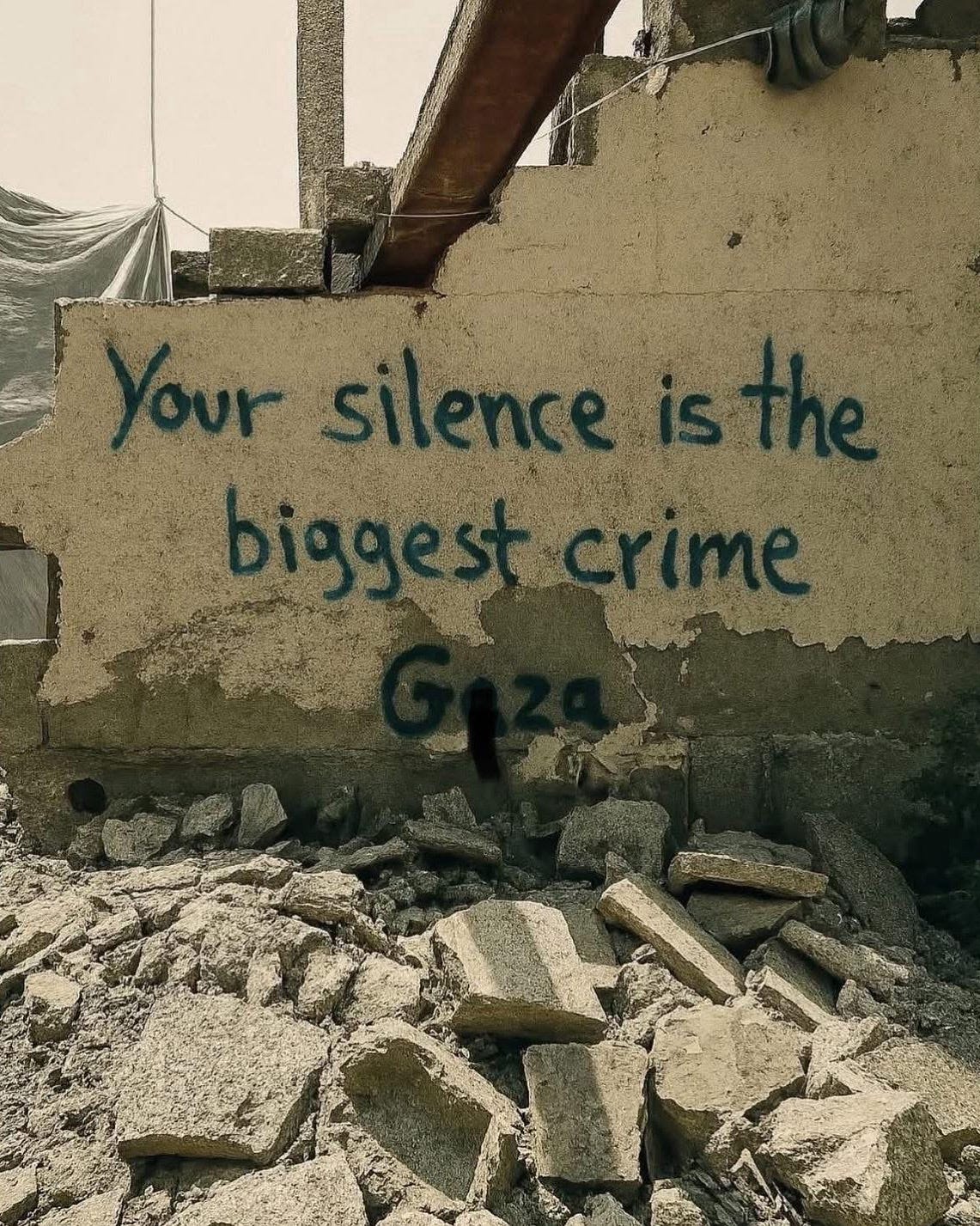
This silence is a form of violence. It is the violence of the normalized. It is the violence of business-as-usual while a people are erased from the earth, from history, and from memory. Every handshake with an Israeli official, every trade deal signed, every silent Friday sermon that fails to name the crime for what it is—a genocide—is a brick in the wall of the open-air prison that is Gaza. It is a stamp of approval on the missiles that reduce apartment blocks to tombs.
And what of the intellectual and academic class in the Muslim world and the diaspora? Too many have retreated into the safe confines of abstract theory, deconstructing everything but the power structures that enable mass death. The Sharia-focused class of embedded “scholars” speaks sophisticated nothingness to numb the followers into obedience and silence. They are fluent in the language to offer a critique of postmodernism, critical race theories, and Marxism, but are struck mute on the moral question of the day, and when faced with the stark, conservative, liberal, and centrist violence of an F-35 raining hellfire on a refugee camp consisting of tents. Their silence is a betrayal of the very vocation of the intellectual: to speak truth to power.
This global silence finds its mirror in the manufactured consent within Western publics. The pro-Israel lobby, with its influence deep in the political and media establishments, has for decades meticulously constructed a narrative that inverts reality: the colonizer becomes the victim, the occupied people facing a siege become the terrorists, and the genocide becomes a “war for survival.” To challenge this narrative is to be immediately branded an antisemite, a charge wielded not as a shield against genuine bigotry, but as a sword to decapitate legitimate criticism of the Israeli state.
This weaponization of antisemitism is a masterstroke of ideological control. It has effectively placed the Israeli state beyond critique, insulating it from the moral and legal standards applied to every other nation on earth. It forces a false choice: you can either stand against antisemitism or you can stand for Palestinian rights. This is a lie. One can and must vehemently oppose antisemitism—the very real hatred and persecution of Jewish people—while simultaneously opposing the settler-colonial project of Zionism and the war crimes of the Israeli state. To conflate the two is to engage in the highest form of intellectual dishonesty, one that cheapens the memory of the Holocaust and provides a perpetual license for Israel to kill with impunity.
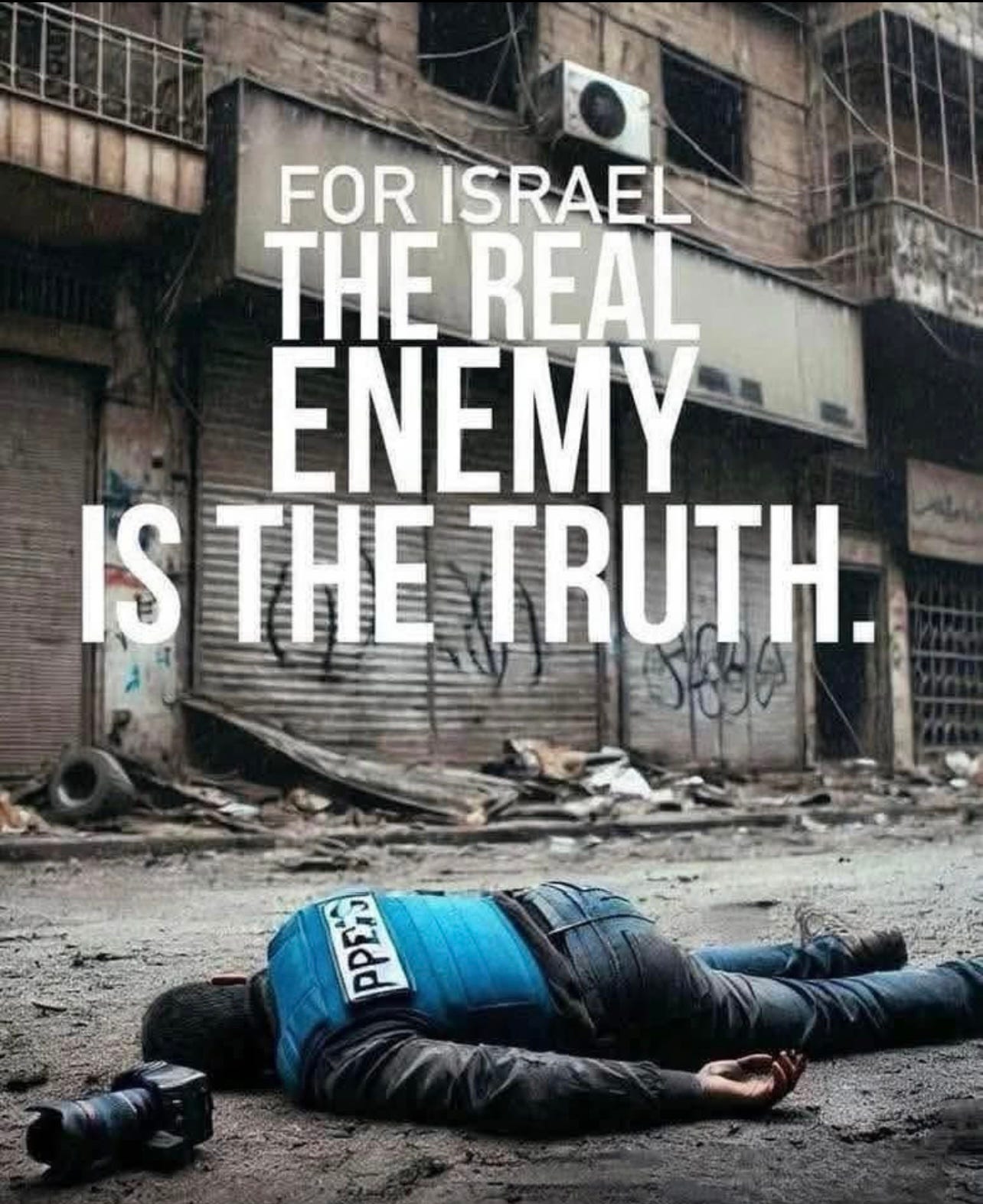
The genocide in Gaza has torn away the veil. The raw, unfiltered images of dismembered children, of fathers clutching the plastic bags containing the remains of their families, of doctors performing surgeries without anesthesia, have shattered the Orwellian language of “the most moral army in the world” and “human animals.” The world is watching, and it sees the truth. The carefully constructed narratives are crumbling under the weight of the evidence provided by Palestinian martyrs themselves.
In this moment of stark clarity, the Muslim Zionist and the silent accomplice stand exposed. They are on the wrong side of history, the wrong side of morality, and the wrong side of God. They have chosen the ephemeral power of the colonizer over the eternal justice of the divine.
Our obligation, then, is twofold. First, we must relentlessly expose and condemn this collaboration, not with personal attacks, but with unwavering intellectual and theological rigor. We must reclaim our faith from those who would hollow it out and weaponize it against the oppressed. We must center the Palestinian narrative not as a “conflict” to be debated, but as a paramount moral crisis of our time, a litmus test for our collective humanity.
Second, and most importantly, we must shatter the silence with the thunder of collective action. Silence is the oxygen that genocide breathes. We must deprive it of that oxygen. We must mobilize, organize, boycott, divest, and sanction. We must pressure our governments, challenge our institutions, and transform our streets into rivers of protest that cannot be ignored. We must redirect our grief, our rage, and our faith into an unstoppable force for justice. The time to transform the world is upon us and the hero you are waiting for is you and all those around you!
The road to liberation is long, and the cost is unimaginably high, paid in the currency of Palestinian blood. But to stand idly by, to be silent, to offer excuses, or worse, to side with the oppressor, is to become a footnote in the manifesto of the genocide. History will judge us not by our intentions, but by our actions for justice in this defining moment. Will we be remembered as the generation that watched a genocide unfold in real time and looked away? Or will we be the generation that finally, definitively, said: Never again, for anyone. The choice is ours, and the time to make it is now, before the last scream in Gaza is silenced forever.

