To understand the modern Middle East, its wars, its treaties, its collapsed states, its constant shifts, and compliant kings, one must first accept a foundational premise: the region, the modern Middle East, has not been shaped by accident or by its own population. The genocide in Gaza, chaos in Syria, the “peace” in Cairo, invasion of Lebanon, the civil war in Sudan, the proxy battles in Yemen, illegal attacks on Iran, these are not discrete failures of governance or unfortunate eruptions of sectarian passion. The Western talking heads who reduce everything to sectarian violence or old animosities actually participate in the obfuscation. In all honesty, these episodes are, in significant measure, the outcomes of a coherent long-term strategy designed to prevent any state or movement in the Arab and Muslim worlds from accumulating the political, military, cultural, or economic power to challenge Israel or the Western order that guarantees its security. Let’s be honest, the region has far too much oil and gas to leave it for the benefit of its own people. Blood, skulls, and destruction are an “acceptable price” to keep the stock market going and to purchase more planes, apartments and islands for the Epstein Class. If they don’t care about their own kids and women, as they traffic and kill for pleasure, why do we think they would give a moment of concern to those with darker complexions?
The strategy for the Arab and Muslim worlds is not monolithic. It does not flow from a single room or a single document. But its logic is consistent, and its fingerprints are visible across decades. The France-based Foundation for Strategic Research (FRS) described it plainly in April 2026: “Any future regional arrangement must pass through Israel and remain subordinate to its security interests.” Israeli leaders themselves have articulated the vision. As analyst Hammoura noted in The New Arab, Israel is not pursuing peace out of weakness; it proposes peace as “a tool to consolidate a new reality,” using military success to extract political outcomes. The new reality is visible in Gaza, the West Bank, Lebanon, Syria, Iran, Iraq, Somalia, and Sudan, just to name a few.
I would like to offer the five operational pillars of that strategy, documented through primary sources, think-tank research, and the public record. It is not a conspiracy theory, even though one can never discount the power and use of conspiracies in the region, just think back to the Sykes-Picot Agreement. I offer political analysis of power as it is actually exercised.
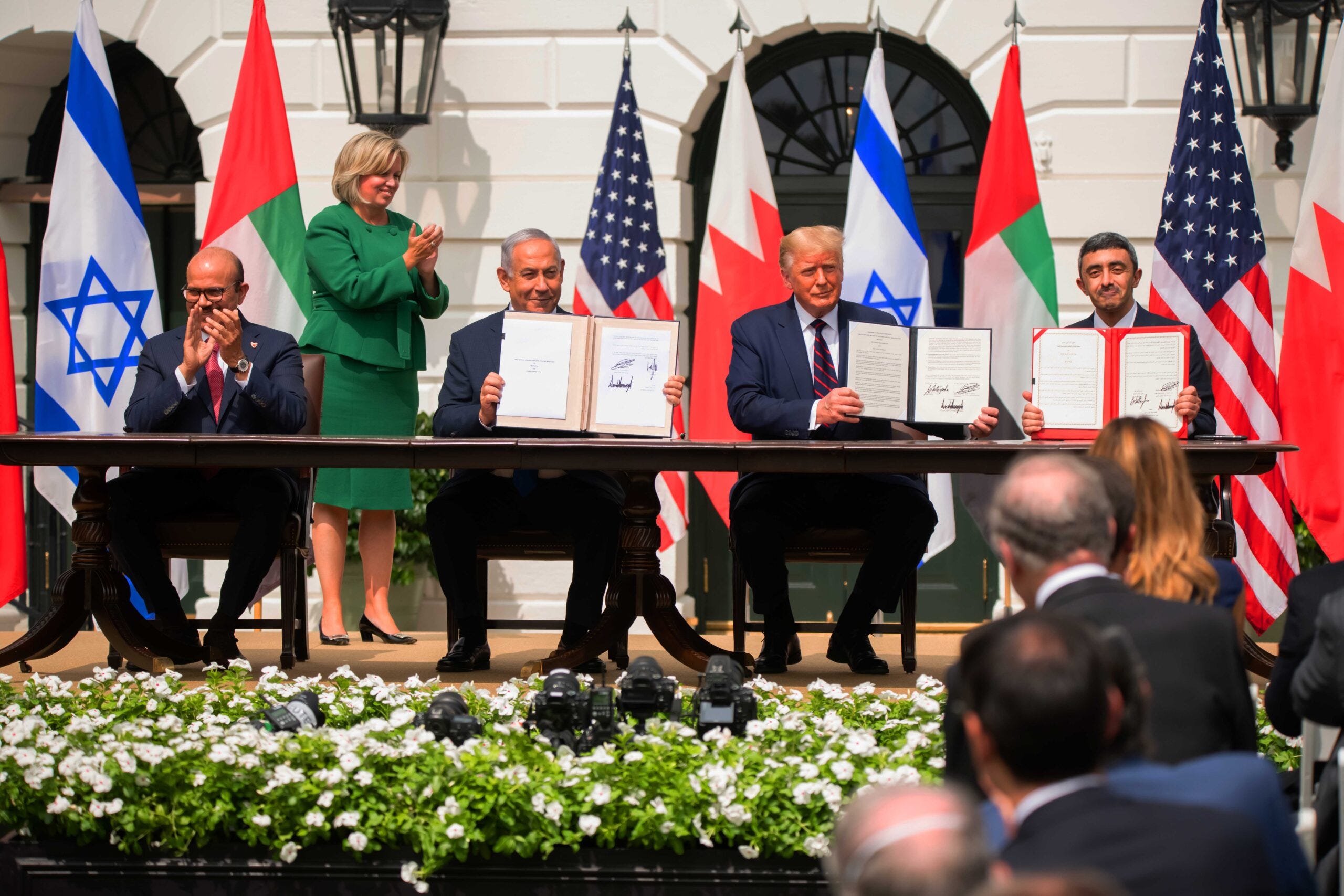
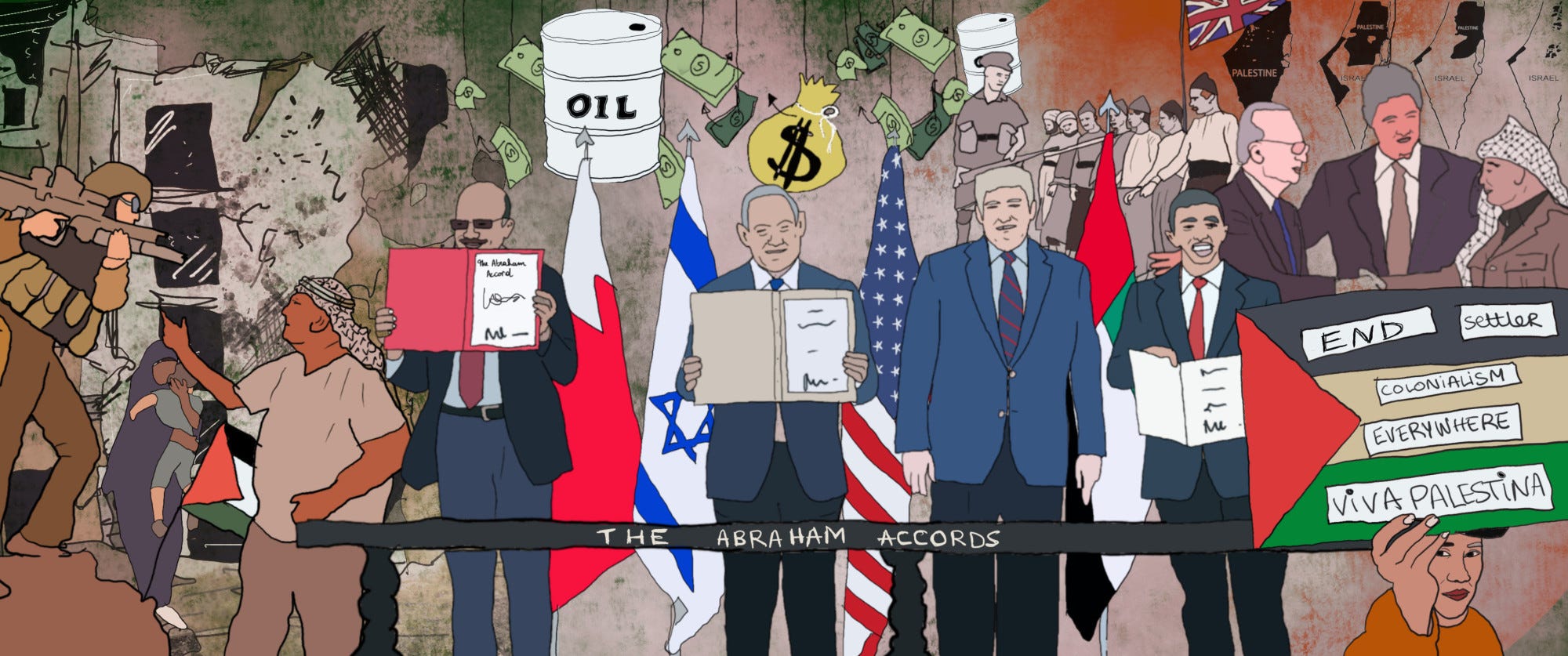
The first and most “respectable-looking pillar” is normalization: bilateral peace treaties that are celebrated in Western capitals as evidence of progress while, in practice, functioning as instruments of structural dependency. The model was established with Egypt in 1979 and Jordan in 1994, and has been industrialized through the Abraham Accords of 2020.
https://www.tni.org/en/article/framing-palestine
The Egypt-Israel peace treaty, signed after the Camp David Accords mediated by the United States, neutralized the most powerful Arab military by design. Israel’s strategic objective, as The Conversation documented in its analysis of the treaty, was explicit: “to secure its southern border and neutralize the region’s largest and most powerful Arab country.” The Camp David treaty opened the door for Israel’s invasion of Lebanon and the non-stop torment of Lebanon with its large Palestinian refugee population. What followed was not a partnership of equals; Israel used the treaty to free its hand across the region. Egypt received U.S. military aid that locked its armed forces into American (and by extension Israeli) dependency. According to Al Jazeera, Egypt has received more than $87 billion in U.S. foreign aid since 1946, with military and economic assistance increasing sharply after the 1979 peace deal. The current annual military aid of $1.4 billion is explicitly conditioned on maintaining that peace. Jordan, similarly, receives $1.72 billion per year in bilateral U.S. assistance, a figure that emerged directly from its 1994 peace with Israel.
The mechanism is transparent: peace with Israel is the price of admission to the U.S. patronage network as well as an open door to “places” of influence in the West. Abrogating the treaty would mean losing the money, the weapons, and the political cover. Egypt’s peace with Israel has been described even by Israeli officials as a “cold peace” — the population rejects it, but the government is financially captive to it. Add to this the use of aid as a tool to seed corruption and subvert internal decision-making, especially among the military officer corps. When Trump threatened in early 2025 to cut aid to Egypt if it refused to accept Palestinian refugees, diplomatic sources in Cairo told the press that such a cut could invalidate the peace treaty itself. The threat worked because the dependency and control are real.
The Abraham Accords formalized this model for the Gulf states. As the Middle East Institute documented, the accords were built on an “outside-in” approach focused on “fostering bilateral diplomatic, trade, and security relations with Arab states not directly party to the Israeli-Palestinian conflict,” explicitly bypassing the Palestinian question. The quid pro quo, as reviewed in the Middle East Research and Information Project (MERIP), was stark: “Israel would gain recognition and access to Middle East markets, and in return the ruling Gulf families would receive protection and profits.”
Morocco’s normalization was purchased with U.S. recognition of Moroccan sovereignty over Western Sahara, a separate territorial dispute used as currency. Bahrain received security guarantees and access to U.S. arms. The UAE gained advanced weapons systems, including the F-35, which had previously been withheld. In each case, normalization was not freely chosen; it was bought, with the currency being American military and political power deployed on Israel’s behalf.
The strategic goal of this pillar is to embed Israel into the economic, intelligence, and security infrastructure of the Arab world, not as an equal partner, but as the node through which all connections to the United States pass. As Outlook India reported, Israel’s “integration into US Central Command (CENTCOM), deeper security ties with Arab states, and efforts to shape regional infrastructure, from energy routes to intelligence networks, suggest ambitions that go beyond borders.”
Where normalization is not available, where the state is too resistant, the population too hostile, or the government too independent, the second pillar is deployed: controlled fragmentation. The goal is not military victory in the conventional sense. The goal is permanent debilitation, states reduced to warring factions, economies destroyed, populations traumatized, and governments so desperate for survival that they eventually accept the terms of the order they once defied.
The intellectual framework for this approach was laid out with unusual candor in 1982. Oded Yinon, a former senior Israeli Foreign Ministry official and advisor to then-Defense Minister Ariel Sharon, published a document titled “A Strategy for Israel in the Nineteen Eighties.” The “Yinon Plan” argued that Israel should exploit ethnic and sectarian divisions to bring about “the fragmentation of the Arab world into a mosaic of ethnic and confessional groupings.” Yinon stated that “every kind of inter-Arab confrontation would prove to be advantageous to Israel in the short term,” and identified the “dissolution of Syria and Iraq into ethnically or religiously unique areas” as Israel’s “primary target on the Eastern front in the long run.” This is also in progress in Iran and, possibly in the future, in Pakistan and Turkey.
What was a speculative strategy in 1982 reads like a policy report in 2026. Syria has been shattered. Lebanon has been financially collapsed and repeatedly bombed. Sudan is in civil war. Libya has not had a functioning national government since 2011. Yemen is one of the worst humanitarian and regional catastrophes in the world. Somalia has been in varying states of disintegration for three decades.
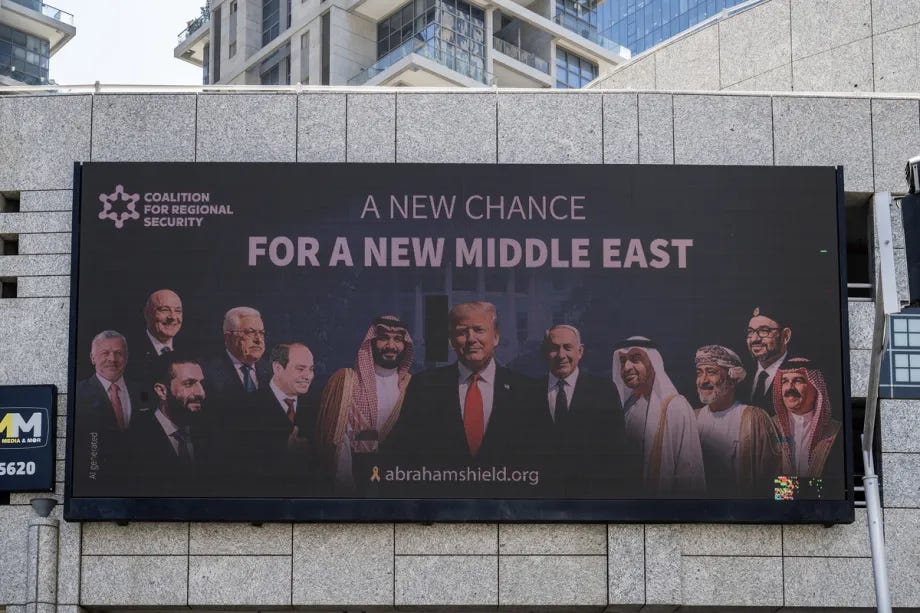
The mechanisms vary. In Libya, it was NATO intervention, direct military strikes under the banner of civilian protection, that destroyed Gaddafi’s government and left the country fragmented among competing militias. The same logic applied earlier to Syria, the Carnegie Endowment in March 2025 noted that regional actors’ “current policies often entangle them in direct or proxy conflicts,” with external support for armed factions preventing any political resolution.
In Yemen, the human cost has been catastrophic and the strategic logic unmistakable. The Brookings Institution documented in March 2025 that more than 19 million Yemenis are in need of humanitarian assistance, while noting that Israeli strikes on Hodeidah port in September 2024 further damaged the infrastructure through which humanitarian aid enters the country. Yemen poses no existential threat to Israel, but a strong, unified Yemen allied with a regional resistance network does. Perpetual civil war forecloses that possibility while making sure the sectarian playbook is kept active.
Saudi Arabia’s war in Yemen, conducted with U.S. weapons and logistics, serves the same function. As the Carnegie Endowment observed, Saudi Arabia and the UAE have been militarily involved in Yemen in ways that have diverted their resources, attention, and regional credibility, keeping them focused on a civil war rather than on Palestinian solidarity or challenges to Western regional hegemony. When the Saudi-UAE rift emerged in December 2025, one of the flashpoints was, notably, Abu Dhabi’s perceived support for “secessionist movements and nonstate actors in Libya, Sudan, Syria, and Yemen,” precisely the fragmentation strategy documented here.
Lebanon’s collapse is perhaps the most deliberate. The country’s financial system imploded in 2019 in what the World Bank called one of the worst economic crises in modern history. The 2020 Beirut port explosion killed hundreds and destroyed the capital’s infrastructure. Israeli strikes in 2024 devastated Hezbollah but also the Lebanese state apparatus. The result is a country unable to function as a sovereign entity, dependent on outside actors, and incapable of projecting any regional power.
The third pillar operates at a greater geographic distance but serves a parallel function: keeping Muslim-majority states on the periphery of the Middle East consumed by their own conflicts so that their resources, military power, and political attention cannot be directed toward the Palestinian question or toward challenging the Western-Israeli regional order. The West created the Middle East post-WWI and the destruction of the Ottoman State, and it intends to keep it that way for the foreseeable future, no matter the Arab and Muslim body count under the rubble.
Pakistan and Turkey are the most consequential cases. Pakistan is the most populous Muslim-majority country in the world, nuclear-armed, possessing one of the largest standing armies on earth, and home to a population with deep solidarity with Palestinians. Pakistan is, in theory, the most formidable potential challenger to Israeli-Western strategic dominance. In practice, it has been consumed for decades by its conflict with India over Kashmir, by its internal insurgencies, by its relationship of dependency on IMF debt, and by the aftermath of the U.S. war in Afghanistan. The Afghanistan war, which lasted two decades, turned Pakistan into a frontline state, flooded it with refugees and weapons, fueled the Taliban and other armed movements on its territory, and embedded the Pakistani military in a relationship of clientelism with Washington that severely constrained its strategic autonomy.
Turkey’s contemporary geopolitical position can be understood through the lens of containment via peripheral conflict, wherein a state is not directly confronted but instead encircled by overlapping crises that constrain its strategic autonomy. Situated at the crossroads of multiple regions, Turkey faces continuous pressures along its borders from the Syrian Civil War and the Kurdish struggle tied to the PKK in Syria and Iraq, to maritime and gas field disputes in the Eastern Mediterranean with Greece and Cyprus, as well as strategic entanglements in the Nagorno-Karabakh conflict. These external pressures are compounded by internal political, economic, and social strains, including the management of large refugee populations and domestic polarization. At the same time, Turkey’s membership in NATO generates structural contradictions, binding it to alliances that often conflict with its regional interests. Taken together, these dynamics produce a condition not of outright confrontation but of managed overextension, where Turkey is compelled into constant reactive engagement, limiting its capacity to consolidate independent regional leadership.
Azerbaijan’s conflict with Armenia over Nagorno-Karabakh, which escalated into a full military offensive in 2020 and 2023, has served to lock the South Caucasus into a cycle of confrontation that absorbs Azerbaijani resources and diverts Turkish strategic attention, Turkey being a NATO member that has periodically positioned itself as a champion of Muslim causes while being constrained by its alliance commitments. Israel, notably, was a major arms supplier to Azerbaijan during its Karabakh operations, selling it drones that proved decisive on the battlefield, a strategic investment in a conflict that served the function of peripheral entanglement.
Algeria, sub-Saharan Africa’s most militarily capable state and historically one of the most resistant to Western diktat, has been managed through its domestic security preoccupations, the legacy of the 1990s civil war, the Sahel insurgencies on its southern border, and its ongoing rivalry with Morocco (itself now an Abraham Accords signatory). Chad and Eritrea have been similarly ensnared in regional conflicts, the Chadian civil wars, the Tigray war in Ethiopia that drew in Eritrea, which keeps their governments focused on survival rather than on any broader political project.
The pattern is consistent: states with the potential to organize meaningful opposition to the regional order are kept busy, destabilized, or dependent. The tools are varied — proxy conflicts, arms sales to rivals, debt leverage, support for internal opposition — but the strategic function is uniform: containment by distraction. This analysis is not intended to endorse or speak in support of any of the internal political orders in these countries, but to provide a window into the broader strategic picture at play.
The fourth pillar is the most invisible and, in some ways, the most effective: the cultivation of internal political actors, forming or funding political parties, movements, media outlets, civil society organizations, business interests that carry Western and Israeli strategic interests while presenting themselves as domestic political forces. This is not a new phenomenon. It is the standard operating procedure of great power politics, practiced by every major power in every era. What distinguishes its application in the Muslim world is its systematic character and its specific orientation toward preventing any government from pursuing an independent, solidarity-based foreign policy.
Turkey is the clearest and most institutionalized case. NATO membership has embedded Turkish military and intelligence structures in Western command systems since 1952. Turkey was the first Muslim-majority country to recognize Israel, in 1949, and has oscillated between deep cooperation and strategic tension depending on domestic politics. The attempted coup of July 2016, which the Erdogan government attributed to the Gülenist movement operating through state institutions, a movement that had long been cultivated in part through connections to Western intelligence and educational networks, demonstrated how deeply such penetration can reach into a state’s organs. Turkey’s periodic attempts to assert independent regional leadership, including on the Palestinian question, have consistently been countered by the activation of these internal levers: financial pressure, NATO institutional friction, and the amplification of internal opposition.
Iraq, since 2003, is perhaps the most thoroughly restructured state in the region. The U.S. invasion dismantled the entire Ba’athist state apparatus, the military, the intelligence services, and the civil bureaucracy and rebuilt them from scratch under American supervision. The political system that emerged is designed to produce perpetual factional competition, preventing any strong, unifying national government from emerging. As the Carnegie Endowment noted in its analysis of Israeli policy, the “forever war” is “regional” and extends across multiple theaters. The goal is to prevent the consolidation of state power that could challenge the regional order.
Iran presents a different challenge, a government that has explicitly organized its foreign policy around resistance to Israeli-American hegemony. The response has been multi-layered: economic sanctions designed to collapse the economy and generate internal pressure, support for ethnic and political opposition movements (Kurdish, Baloch, Arab, and others within Iran’s borders), cyberattacks, assassinations of scientists and military commanders, and direct military strikes beginning with the Israeli operations of 2025. Al Jazeera’s analysis noted that “the pro-Israel lobby in Washington has been successful in inserting Israeli regional interests into U.S. foreign policy on the Middle East,” and that “U.S. military and financial support for several states in the region has been conditional on their accepting Israeli diktats in regional affairs.”
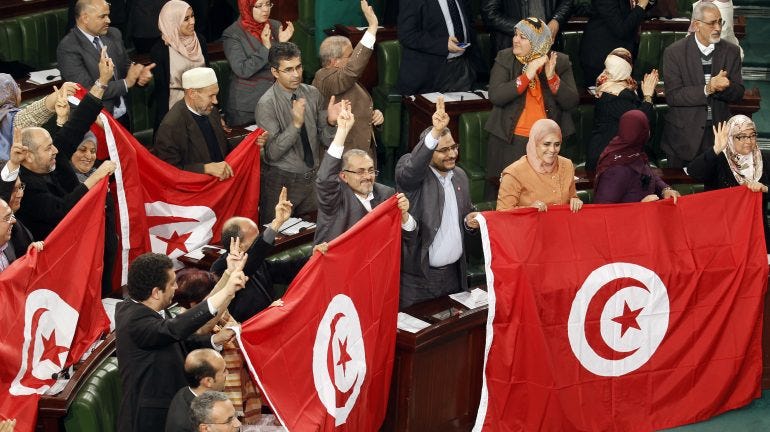
Morocco is a case where normalization (Pillar One) and internal management (Pillar Four) overlap. The monarchy, which signed the Abraham Accords in exchange for U.S. recognition of its Western Sahara claim, has used that transaction to entrench its domestic political position while suppressing the large portion of the Moroccan population that opposes normalization with Israel. Tunisia, which experienced a genuine democratic transition after 2011 before descending into authoritarian reversal under Kais Saied, saw Western and Israeli interests work to contain and ultimately reverse the democratic experiment — particularly as Islamist-aligned parties that might take a more independent foreign policy position gained electoral ground.
All four pillars described above operate in the background through financial dependency, fragmentation, peripheral entrapment, and political infiltration. When they prove insufficient, a fifth pillar activates: open, direct military force. It is not a last resort. It is, rather, the backstop that makes all other pillars credible and operational. The credible threat of overwhelming military violence is what makes the “peace” in Cairo and Amman cold but durable, what disciplines the internal opposition in Tehran, what makes Gulf rulers calculate that resistance is more costly than accommodation.
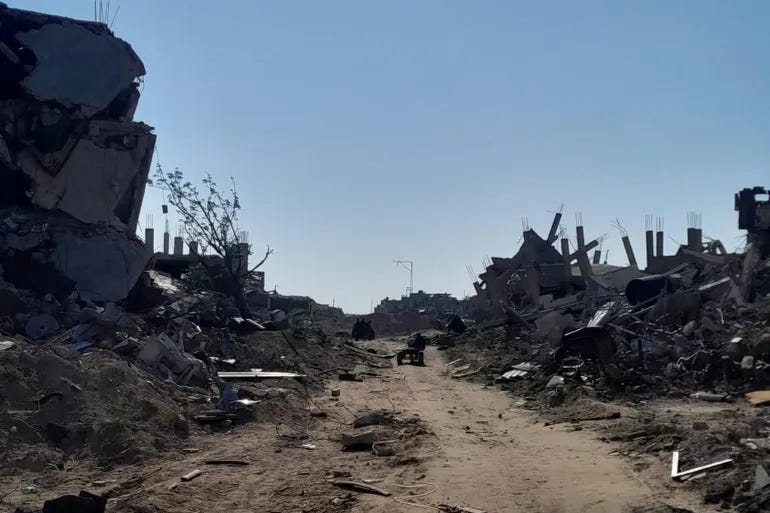
Israel’s military doctrine has undergone a fundamental transformation since October 7, 2023. What had previously been described as “mowing the lawn,” periodic military operations designed to degrade adversary capabilities without seeking decisive outcomes, has been replaced, under Netanyahu, by a doctrine of strategic transformation through force. The European Council on Political Research described this shift plainly: “Instead of ‘mowing the lawn’ it is using military force for a different end: creating a new regional balance of power.”
The targets since 2023 have been sequential and deliberately escalatory. Gaza was subjected to what the International Court of Justice has been asked to rule constitutes genocide. Lebanon’s Hezbollah leadership was eliminated in a series of assassinations and airstrikes. Syria’s post-Assad government was subjected to hundreds of airstrikes that destroyed military infrastructure; Israel simultaneously expanded its occupation beyond the 1974 ceasefire line. Iran was struck directly beginning in 2025 in what Israeli leaders called “Operation Lion Rising” and currently is facing a joint US-Israeli attack that intends to bring about regime change.
Each of these military campaigns simultaneously serves the function of demonstrating what awaits states that do not choose Pillar One (normalization), resist Pillar Two (managed fragmentation), avoid Pillar Three’s containment, or successfully neutralize Pillar Four’s internal penetration. As the Foundation for Strategic Research noted, “negotiation is no longer the goal: instead, the aim is to impose surrender through military means, outside any legal framework.”
The integration of Israel into U.S. CENTCOM in January 2021 formalized the military architecture of this system. As the Jewish Policy Center documented, Israel is now a formal component of the regional security architecture spanning the Middle East to Central Asia — conducting joint exercises with Arab militaries, sharing intelligence with Gulf states, and operating as what one Jerusalem Strategic Tribune analysis called “an official component of the regional security architecture that the United States had been building in the Middle East, designed to counter Iran through shared intelligence, integrated air defense, maritime cooperation, and coordinated operational planning.”
The result is a regional security system with Israel at its operational core, backed by American hard power, in which every state must choose between accommodation and the risk of destruction. It is not hidden. Israeli leaders have said so. Netanyahu himself has spoken of building “a kind of hexagon of alliances” linking Israel with countries across Asia, the Middle East, Africa, and the Mediterranean — a statement Outlook India noted positions Israel “not just as a state defending itself, but as a central node in a US-backed regional order.”

