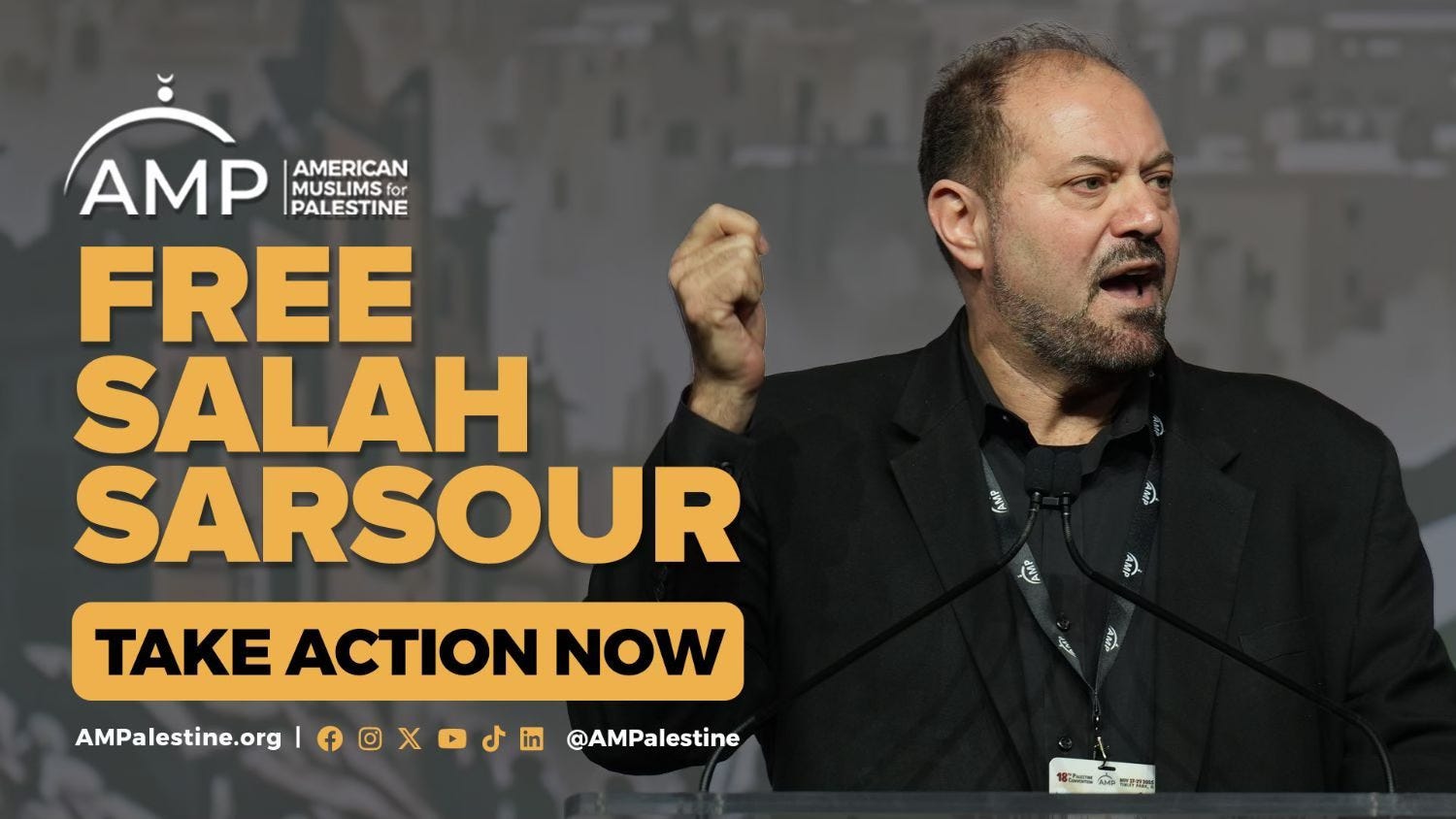
On the morning of March 30, 2026, more than ten armed ICE agents descended on a Milwaukee street and surrounded the car of Salah Sarsour, a 53-year-old Palestinian-born man who has lived in the United States for 32 years, holds a green card, and has served for five years as board president of the Islamic Society of Milwaukee, Wisconsin’s largest mosque, and a board member of American Muslims for Palestine. His wife and four adult children are American citizens. He has no criminal record in the United States.[1] He was transferred first to an ICE facility in Broadview, Illinois, then to the Clay County jail near Terre Haute, Indiana, held far from his family, his community, and his lawyers.[2] On the grounds, according to the Department of Homeland Security, that he is a “foreign policy threat” suspected of “funding terrorist organizations.”[3] The charge of “foreign policy threat” is a tool used by the US government to silence Palestinian voices speaking about the ongoing genocide in Gaza.
The other charge against Sarsour rests entirely on a “conviction” by an Israeli military court when he was a teenager in the occupied West Bank. His attorneys confirm that this conviction was known to the U.S. government when he arrived in 1993 and remained on file for over three decades without consequence. His attorney, Munjed Ahmad, was direct in responding to the charge: “Our government should not be doing the bidding of a foreign government. There’s no question in my mind that this is to stifle the discourse on the Palestinian narrative.”[4]
This is not an isolated immigration enforcement action. It is the latest chapter in a long, documented, and deliberate campaign to silence Palestinian voices in the United States, a campaign that predates the War on Terror, predates the Patriot Act, and predates every administration that has recycled its tools. To understand what happened to Salah Sarsour, you must understand what has been happening to Palestinians in America for more than five decades.
“Our government should not be doing the bidding of a foreign government. There’s no question in my mind that this is to stifle the discourse on the Palestinian narrative.” — Munjed Ahmad, attorney for Salah Sarsour
The targeting of Palestinian political activists in America did not begin with September 11. It began, in institutional and systematic form, under Richard Nixon, who in 1972 launched what his administration internally named Operation Boulder, a sweeping surveillance program that, following the Black September attacks at the Munich Olympics, explicitly targeted Arab Americans, and Palestinians in particular, for investigation, intimidation, and suppression of 1st Amendment political activity. As legal scholar Susan Akram has documented, Operation Boulder was “perhaps the first concerted U.S. government effort to target Arabs in the U.S. for special investigation” with the specific purpose of deterring their activism on issues relating to the Middle East.[5] The program boils down to a racially and ethnically targeted policing based on constitutionally protected activities.
The program involved coordination between the FBI, the Immigration and Naturalization Service, the CIA, and, as investigative reporters at MERIP uncovered at the time, Israeli intelligence services and the Anti-Defamation League, which shared surveillance data on Arab Americans with American federal agencies.[6]Immigration authorities required Arab students to sign affidavits stating that they would not engage in political activities. The American Civil Liberties Union wrote to the Attorney General in February 1974, condemning the program for unfairly targeting individuals defined as Arab “on the basis of a person’s parentage.”[7] The FBI formally terminated Operation Boulder in 1975, acknowledging its ineffectiveness. But the template it established, Palestinian political identity as presumptive security threat, immigration law as suppression mechanism, survived it.[8]
This was the original architecture: define Palestinian political identity as a security threat, use immigration law and terrorism designations as the enforcement mechanism, and suppress the organizing capacity of a community through surveillance, fear, and selective prosecution. The political content of the activity was irrelevant to any genuine national security calculus. What mattered was keeping Palestinian voices out of American public life in the service of American foreign policy and its unconditional support for Israel.
One of the longest cases on the books is the LA case, which I have followed, spoke and organized to defend those accused, wrote about, and had the son of one of the accused end up raising his hand in my own course at UC Berkeley while I am lecturing about the case to say it was his father. The case started before he was born, and now he is in a college course that addresses his father's struggles.
Shortly before dawn on January 26, 1987, FBI agents and INS officers conducted simultaneous raids across Los Angeles and arrested seven Palestinian men and the Kenyan wife of one of them. They became known as the LA8. The targets were held at Terminal Island federal penitentiary, shackled, and placed in solitary confinement for over three weeks. As one of the Eight later described: “We were arrested at gunpoint, shackled, and held in solitary confinement at Terminal Island, a maximum-security state prison, for twenty-three days.”[9].
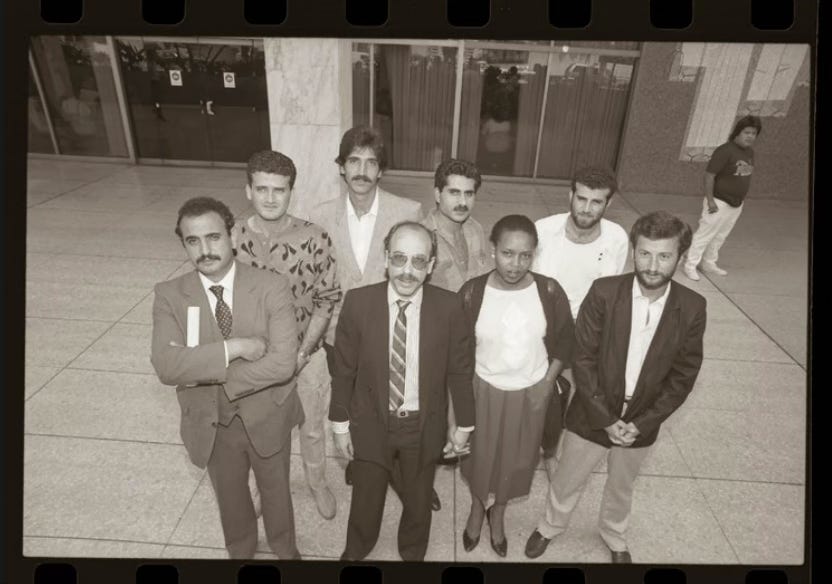
The charges rested on activities that included distributing the Palestinian magazine Al-Hadaf, which was already available in public libraries and on American university campuses, participating in demonstrations, and organizing humanitarian aid fundraisers for Palestinians. The Reagan administration charged them under the McCarran-Walter Act of 1952, claiming their association with the Popular Front for the Liberation of Palestine warranted deportation. The FBI had conducted a three-year investigation and, as FBI director William Webster himself testified, concluded that the individuals had committed no crimes. It nonetheless urged their deportation.[10] Internal FBI documents characterized the group’s protests as “anti-Israel” and “anti-Reagan,” and singled out green-card holder Khader Hamide because he was, in the Bureau’s own words, “intelligent, aggressive, dedicated, and shows great leadership ability.”[11]
The case was finally dismissed in 2007, the government’s sixth unsuccessful attempt at prosecution, when an immigration judge ruled that the proceedings constituted “a festering wound on the body of respondents and an embarrassment to the rule of law.”[12] The case had reached the Supreme Court once, the federal courts of appeals four times, and the Board of Immigration Appeals multiple times, spanning four presidential administrations. Every legal argument eventually collapsed. The case was kept alive and moving by both Democratic and Republican administrations, as both are equally committed to defending Israel at the expense of the US Constitution and the rule of law.
Georgetown law professor David Cole, who represented the LA8 from the beginning, wrote in The New Yorker in March 2025 that the group was targeted “not because they had engaged in any criminal activity but because they were effective activists.”[13] When the USA PATRIOT Act was enacted after September 11, 2001, the Department of Homeland Security attempted to use its provisions against the remaining defendants, Hamide and Shehadeh, marking the first use of PATRIOT Act provisions to seek the deportation of immigrants for supporting designated groups.[14]
The 1990s brought a new political vocabulary to the suppression of Palestinian organizing. The Oslo peace process created a convenient fiction that the Palestinian cause was being managed diplomatically, and that Palestinians who organized outside that framework were therefore potential security threats. The Clinton administration embraced this framing and used it to build the legal architecture for the next wave of suppression.
In 1995, President Clinton signed an executive order designating specific Palestinian organizations as terrorist entities. Important to recall that Clinton took this action in response to an Israeli American settler, Baruch Goldstein, a Zionist extremist from the far-right Kach movement, who carried out a massacre in al-Ibrahimi Mosque (the Cave of the Patriarchs) in Hebron. Goldstein entered the sanctuary during the morning prayers in the Month of Ramadan and opened fire at praying Muslims with an automatic weapon, killing 29 of them and injuring about 150 others. President Clinton declared a state of emergency after violence erupted in Palestine and targeted Palestinian Americans. The Antiterrorism and Effective Death Penalty Act of 1996 formalized and expanded the “material support” framework legislation whose design, as its congressional advocates made explicit during floor debates, was to allow criminalization of support for designated organizations without requiring evidence of direct involvement in violence.
Chief among the targets was the Holy Land Foundation for Relief and Development, then the largest Muslim charity in the United States, which provided humanitarian assistance to Palestinian families in Jordan, Lebanon, and the occupied territories. Federal surveillance began in 1996. The Bush administration, at the request of then Israeli Prime Minister Ariel Sharon, shut it down after September 11, 2001, and prosecuted its leadership in what federal prosecutors called “the largest terrorism financing prosecution in American history.”[15][16] The Holy Land Foundation had donated money to Palestinian charities that the U.S. government itself simultaneously supported through other channels. The five convicted leaders received sentences of up to life in prison.[17]
The material support framework was not simply a law. It was a mechanism for dissolving the organizational infrastructure of Palestinian American civil society and making sure that critics of Israel are punished. Charities were shut down, assets frozen, leaders imprisoned. Lawyers refused cases. Donors were investigated. The chilling effect was total and deliberate, and every administration since Clinton has inherited and extended it.
The same legal architecture that dismantled Palestinian civil society in the 1990s, built not on evidence of violence but on the equation of Palestinian political identity with terrorism, is the architecture being used today to deport a mosque president for throwing rocks as a teenager under military occupation.
The attacks of September 11, 2001, delivered to the national security apparatus what the LA8 case and the Holy Land Foundation prosecutions had been unable to achieve: a sweeping public mandate for the unlimited surveillance and criminalization of Arab and Muslim communities. The USA PATRIOT Act, passed six weeks after the attacks, expanded wiretapping authority, loosened restrictions on FBI surveillance of political organizations, and broadened the material support definition so aggressively that providing legal advice to a designated organization could constitute a federal crime.
The National Security Entry-Exit Registration System, NSEERS, known informally as “special registration,” was established by the Bush administration’s Department of Justice in 2002. It required men and boys from predominantly Muslim and Arab countries to report to immigration offices for fingerprinting, photographing, and interrogation. Anyone who failed to comply faced arrest and deportation.[18] The program ran for a decade. As civil rights organizations documented at the time, not one person registered under NSEERS was ever convicted of any crime related to terrorism. It was, in its entirety, a mass ethnic, racial, and religious profiling operation.[19]
Palestinians sat at the intersection of every layer of post-9/11 targeting. Material support laws were applied with elastic definitions that allowed prosecution of individuals for donating to Palestinian charitable organizations or maintaining professional relationships with individuals whose associations could be characterized as problematic. The chilling effect was total. Palestinian American organizations curtailed their work, lawyers refused cases, academics avoided research, and the broader community learned, viscerally and permanently, that political visibility carried legal risk. Law was transformed into a silencing dagger thrust into the collective bodies of Palestinians, Arabs, and Muslims.
The first Trump administration did not merely tighten immigration enforcement — it weaponized it as an explicitly ideological instrument, transforming the apparatus of border control into a tool of political suppression targeted at specific communities, specific beliefs, and specific speech. This was not incidental. It was the point.
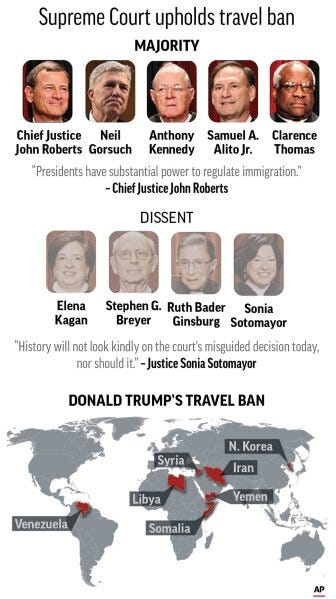
The Muslim Ban, Executive Order 13769, signed within the first week of the administration in January 2017, suspended entry from seven Muslim-majority countries: Iran, Iraq, Libya, Somalia, Sudan, Syria, and Yemen. Subsequent iterations refined the legal packaging while preserving the core logic. The Supreme Court, in Trump v. Hawaii (2018), upheld the third version in a decision that required willful blindness to the public record of the policy’s origins, a record in which the president and his advisors had repeatedly and explicitly described their goal as banning Muslims. The Court chose legal formalism over factual honesty, and in doing so granted constitutional legitimacy to what was, by any plain reading of the evidence, a religiously discriminatory executive action.
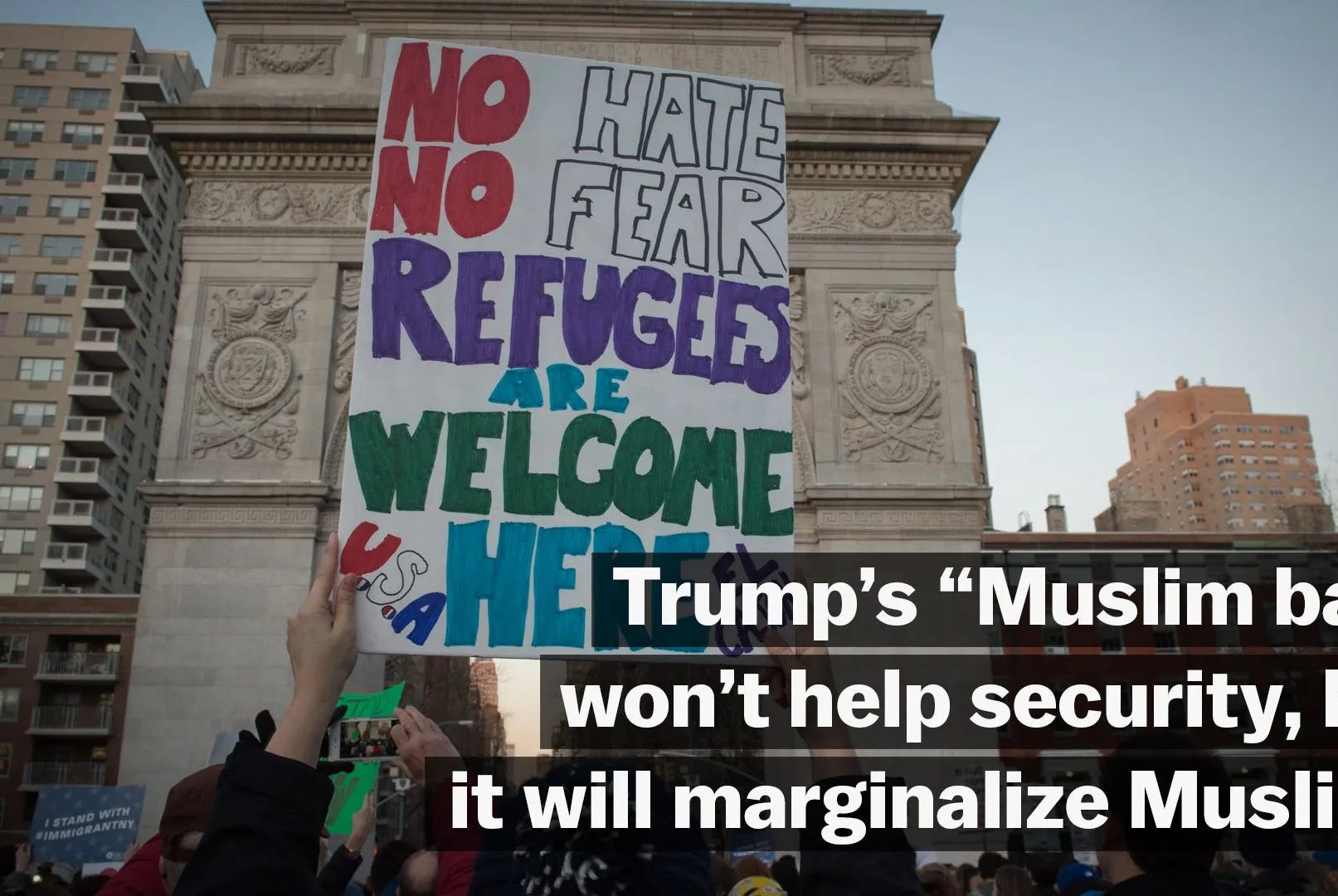
The ban’s clearest message was not contained in its legal provisions but in its political declaration that Muslim identity was, by executive determination, a categorical national security risk. Not conduct. Not evidence. Identity. Palestinian Americans, overwhelmingly connected to a people living under military occupation, understood with precision what their government had just communicated. Their community had been designated a threat class. The state had formalized what street-level Islamophobia had long implied that to be Muslim was to be suspect, and that to be Palestinian and Muslim was to be doubly so.
But the Muslim Ban, sweeping as it was, was in some ways the blunter instrument. More surgically targeted were the visa revocations, entry denials, secondary screenings, and border interrogations that fell disproportionately on Palestinian, Arab and Muslim academics, students, journalists, and activists. These were not random. Individuals who had publicly criticized Israeli policy, participated in pro-Palestinian organizing, or been flagged by pro-Israel monitoring organizations found themselves subjected to treatment that their non-Palestinian, non-Muslim peers did not face. Scholars with invitations from American universities were turned back at airports. Graduate students returning from family visits abroad were taken to interrogation rooms and questioned about their political beliefs and associations. Speakers invited to American conferences were denied entry without explanation or recourse. The “cancel culture” stoked and fomented by Zionist and pro-Israeli operatives is the standard for Palestinians voices in the US from the 1970s to the present.
The infrastructure behind this targeting was, in part, not American at all. The Israeli government’s use of Canary Mission data at its border control, which was documented by Haaretz as early as 2023, revealed that a privately operated Israeli surveillance database, built to compile dossiers on pro-Palestinian activists, students, and academics, had been integrated into Israeli border security screening. What this meant in practice was that an opaque, unaccountable private intelligence operation, funded by anonymous donors and designed explicitly to suppress pro-Palestinian political activity, was functioning as a vetting mechanism with real-world consequences for anyone crossing into Israeli-controlled territory. The implications extend further; the documented relationships between Israeli and American intelligence and law enforcement agencies, and the known practice of information-sharing between them, raise serious and inadequately investigated questions about whether Canary Mission data or data like it has influenced American visa decisions, watchlist designations, or border screening protocols
The pattern, taken as a whole, is unmistakable and damning. Immigration law was being selectively and politically deployed to manage, restrict, and punish who could participate in American public discourse about Palestine. It was not being applied uniformly to travelers, students, or academics as such; it was being applied to a specific political speech community. The selection criterion was not criminality, nor any specific conduct. It was viewpoint-specific. It was identity. It was the particular combination of being Palestinian, or Muslim, or publicly sympathetic to Palestinian rights, at a moment when the executive branch had decided that sympathy was a form of threat.
This is, by any rigorous definition, political persecution conducted through administrative channels. It does not require a secret conspiracy to function; it requires only that enforcement priorities align with political goals, that relevant agencies share data without public scrutiny, and that those targeted lack the legal standing or institutional support to mount effective challenges. All three conditions were met. The result was a regime in which Israeli intelligence networks functioned as de facto informants feeding into American enforcement, and in which the formal neutrality of immigration law served as cover for what was, in substance, ideological gatekeeping of American civic and intellectual life.
October 7, 2023, and Israel’s subsequent military campaign in Gaza, which killed tens of thousands of Palestinian civilians and which the International Court of Justice found to have plausibly violated the Genocide Convention, transformed the political stakes of Palestinian advocacy in America. The genocide was visible in real time, documented in footage and testimony that was irrefutable, and it produced the largest sustained wave of Palestinian solidarity activism in American history: campus encampments, faculty letters, municipal ceasefire resolutions, and unprecedented public pressure on American political institutions to stop funding a state engaged in mass slaughter and genocide.
The response from pro-Israel organizations and their allies in government was not to engage this activism on its merits. It was to destroy its infrastructure and terrorize its participants. Genocide in Gaza was transplanted into institutional repression and Islamophobia to protect Israel and continue unconditional support for its crimes.
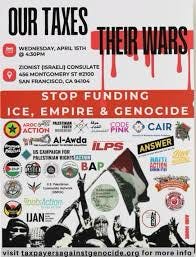
The mechanism was a coordinated deployment of every suppressive tool in the American institutional arsenal, applied simultaneously across multiple domains. University administrations, under documented pressure from pro-Israel donors and organizations, suspended Palestinian student groups, canceled events, disciplined and fired faculty, and cooperated with federal investigations and handed names of students, faculty, and staff to the Trump Administration. The Department of Education’s Office for Civil Rights launched investigations into universities under the banner of antisemitism, a process systematically deployed to suppress pro-Palestinian speech. The IRS and Treasury Department turned their audit and designation powers toward Palestinian-linked organizations. And the Department of Homeland Security, under the Trump administration that returned to power in January 2025, activated ICE as the enforcement arm of an explicitly ideological targeting campaign.
Milwaukee County Executive David Crowley described the operational logic of this campaign in his formal statement about Sarsour’s arrest: “Agents did not stumble upon Mr. Sarsour. They followed him and monitored him based on his profile and the community he leads. That is religious profiling and government surveillance of a faith community happening right here in Milwaukee, and this administration expects us to simply accept it. We will not.”[20]
Central to the post-October 2023 targeting campaign is Canary Mission, an anonymous, Israel-based doxxing operation that has compiled profiles of thousands of students, academics, and activists accused of pro-Palestinian activism or criticism of Israel. The site posts photographs, social media profiles, and personal details, labeling its subjects as supporters of terrorism, often on the basis of a single co-authored opinion piece, attendance at a protest, or a social media post. Haaretz reported in 2023 that Israeli intelligence organizations, including the Shin Bet, use Canary Mission profiles, and that the Ministry of Strategic Affairs deployed the site in deportation proceedings against Palestinian activists seeking entry to Israel.[21]
In July 2025, a senior Department of Homeland Security official confirmed under oath in federal court that ICE investigators had relied heavily on Canary Mission profiles to identify pro-Palestinian student protesters for deportation.[22] Newly unsealed court records and trial testimony revealed that top Trump advisor Stephen Miller was personally and deeply involved in the targeting operation. John Armstrong, acting chief of the State Department’s Bureau of Consular Affairs, testified that Miller participated in interagency conference calls related to the student deportation drive “at one point at least weekly,” with calls including officials from the State and Homeland Security departments.[23
]A January 2026 investigation by Drop Site News revealed Canary Mission’s internal strategic documents. The organization used facial recognition software combined with social media scraping to produce 150 new activist profiles per week. Its explicitly stated goals included dismantling specific organizations: Students for Justice in Palestine, American Muslims for Palestine, Jewish Voice for Peace, CAIR, and others. The documents’ time zones corresponded to Israel.[24]
The arrest of Rümeysa Öztürk, a Turkish doctoral student at Tufts University, came within weeks of her being profiled on Canary Mission for co-writing an opinion piece in her university’s student newspaper.[25] The arrest of Mohsen Mahdawi, a Palestinian Columbia University student who had lived in the United States for a decade and was applying for citizenship, came at what he had been told was a naturalization interview. He had been targeted by Canary Mission and by the pro-Israel organization Betar.[26] The connection to Sarsour’s arrest is not metaphorical. It is operational and specific.
A private, anonymously funded doxxing operation based in Israel has been formally integrated into U.S. immigration enforcement. This is not a policy failure. It is the policy.
The targeting of Palestinians in the United States cannot be understood apart from what researchers, including the Islamophobia Studies Center, have documented as the Islamophobia industry: a network of organizations, think tanks, media operations, and political donors that produces, funds, and distributes anti-Muslim content and policy advocacy, with particular intensity directed at any Muslim or Arab voice that challenges Israeli policy. By making Muslim identity a synonym for potential terrorism, this industry makes Palestinian, Arab, and Muslim identity a permanent liability in American public life.
The Anti-Defamation League sits at the center of this apparatus, and its role requires examination that goes beyond recent controversies. The ADL presents itself as a civil rights organization. Its operational history tells a different story.
ADL’s structural complicity in Islamophobia, not defense of civil and human rights, is apparent when examining key episodes in recent U.S. history in which Palestinian and Muslim communities have faced state persecution. The “LA 8” case discussed above is an early and telling example. The ADL provided intelligence reports to federal authorities that framed these individuals as security threats, even though they faced no terrorism charges and had committed no crimes. Rather than defending the activists’ rights to political expression, the ADL aligned itself with immigration policing that criminalized Palestinian identity.

I have followed the LA 8 case since 1987 and have seen the consequences that led to the US Supreme Court decision denying 1st Amendment Rights to non-citizen aliens and green card holders. Professor David Cole, who argued the case on behalf of ADC, said, “We were blindsided. The court has effectively denied to all immigrants in this country the right to engage in the same political activities that citizens have an unquestioned 1st Amendment right to engage in, and they did so after telling us not to address that issue.” The attacks on student activists on college campuses and arrests of non-citizens engaging in 1st Amendment activities need look no further than the LA 8 case and the ADL’s entanglement with it to protect Israel at all costs and punish Palestinian voices no matter the price. The ADL’s war on the 1st Amendment of the U.S. Constitution is situated around the protection and preservation of Israel’s interests and Zionism while creating the Islamophobic and anti-Palestinian social imaginary in civil society.
In 1993, the San Francisco District Attorney investigated the ADL for collecting confidential information on nearly 10,000 activists and at least 700 organizations. San Francisco police searched two ADL offices, confiscating police records, including fingerprints and copies of confidential reports.[27][28] I was directly involved in organizing for Palestine and the Anti-Apartheid Movement at San Francisco State University and followed the case, which revealed that the ADL had been operating a sophisticated and extensive spying operation, not on neo-Nazis, but on the American peace and social justice movement. The ADL’s undercover operative, Roy Bullock, had worked for the organization for over four decades, building a database that included files on Arab-American organizations, Palestine solidarity groups, anti-apartheid activists, the NAACP, the United Farm Workers, the National Lawyers Guild, Greenpeace, and the American Indian Movement. Bullock had simultaneously served as an informant for South African apartheid intelligence.[29] As the lead plaintiff’s attorney noted at the time: one wonders what would have happened had an Arab American or Muslim organization been caught with the names of 10,000 people and 600 organizations in their files.[30]
The ADL presented this not as political espionage but as the legitimate monitoring of “anti-Israel” and “anti-Semitic” elements. However, the breadth of the targets demonstrated that the ADL’s mandate had expanded to include the surveillance of any group critical of U.S. or Israeli foreign policy. The insidious nature of the ADL action can be inferred from Roy Bullock’s actions: he was sent to volunteer as a data entry person for the Bay Area Spring Mobilization for Peace and Jobs, which enabled him to compile information on all those active in the movement. In addition, Bullock joined ADC delegations to visit local Congress offices while all along being an agent of the ADL spying on the local Arab and Palestinian community. Adding insult to injury, Roy Bullock made sure to include ADC on the mailing list of White Supremacist groups to tarnish their standing and implicate them with real long-standing anti-Semitism in Western societies. The case was eventually settled with the ADL paying a financial settlement and admitting no wrongdoing, but it established a clear precedent: the organization was willing to employ extralegal and spying tactics to monitor and disrupt opponents of Israel in the US. This established a modus operandi of conflating pro-Palestinian advocacy with the weaponization of anti-Semitism, a tactic that would be refined and amplified in the coming decades.
Today, the ADL, as its 2016 annual report boasts, is the single largest non-governmental police trainer in the United States.[31] Through its National Counter-Terrorism Seminar, which was launched in 2004, the ADL has brought more than 200 top-ranking U.S. law enforcement officials, including police chiefs and ICE officers, to Israel to train with Israeli police, military, and intelligence agencies, including the Shin Bet. Through its Advanced Training School, it has brought those same Israeli forces to train more than 1,000 U.S. police, ICE, and border officials on American soil.[32] The ADL’s own director of law enforcement initiatives described the intended outcome with candor: participants in these Israel trips “come back and they are Zionists.”[33]
The consequences of this “Deadly Exchange”, the term coined by Jewish Voice for Peace for its campaign to end these programs, are not abstract. The NYPD’s notorious Demographics Unit, which mapped entire Muslim communities and deployed “mosque crawlers” to surveil worshippers as potential terrorists, was modeled, in the words of its own architect, “in part on how Israeli authorities operate in the West Bank.”[34] NYPD Commissioner Ray Kelly, who oversaw both that mass surveillance program and the expansion of stop-and-frisk policing targeting Black and Latino New Yorkers, had participated in ADL-sponsored Israel training programs.[35] The St. Louis County Police Department, the same department that besieged Ferguson following the killing of Michael Brown, had sent its police chief through the same ADL pipeline. Less than a year after Michael Brown’s death, the St. Louis ADL formally honored the St. Louis Metropolitan Police Department.[36]
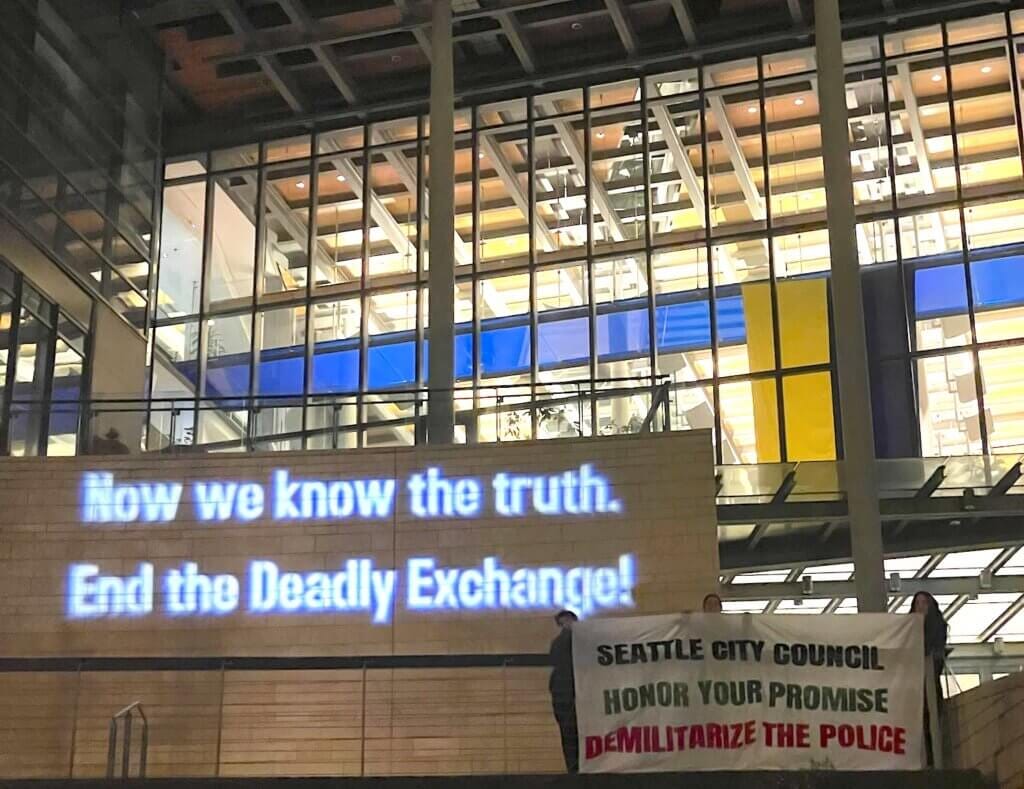
The Deadly Exchange is not a fringe program. It is the direct transmission belt between Israeli occupation methodology and American law enforcement practice, and its ideological core is the proposition that Palestinian communities, Muslim communities, and their American allies are a counterinsurgency problem to be managed rather than a population of citizens with constitutional rights. When ICE agents follow Salah Sarsour from his home, surround his car with ten agents, and transport him across state lines before his family knows where he is, they are enacting a doctrine refined in the occupied West Bank and imported through training programs the ADL ran and celebrated.
The ADL has endorsed both of Donald Trump’s executive orders targeting critics of Israel, the 2019 order and the February 2025 order that explicitly threatens non-citizens with deportation for pro-Palestinian protests. It has not condemned the arrests of Mahmoud Khalil, Rümeysa Öztürk, Mohsen Mahdawi, or Salah Sarsour.[37]Former ADL staff have described CEO Jonathan Greenblatt as repeatedly choosing to support crackdowns on criticism of Israel over protecting civil liberties, putting him in conflict with the ADL’s own civil rights office.[38] One former regional development director put it plainly: the ADL is “willing to throw Palestinians under the bus” to maximize fundraising.[39]
Betar, the far-right Zionist organization that targeted Mohsen Mahdawi for deportation and claims to have provided the Trump administration with lists of hundreds of activists it wants deported, operates at the violent edge of this same ecosystem. The New York Attorney General’s office investigated Betar in early 2025 after receiving multiple complaints and found a documented pattern of violence and harassment driven by explicit anti-Palestinian, anti-Arab, and anti-Muslim hostility, including members physically forcing beepers onto people wearing hijabs and keffiyehs.[40] The Washington Post confirmed that Betar had publicly put Mahmoud Khalil on its “deport list” six weeks before his arrest.[41] Betar’s spokesperson, after Khalil’s detention, said: “While we thank the Trump Administration, we urge many more deportations and quicker.”[42]
The ADL labeled Betar an extremist organization.[43] But the distinction between them is one of style, not function. Both organizations work to suppress Palestinian political voices. The ADL does so through police training programs, lobbying, Title VI complaints, and public campaigns that equate Palestinian advocacy with terrorism. Betar does so through doxxing, harassment, bounty offers, and physical intimidation. Together with AIPAC, which poured nine-figure sums through its Super PAC into primary campaigns targeting members of Congress who voted for ceasefire resolutions, these organizations constitute the institutional infrastructure through which the United States government is made to act as an extension of Israeli suppression policy.[44]
This is not a conspiracy. It is a network that is openly documented, funded, and operating. The “Deadly Exchange” trains the police. Canary Mission profiles the targets. Betar provides the deportation lists. The ADL provides the legal cover and the political legitimacy needed to rally and placate civil society. AIPAC funds the political consequences for anyone who resists. And ICE executes the arrests. What happened to Salah Sarsour on March 30, 2026, on a Milwaukee street is the output of that entire machine.
Salah Sarsour arrived in the United States in 1993 from the occupied West Bank, where, as a teenager living under Israeli military occupation, he was detained, subjected to what the Islamic Society of Milwaukee describes as Israeli military brutality, and convicted by an Israeli military court. He says the proceedings were conducted in Hebrew, which he did not understand, and that his confession was coerced. He disclosed his record to American immigration authorities upon arrival in 1993. They approved his residency. They knew.[45]
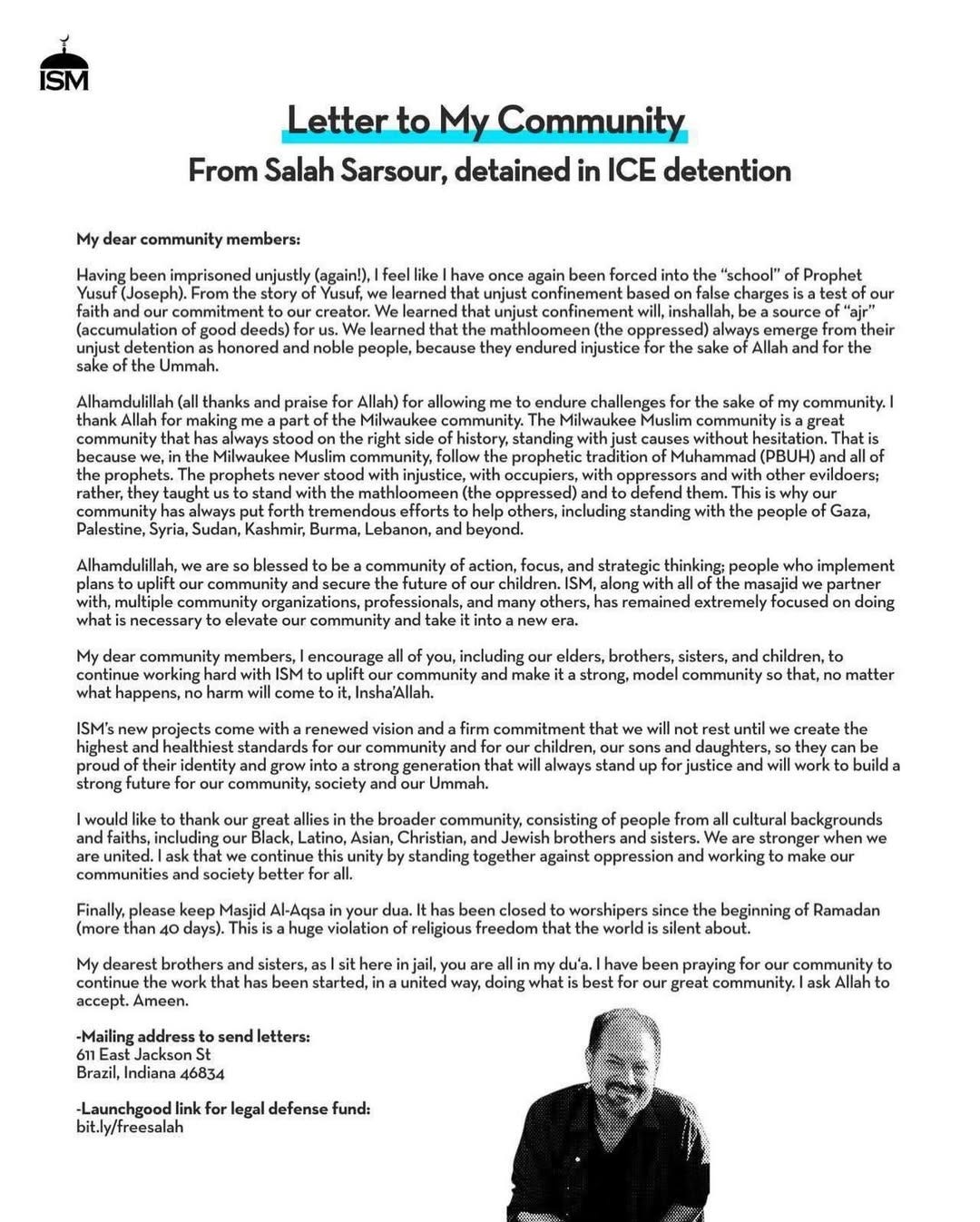
For 32 years, Salah Sarsour built a life in Milwaukee. He raised four children who are American citizens, and their children are all American citizens. He married an American citizen. He became the volunteer president of the Islamic Society of Milwaukee, the largest Islamic organization in Wisconsin, a pillar of his community in every dimension: as a civic leader, a businessman, a father, a grandfather, and through American Muslims for Palestine and Muslim American Society, a voice for Palestinians living under occupation and siege. And then, as the genocide in Gaza unfolded in real time, as he spoke publicly about what he saw happening to his people, ten-armed federal agents surrounded his car on a Milwaukee street and transported him to a detention center in Indiana.[46]
Milwaukee Mayor Cavalier Johnson was unequivocal: “He is a legal permanent resident. There is no substantive evidence he has done anything wrong. This is another example of overreach and harm from the U.S. immigration authorities.”[47] County Executive David Crowley called it “an affront to everything Milwaukee stands for” and condemned “religious profiling and government surveillance of a faith community.” CAIR, the Muslim Legal Fund of America, the ACLU of Wisconsin, the Islamophobia Studies Center, and dozens of national civil rights organizations called for his immediate release, stating plainly in a joint letter: “Salah is being targeted on the basis of his Palestinian and Muslim background.”[48]
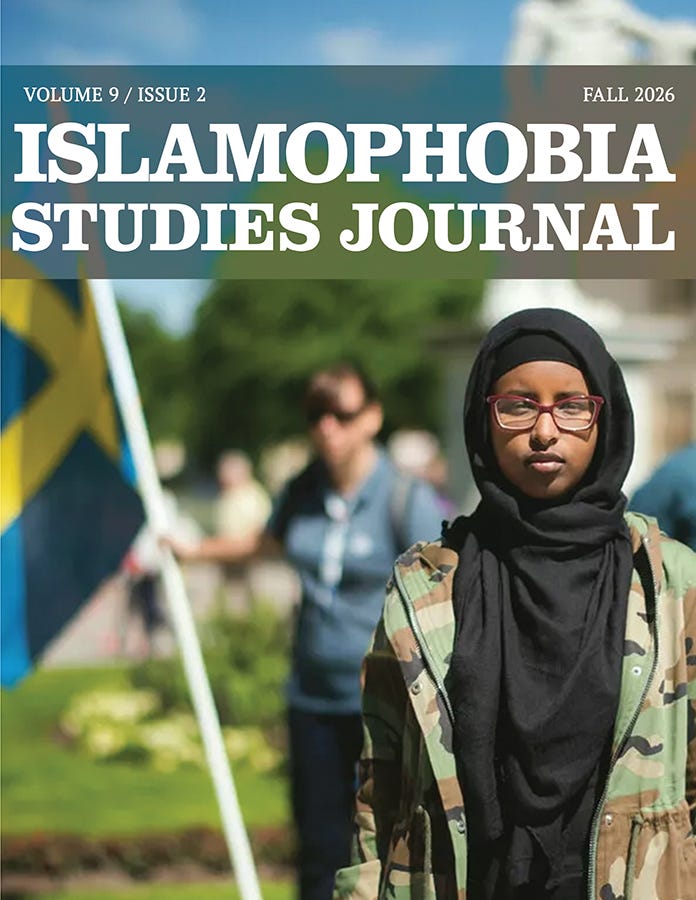
The DHS, in its public statement, called Sarsour, a man with no criminal record in the United States, a man who has lived lawfully here for over three decades, a “terrorist” and a “criminal illegal alien from Jordan.”[49]The language is not incidental. It is the culmination of a fifty-year project to make Palestinian identity, in the American political imagination, synonymous with terrorism. This is the Islamophobic imaginary put into circulation. It is what Operation Boulder started. It is what the LA8 case was designed to normalize. It is what the Holy Land Foundation prosecution was meant to institutionalize. And it is what Canary Mission, the ADL, Betar, and the broader Islamophobia industry — funded by the same networks that bankroll American support for Israeli impunity have spent decades manufacturing as political reality.
The goal of arresting Salah Sarsour is not to deport a dangerous man. There is no dangerous man here. The goal is to send a message to every Palestinian community leader, every mosque president, every activist, every student, every professor who has spoken publicly about Gaza that your green card is a hostage, your legal status is a threat, and your political voice will cost you everything. Protecting Israel and Netanyahu means targeting everyone who speaks and organizes to stop the genocide. The goal is to make the cost of bearing witness to genocide too high to pay. That is not immigration enforcement. It is political terror conducted through the machinery of the state.
It will not work.
It did not work in 1987, when the LA8 refused to be deported and fought for twenty years until they won. It did not work against the Holy Land Five, whose imprisonment became a cause that galvanized, rather than silenced, Palestinian-American organizing. It will not work against Salah Sarsour, whose arrest has brought thousands of Milwaukee residents, clergy, elected officials, and national rights organizations into the streets. Every arrest of a Palestinian community leader produces not the silence the architects of suppression intend but a deeper and more resolute solidarity. The Palestinian community in the United States has been fighting this war for fifty years. They know its rhythms, its legal tactics, its political logic. They have seen this before. They are still here and getting stronger.
The question is not whether Salah Sarsour will be silenced. He will not. The question is whether the United States will continue to use its immigration system, its federal agencies, and its outsourced Israeli surveillance networks as weapons of political persecution in the service of a state conducting genocide. That question belongs not to lawyers or to immigration judges. It belongs to everyone.

