In Nineteen Eighty-Four, the most chilling instrument of the regime is not the boot or the cell. It is the memory hole, the small chute beside every desk into which inconvenient facts are dropped, incinerated, and unmade. Winston Smith’s job at the Ministry of Truth is to feed it, to revise the record, to delete the unwanted name, to ensure that what happened did not happen and that what is happening cannot be spoken. Orwell understood that tyranny’s first ambition is not over the body but over the word. Narrow the language, he showed us, and you narrow the range of the possible. Make a thought unsayable, and in time, you make it unthinkable. The slogan was efficient; who controls the present controls the past, and the present on genocide in Gaza is being edited.
I have spent my career at the university, believing it to be the one institution charged, above all others, with resisting the memory hole. The classroom is supposed to be the place where the record is kept open, where the uncomfortable name is spoken precisely because it is uncomfortable, where the student is taught not what to think but how to interrogate society’s assumptions and power. That belief is now being tested in the most literal Orwellian terms. Across North American and European campuses, a coordinated effort is underway to cleanse the syllabus, to scrub Palestine from the curriculum, from the lecture hall, from the gallery wall, and from the commencement stage, and to render a single word, genocide, into the contemporary equivalent of thought crime.
Let me be unambiguous, because the moment demands it and because hedging is itself a form of complicity. What is taking place in Gaza is a genocide. This is not, at the level of professional scholarship, a matter of debate. The legal architecture is in place with South Africa’s case before the International Court of Justice, the Court’s provisional measures, the findings of the world’s leading scholars of genocide and the major human rights organizations, the daily evidentiary record of mass killing, deliberate starvation, and the systematic destruction of the conditions of life. The scholars whose entire discipline exists to name this phenomenon have named it. The remaining disagreement is not scholarly; rather, it is manufactured, the product of what is openly called the Hasbara network and the Israeli public-relations apparatus, whose institutional purpose is to convince us that what our own eyes and instruments document is somehow still an open question. You can add a $730 million Hasbara funding package for 2026 to operate and perfect the present Israeli memory hole.
The campaign to cleanse the syllabus is the academic front of the Hasbara memory hole apparatus. Its tactics are by now familiar to anyone watching, and each maps onto the machinery Orwell described with grim precision.
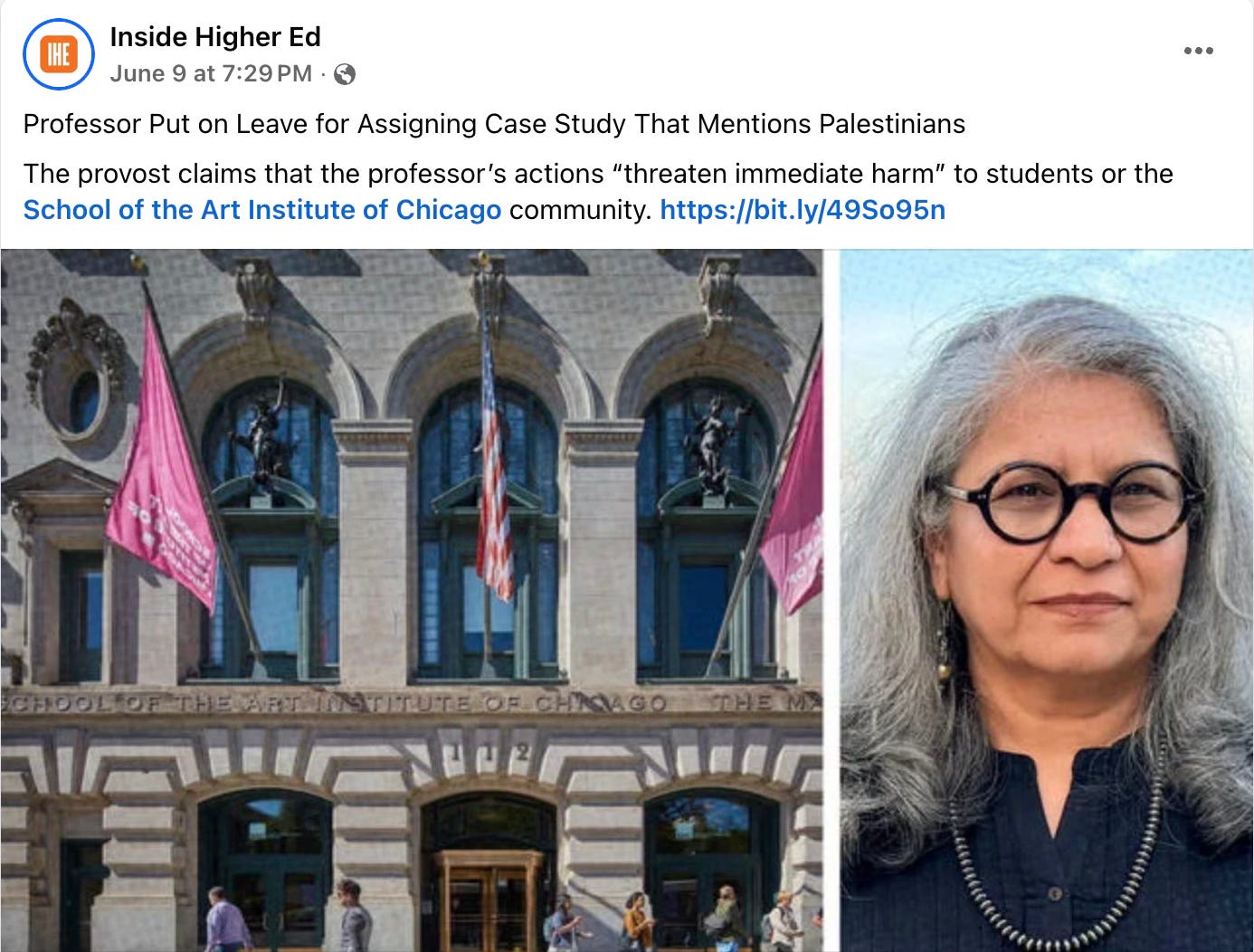
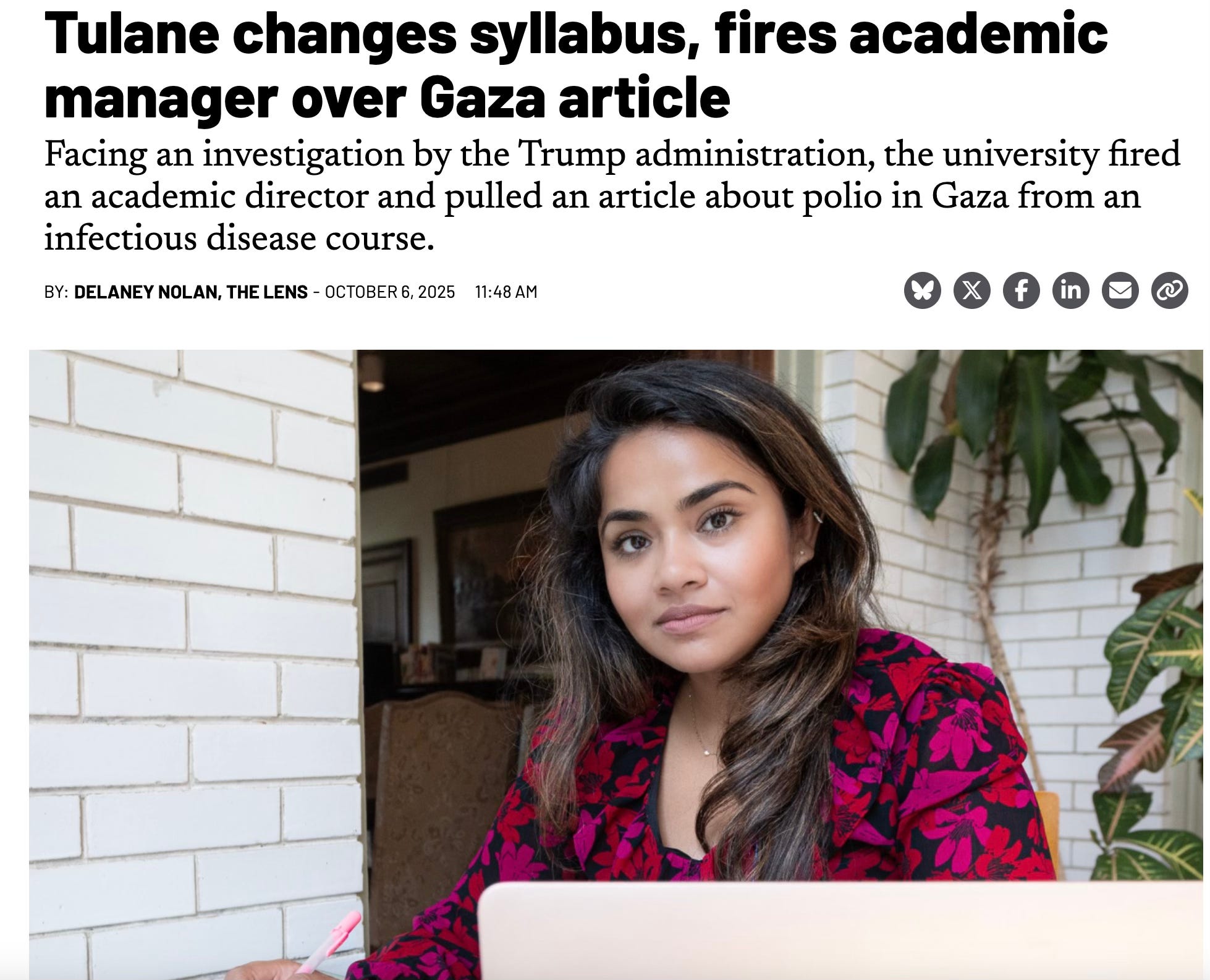
Faculty who spoke have been fired. Others have been suspended “pending further investigation,” that elastic phrase that punishes through process while pretending to reserve judgment; the suspension itself is the sentence regardless of the verdict. Untenured colleagues have learned that a public statement of empathy for a child in Rafah can end a career before it begins. Tenured colleagues have discovered that tenure, the very protection designed for this moment, dissolves the instant a donor, a trustee, or a member of Congress is displeased. The message is broadcast not only to the punished but to the watching; this is the cost of speech, and the cost is your livelihood and academic standing.
Funding is the quieter weapon. Research grants are withheld, programs are defunded, centers are quietly starved, and the administrators who do the starving rarely have to say the word Palestine aloud. The budget line does the censoring for them, the most effective memory hole in the whole operation. A program that cannot be openly banned can be allowed to die of induced poverty, and the killing leaves no fingerprints, the most sophisticated tool of silencing.
And then there is the instrument that pretends to be a shield, the weaponized deployment of the IHRA definition of antisemitism. The fight against antisemitism is real, urgent, and morally non-negotiable, which is precisely why its instrumentalization is so corrosive. The IHRA definition, with its contested examples conflating criticism of the state of Israel with hatred of Jews, has been repurposed into a bureaucratic scalpel. With it, administrations have shut down art exhibits, canceled film screenings, closed multicultural centers, ended the Middle Eastern Studies program, fired the directors, disinvited commencement speakers, and, in some cases, canceled student speech at graduation altogether rather than risk a Palestinian word reaching a microphone, the memory hole operating in real time. A definition crafted, in theory, to protect a people has been hollowed out and refilled to protect a foreign state and genocide policy. That is doublethink in its purest institutional form, the simultaneous claim to be defending against bigotry while practicing the suppression of an entire people’s narration of its own annihilation.
What unites every one of these tactics is that none of them is about safety, and none is about scholarship. They are about the university's image and funding. They are an exercise in reputation management on behalf of a state conducting a genocide that has been underway, in plain sight, for the better part of three years. The university is being conscripted into the cover-up and asked not merely to look away but to actively maintain the silence, to keep the memory hole fed, to ensure that the generation now passing through its classrooms graduates without the vocabulary to describe the defining atrocity of its own time.
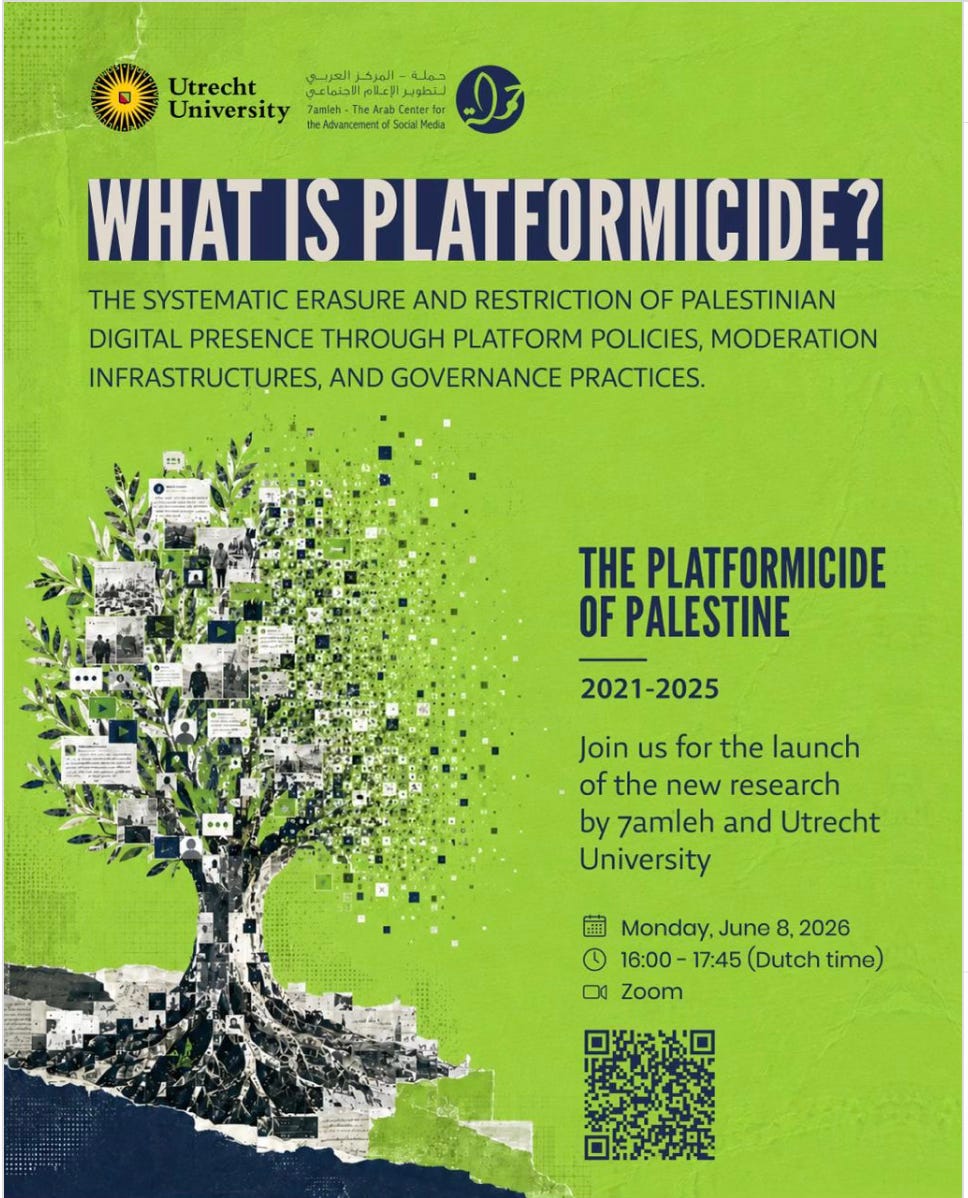
Orwell’s deepest insight was that this works. The narrowing of language does eventually narrow thought. A student who is taught that genocide is an unsayable word, a slur, a career-ending provocation, will in time struggle to think the concept at all. That is the project. Not to win the argument, the argument is lost, which is why it must be suppressed rather than engaged, but to abolish the conditions under which the argument can be had. We should refuse, and the refusal must be specific. It is not enough to defend “academic freedom” in the abstract while the particular freedom under assault goes unnamed. The freedom being cleansed is the freedom to name Gaza. The empathy being criminalized is empathy for Palestinians. To speak of the principle while avoiding the case is to perform exactly the evasion the apparatus desires. The scholar’s obligation is the opposite of the censor’s; to keep the record open, to speak the name, to teach the word, and to insist, calmly, repeatedly, on the strength of the evidence and the discipline that what is happening in Gaza is a genocide and that no public-relations machine, however well-funded, gets to relocate that fact into the memory hole.
The university will be judged, as it was judged after every prior complicity, by what it permitted to be said within its walls while the killing went on. There is still time to be on the side of the spoken word. But the chute beside the administrator’s desk is open, and the incinerator is running, and the question for each of us is whether we feed it or refuse.

