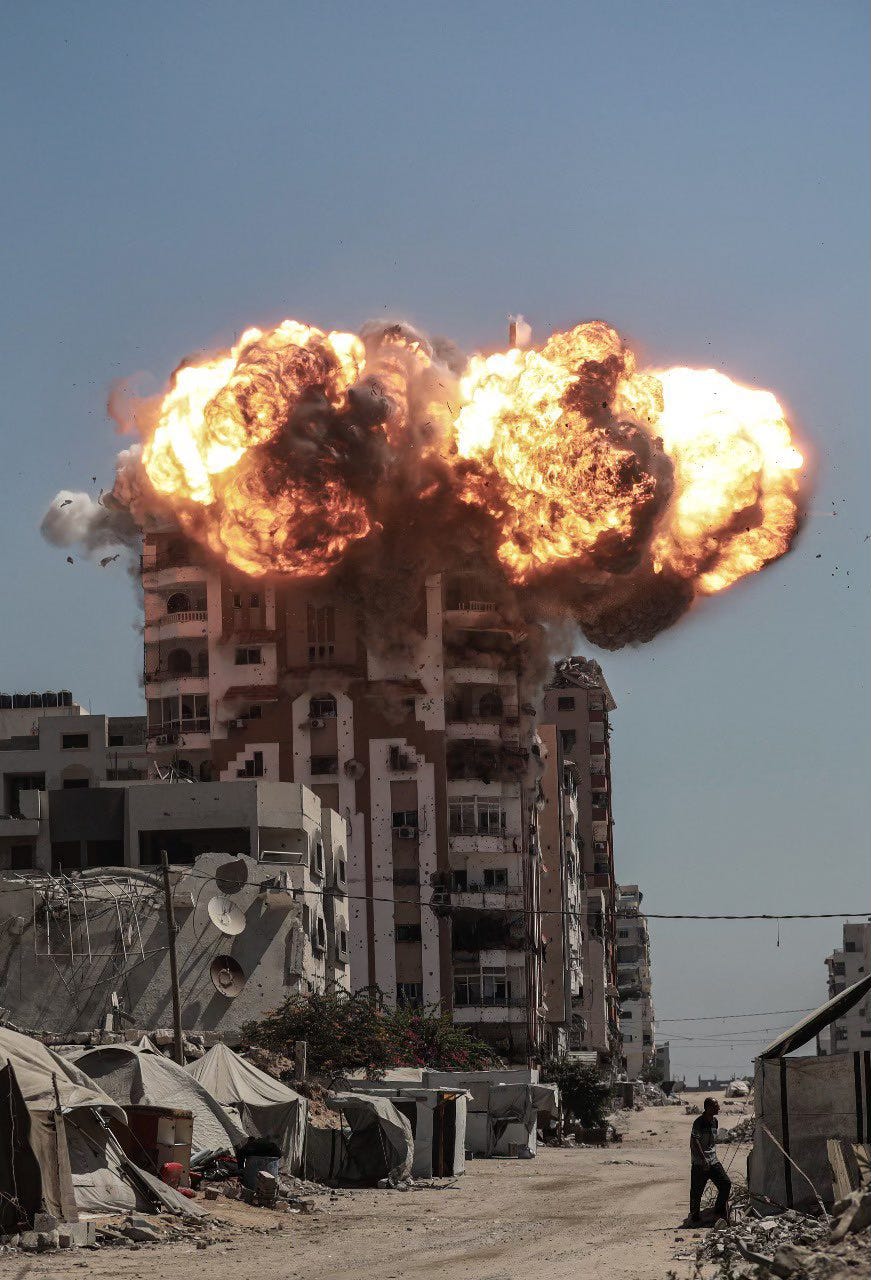
The smoke rising over Gaza is seen, distorted and ignored, through many lenses. For some, it is the tragic fallout of an attack and a subsequent military campaign. For others, it is a precise instance of a disproportionate response and genocide. But for a robust and influential segment in the US and Europe, and particularly within certain strands of American evangelicalism, the devastation is not merely a geopolitical event; it is a necessary, even divinely ordained, precursor to the culmination of the final chapter of history itself. According to this view, we are witnessing and participating in the divine narrative of the end of times. This perspective forces a harrowing theological and ethical question: Does God desire war and destruction as the necessary instruments for the Second Coming of Jesus Christ?
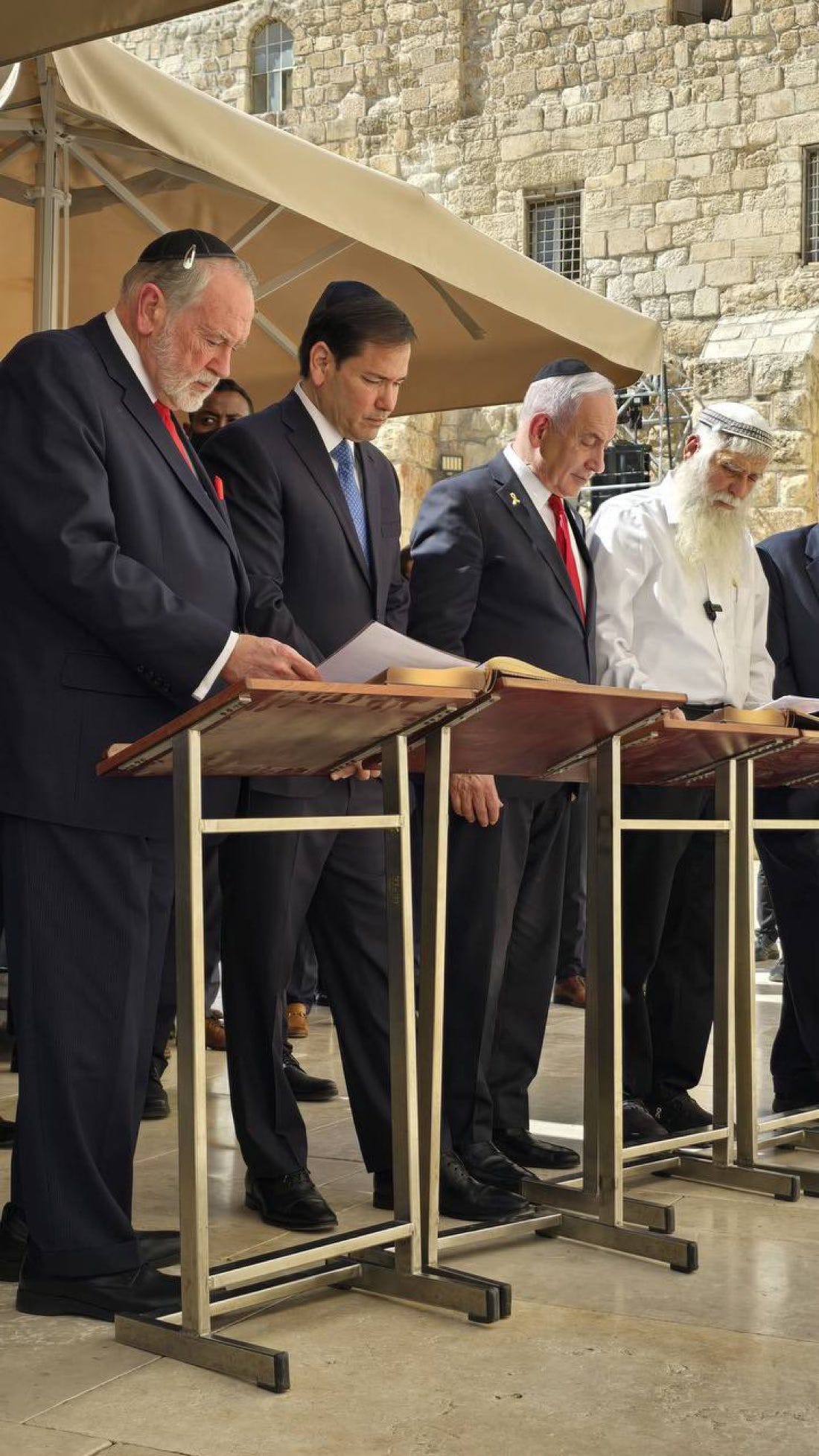
The answer, upon serious theological examination, must be a resounding no. Broadly speaking, theological discourses and interpretations of religious texts are a human endeavor influenced by the political, social, and economic conditions of every period. Indeed, marshalling religious text to cloak imperial projects with divine purpose is as old as human beings being on earth. As U.S. Ambassador to Israel, Mike Huckabee has stated that the Israeli-Palestinian conflict is fundamentally a "spiritual" battle, not a geopolitical one. In his view, God gave the land to the Jewish people thousands of years ago, a covenantal relationship that is central to his worldview.
What we are witnessing is the perilous entanglement of foreign policy, ancient apocalyptic beliefs, with modern neoliberal economics, militarism, and “success theology,” creating a violent ideology that risks escalating into a global WWIII confrontation. The war is being stoked in the hope for the Second Coming of Jesus Christ, but the question is what will happen before and after to the non-Christian world population! I leave the answer for all to contemplate and ask of those who witness a God of War, rather than one of love, faith, and a call to attend to the stranger.
The theological framework in question is primarily a modern American interpretation of Dispensational Premillennialism, popularized by the 20th-century Scofield Reference Bible and later by figures like Hal Lindsey and John Hagee. This system posits a detailed, literalistic timeline for the end of the world, which includes the rapture of the church, seven years of tribulation, the rise of a global dictator (the Antichrist), and a final, catastrophic war at Armageddon in Israel, culminating in Christ’s return to establish a literal thousand-year reign.
The role of the United States became associated with this theological framework, where Protestant ministers utilized millennialism to feed the flames of nationalism and Manifest Destiny. For example, Samuel H. Cox, a leading Presbyterian minister of the 1840s, told an English audience that "in America, the state of society is without parallel in universal history.… I really believe that God has got America within anchorage, and that upon that arena, He intends to display his prodigies for the millennium." Here, we have the fusion of American history, exceptionalism, and theology.
Crucially, this framework requires the specific nation-state of Israel to play a central role. For this prophecy to be “fulfilled,” Israel must have “the biblical lands”, a Jewish temple must be rebuilt in Jerusalem (necessitating the destruction of the Islamic holy sites in Jerusalem), and the nations of the world must eventually turn against it. Within this hermeneutic, modern political Zionism is not just a secular nationalist movement but a direct instrument of God’s prophetic plan. Any action that strengthens the Israeli state, including the violent seizure of land and the suppression of its inhabitants, is thus seen as indirectly advancing God’s will and hastening the return of Christ.
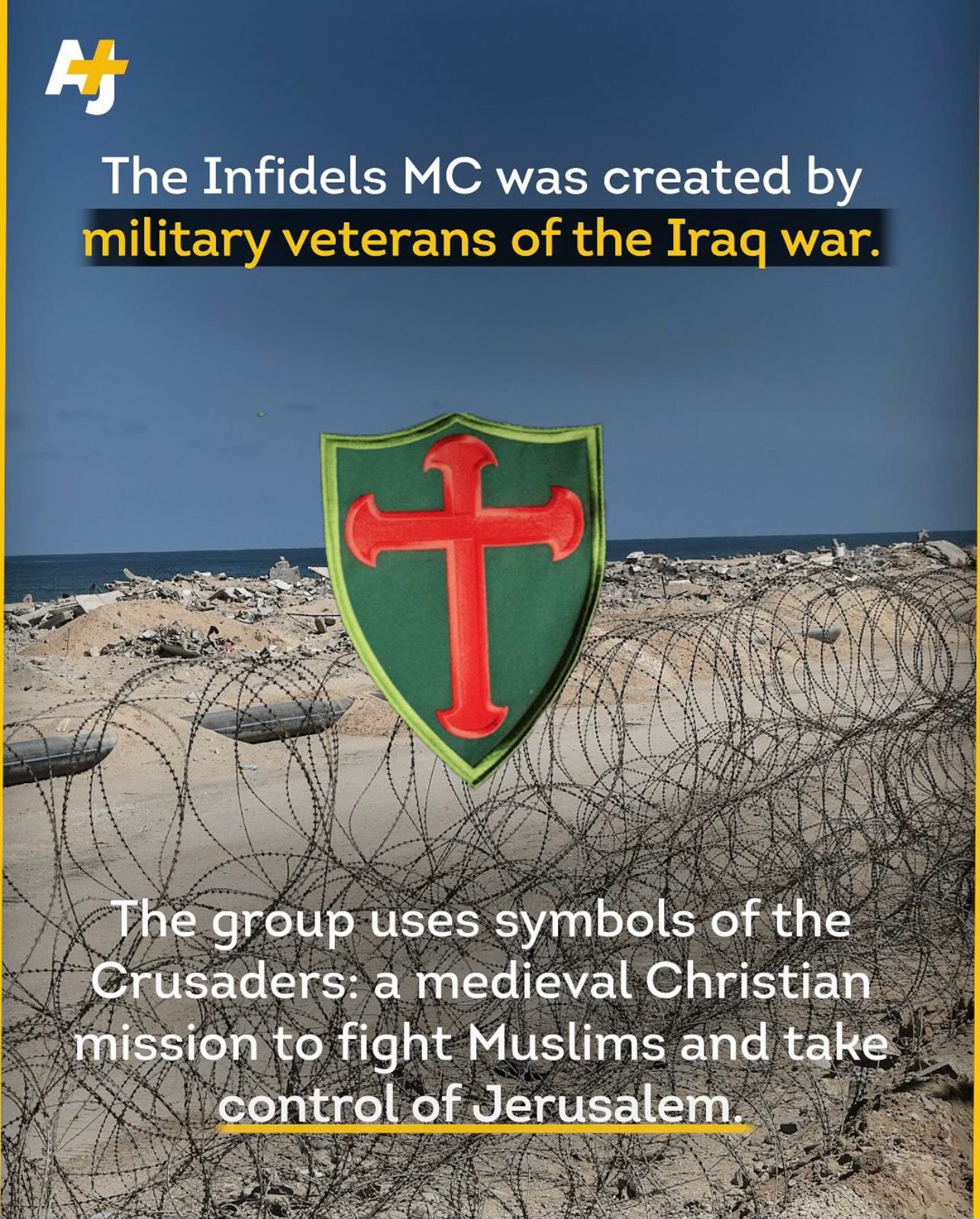
This is where the first critical distortion occurs: the conflation of divine sovereignty with human agency. Classical Christian theology has long held that God’s ultimate victory is assured, but the path to that victory is not meant to be paved by human sin. To argue that God needs humans to commit acts of ethnic cleansing, genocide, to wage war, and to perpetuate injustice to achieve His ends is to create a theology where the ends justify any means. Maybe this fits into the US’s imperial history and interests, as well as Netanyahu’s desire to receive all the aid that is needed to continue the settler colonial project. It transforms the God of justice and mercy into a celestial scriptwriter demanding a real-world blood sacrifice. It absolves believers of ethical responsibility in the present, as their role is reduced to cheering for the events that signal the approaching end, no matter how horrific they may be.
This eschatological framework did not emerge in a vacuum. It found fertile ground in the late 20th and early 21st-century American expansionist landscape, where it became intertwined with three powerful secular forces: neoliberal economics, militarism, and the Prosperity Gospel.
The road to neoliberal economics, the Republican Party and its links to the Christian right take their initial steps after the 1960s Civil Rights Movement. The alliance between the Christian right and the Republican Party, solidified in the 1980s, was a marriage of social conservatism and crony free-market fundamentalism. The same figures and institutions that championed deregulation, tax cuts for the wealthy, and the erosion of the social safety net were also the most ardent supporters of unconditional aid and military support for Israel. This created a feedback loop: support for Israel became a litmus test for political power, and that political power was used to further an economic agenda that concentrated wealth. This wealth, in turn, funded the megachurches, media empires, and lobbying groups (like John Hagee’s Christians United for Israel - CUFI) that promote this specific end-times narrative. The struggle is framed as a spiritual war between good and evil, which maps neatly onto a neoliberal worldview of us-versus-them, where “us” is a Christian, capitalist West allied with Israel, and “them” is everyone else.
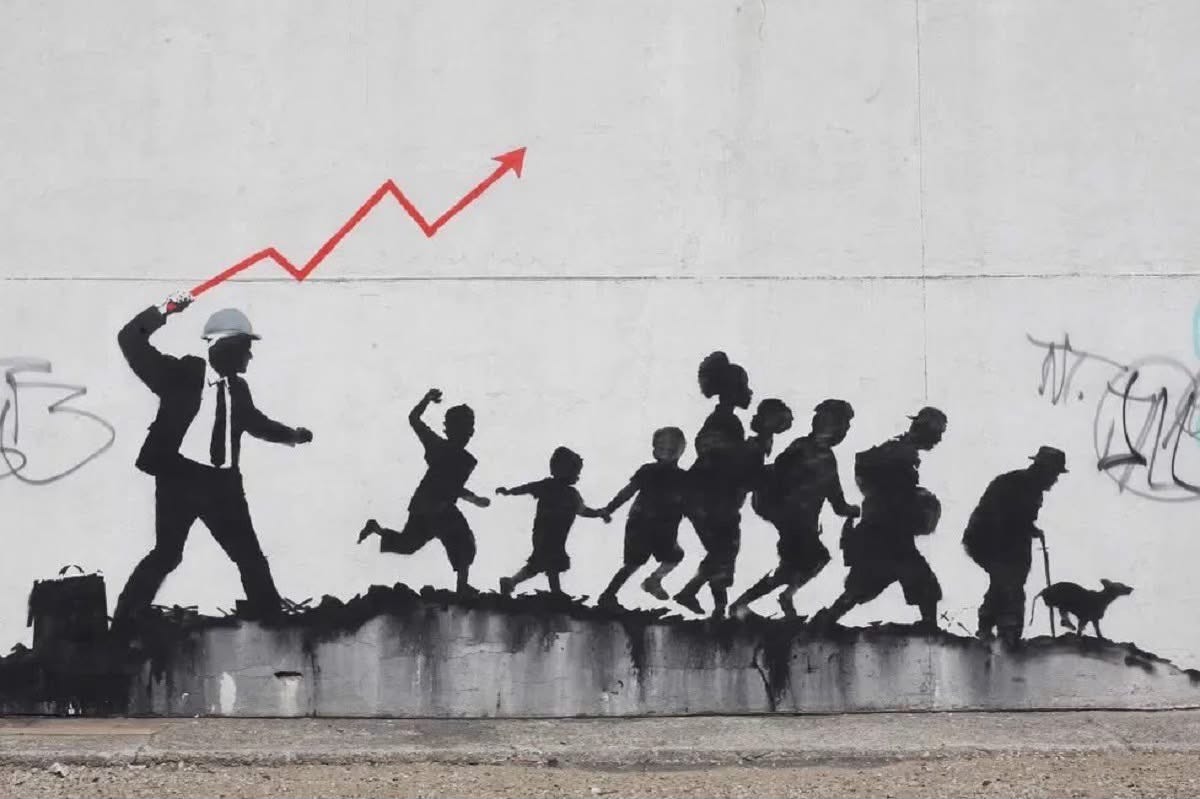
As an extension of and growth of neoliberal economics is the emergence of the Prosperity Gospel. Often dubbed “Name It and Claim It” or the “Health and Wealth” gospel, this heresy posits that financial blessing and physical well-being are always the will of God for believers, and that such blessings can be secured through faith, positive speech, and donations (“seed faith”) to religious ministries. This theology dovetails perfectly with militarism and nationalist fervor. If America is a “Christian nation,” then its military and economic supremacy are signs of God’s favor. Support for the world’s most potent military becomes a spiritual act, a defense of God’s chosen instrument on the world stage. Donating to a pastor who preaches this gospel and also champions the bombing of Gaza becomes a two-fold “investment”: one secures personal blessing, and the other helps fund the propaganda that advances the “prophetic” war one believes God wants.
This brings us to the current crisis in Gaza. For ideologues steeped in this worldview, the Palestinian people are not a nation with a right to self-determination; they are at best a prophetic obstacle and at worst the descendants of Amalekites—a biblical people God commanded Israel to destroy utterly. When politicians and media figures dehumanize Palestinians by referencing Amalek, as some have done, they are not merely using harsh rhetoric. They are invoking a genocidal framework and sanctifying it with scripture.
The destruction of Gaza, the staggering death toll, and the forced displacement are thus framed not as a humanitarian catastrophe but as a necessary step in a divine plan. It is the “cleansing” of the land for its eventual full Israeli possession, which in turn sets the stage for the final drama. This framing provides a powerful justification for otherwise unconscionable violence. It allows its adherents to view graphic images of dead children not with horror, but with a sense of grim fulfillment—a sign that “things are going according to plan.” This is the ultimate ethical failure: the sacrifice of real, living human beings on the altar of a speculative end-times timeline.
The danger of this ideology extends far beyond the borders of Israel and Palestine. By framing global politics as a binary spiritual battle, it creates a mindset that eagerly anticipates —and may even work to stoke —a larger conflict, with a self-constructed assured victory. The war in Ukraine, Syria, Sudan, tensions with Iran and China, and broader regional instability are all easily slotted into the “wars and rumors of wars” narrative that is supposed to precede the end. The logical endpoint of this ideology is a willingness, even an eagerness, to see a World War III, interpreted not as the ultimate human failure but as the thrilling climax of God’s story. Humans made history, and free will is intentionally and maliciously ascribed a divine purpose.
This represents a profound betrayal of the core message of Jesus Christ, who called his followers to be peacemakers, to love their enemies, and to pray for those who persecute them. The one who stopped Peter from wielding the sword and who wept over Jerusalem’s future destruction is now presented as a general marshaling armies for a final bloodbath. This theology replaces the “crucified Messiah” with a divine imperial Terminator flying an F-16 and F-35 to bomb refugee camps. God and theology are made into instruments of empire, and religious figures operate as handmaidens in this humanly manufactured, destructive drama.
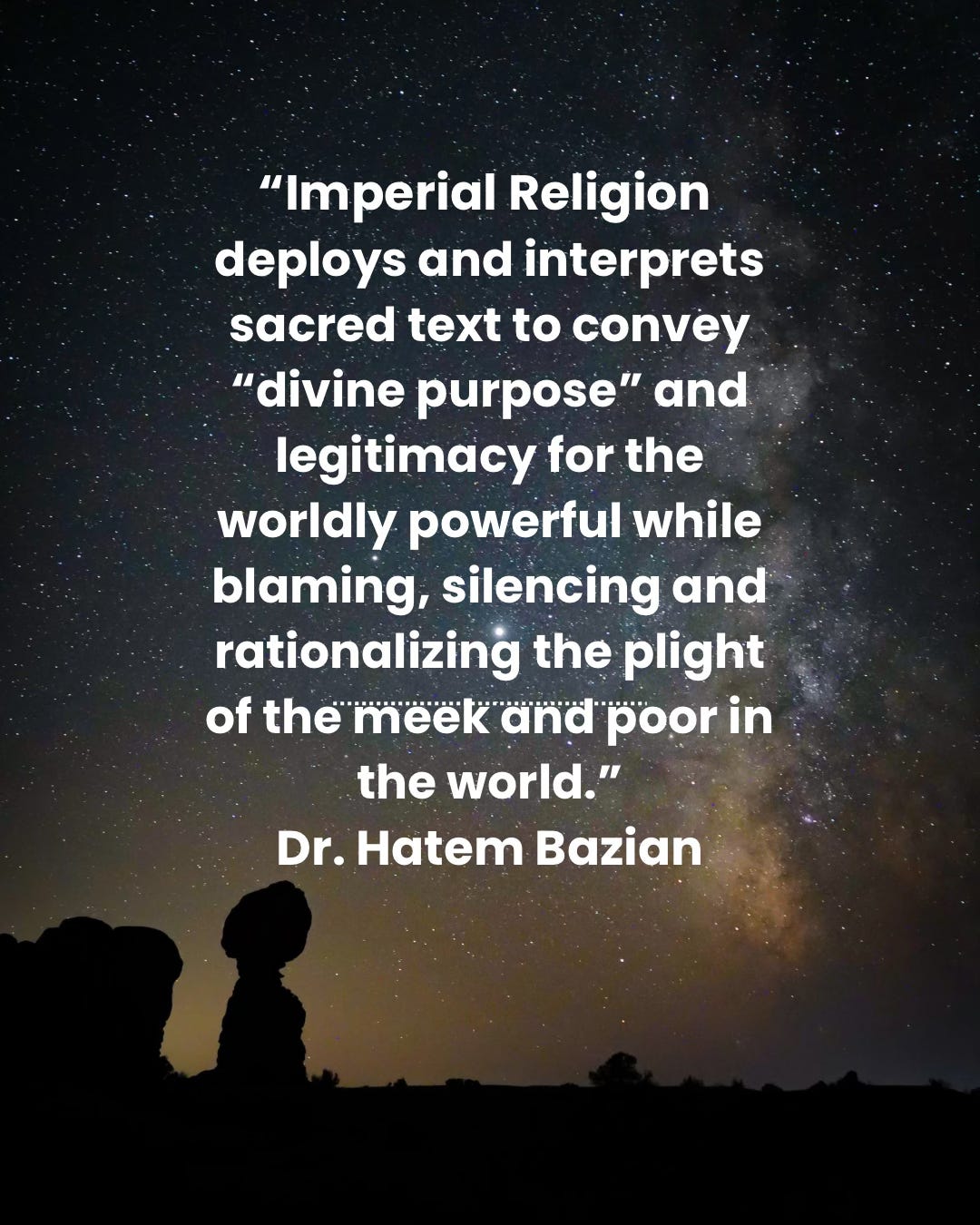
The question is not whether God wants war and destruction. The God revealed in the life and teachings of Moses, Jesus, and Muhammad does not. The real question is how human beings, driven by a desire for certainty, power, and control, have constructed a theological framework that justifies their own worst impulses. They have fused end-times prophecy with neoliberal greed, nationalist idolatry, and militaristic fervor to create an engine of perpetual conflict. This ideology, currently being used to rationalize a genocide in Gaza, represents one of the most significant threats to global peace. It is a theology that looks upon the apocalypse not with repentance and hope, but with a chilling and complicit anticipation. Disarming this destructive belief requires not just political opposition, but a courageous theological effort to reclaim faith from the hands of those who would use it to set the world on fire for their own salvation.

