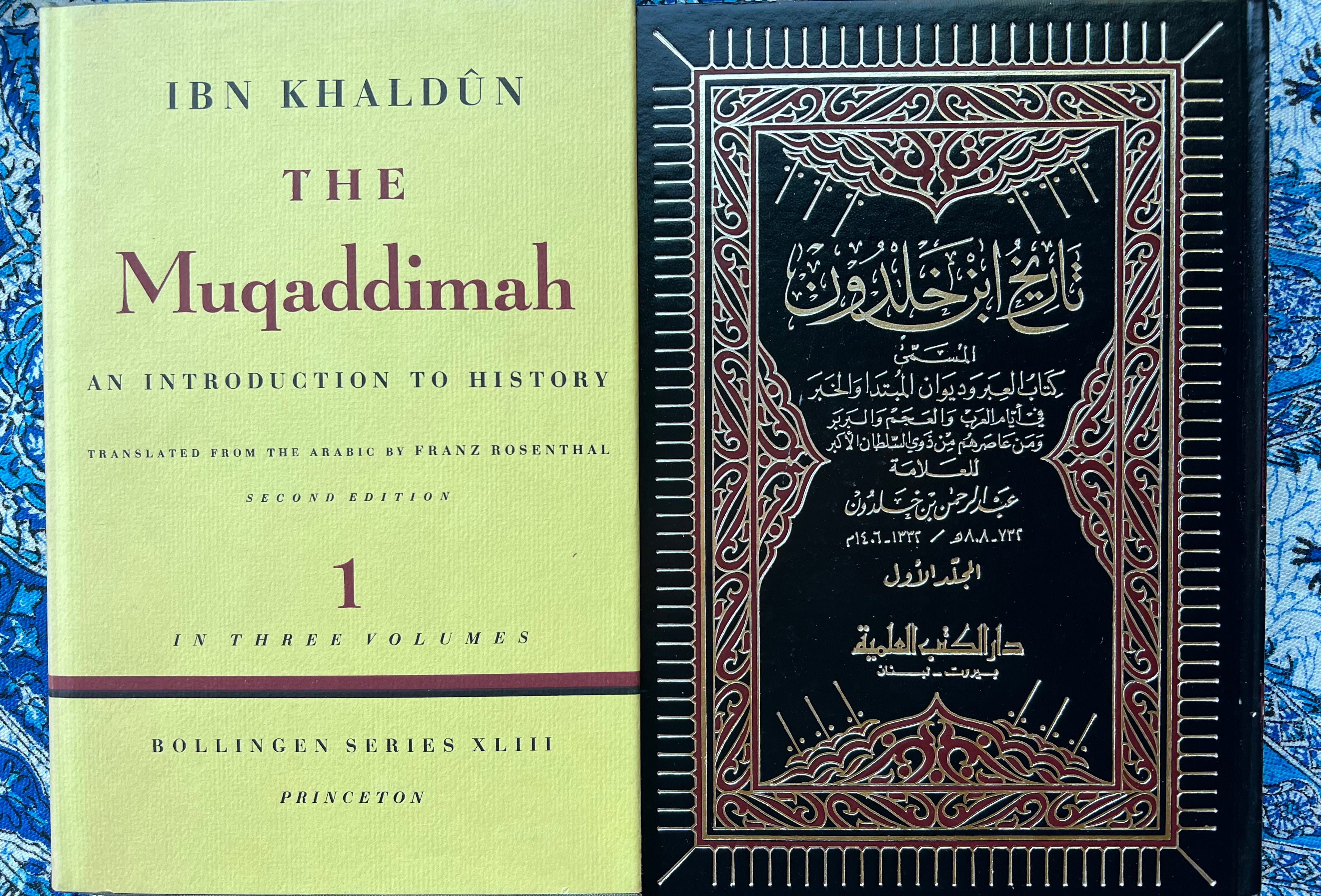
One would think that the study of history is a neutral act, an orderly recounting of events, names, dates, and outcomes, which often glorifies a supposed “pristine” and “pure” pious past. Ibn Khaldūn dismantled this illusion long ago and provided a sound method for engaging with history. For him, history is never merely the transmission of reports; it is an inquiry into human social organization itself, what he famously identifies as ʿumrān, or civilization as a lived reality. History, therefore, is not about what people say happened, but about whether what is claimed could have happened given the material, social, political, and moral conditions of the time. This methodological insistence is not incidental; it is the foundation upon which any ethical engagement with power, theology, and domination must rest. To assume that we engage in the world without accounting for power is a delusional and ignorant proposition. Also, reducing history to individual leaders, their “reported piety,” and a series of events is not history; rather, it is a biographical work standing for a work of history.
This article applies Ibn Khaldūn's civilizational theory to examine Islamophobia as a governing technology within the contemporary United States. Drawing on al-Muqaddimah and interdisciplinary scholarship in Islamophobia studies, settler colonial theory, critical race studies, and media analysis, the article argues that Islamophobia functions as a structural mechanism through which a late-imperial state manages declining legitimacy. Rather than treating Islamophobia as prejudice or misrepresentation alone, the article situates it within a Khaldunian framework of civilizational decline marked by the erosion of ʿasabiyyah (social cohesion, collective solidarity, and moral bond), the normalization of permanent war, racialized governance, and epistemic fragmentation. Through integrated case studies of the Iraq War, Trump-era conspiracism, and U.S. responses to Gaza and Palestine, the article demonstrates how Islamophobia operates simultaneously across foreign policy, domestic security, and mediated public discourse to sustain imperial power amid moral and institutional exhaustion.
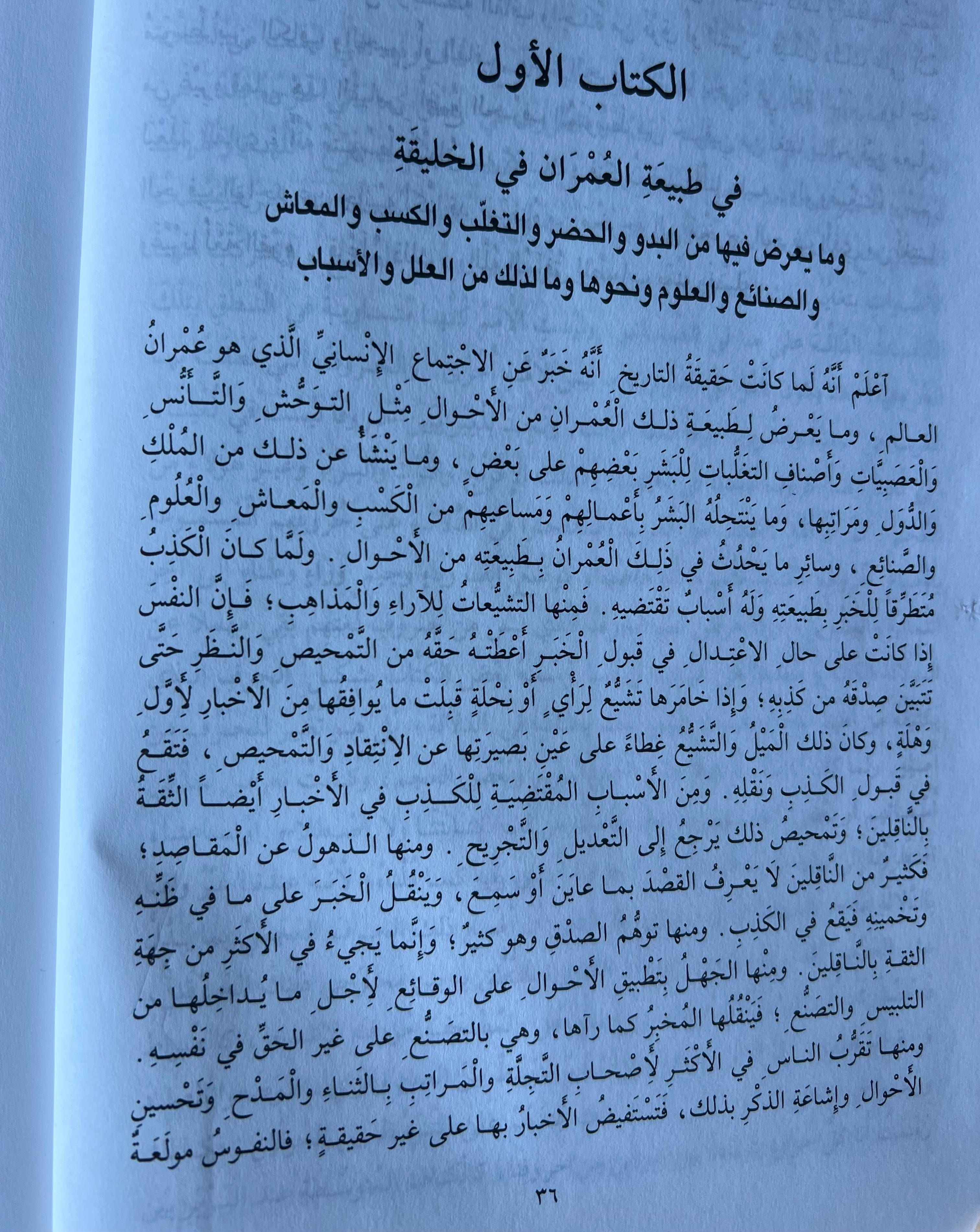
Islamophobia has often been analyzed as cultural fear, media distortion, or ideological racism. While these dimensions remain essential, they are insufficient to explain its durability, adaptability, and centrality within U.S. governance. This article advances a structural argument; Islamophobia functions as a technology of rule in a late-imperial context, not merely as a social bias or discursive excess.
“Islamophobia is a structural organizing tool located at the contemporary racial, gender, and class crossroads, is employed to rationalize and extend the dominant global power hierarchies, while embarking on a project for silencing the collective global other.” Dr. Hatem Bazian, 2009
Ibn Khaldūn’s theory of the rise and decline of civilizations offers a powerful, underutilized framework for understanding this function. In al-Muqaddimah, Ibn Khaldūn rejected linear progress narratives and instead argued that civilizations rise through ʿasabiyyah, a form of social cohesion rooted in justice, reciprocity, and shared moral purpose, and decline when elites abandon justice, accumulate power without accountability, and replace consent with coercion (Ibn Khaldūn [1377] 1967).
This article situates Islamophobia within that Khaldunian arc. It argues that as ʿasabiyyah erodes in the United States, Islamophobia is mobilized to externalize blame, justify endless war, discipline racialized populations, and manage epistemic breakdown. In this sense, Islamophobia is not peripheral to American decline; it is constitutive of how decline is governed.
Ibn Khaldūn understood political authority as inseparable from justice (ʿadl). ʿAsabiyyah was not tribal loyalty in a narrow sense, but a moral-social bond linking rulers and ruled through shared obligation and restraint. When elites sever this bond by living off inherited power, insulating themselves from consequences, and governing through force, ʿasabiyyah collapses and decline accelerates.
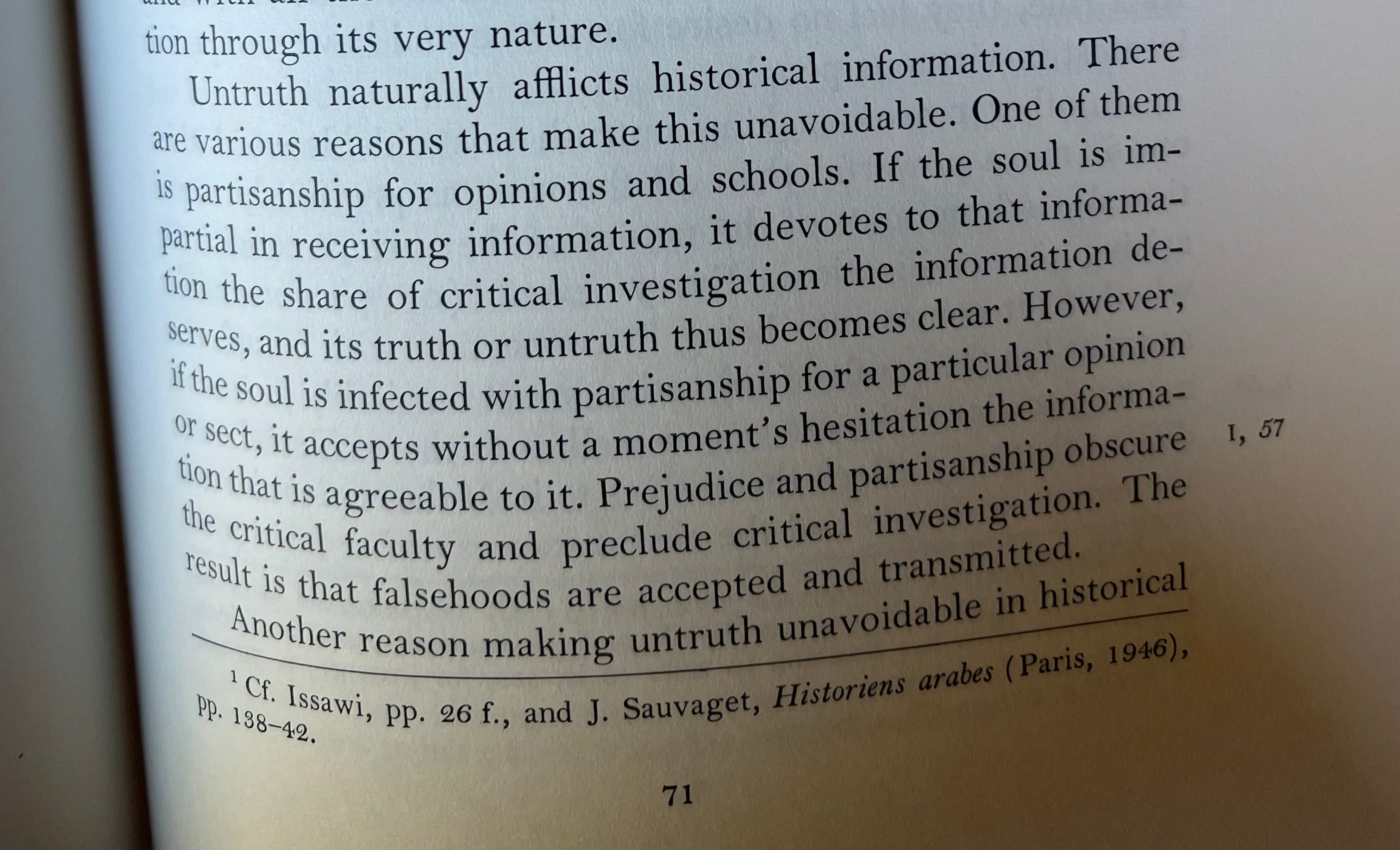
Crucially, Ibn Khaldūn observed that declining states fragment society to survive. Difference becomes a tool of governance rather than a site of solidarity. Fear replaces trust; spectacle replaces legitimacy. This insight is central to understanding Islamophobia as a structural phenomenon rather than an episodic one.
The United States emerged as a settler colonial project premised on Indigenous dispossession, genocide, and racial slavery. Its early cohesion was therefore racially bounded, a racial project from its foundation constructed through exclusion rather than justice. Expansion temporarily masked this contradiction by converting violence into prosperity.
From a Khaldunian perspective, this constituted a fragile and ethically unsustainable form of ʿasabiyyah. Once territorial and economic expansion slowed, unresolved settler colonial violence re-emerged internally through racial governance, carceral expansion, and border militarization. Islamophobia enters this landscape as a racial technology compatible with settler colonial logic, as Muslims are framed as civilizational outsiders whose exclusion reinforces a fragile national identity at moments of crisis.
Islamophobia and the War on Terror: Manufacturing Imperial Legitimacy
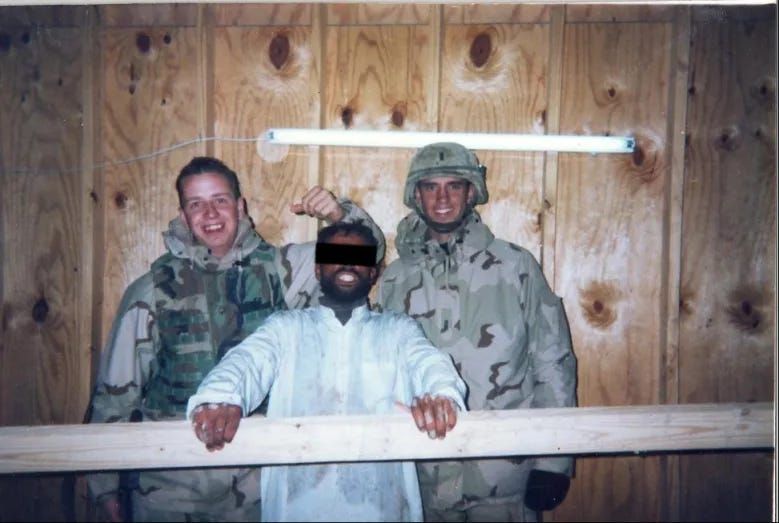
The post-9/11 War on Terror represents a decisive moment in the institutionalization of Islamophobia as statecraft. The construction of Muslims and Muslim-majority societies as inherently violent, deceptive, and irrational enabled the normalization of permanent war, exceptional law, and domestic surveillance.
The 2003 invasion of Iraq provides a paradigmatic case. Claims about weapons of mass destruction functioned not simply as intelligence failures but as epistemic instruments of empire, made plausible through Islamophobic assumptions that Muslim states could not be trusted and did not merit evidentiary rigor. As I demonstrated in earlier articles, Islamophobia supplied the civilizational grammar, i.e., the Clash of Civilizations thesis, through which invasion became both necessary and moral.
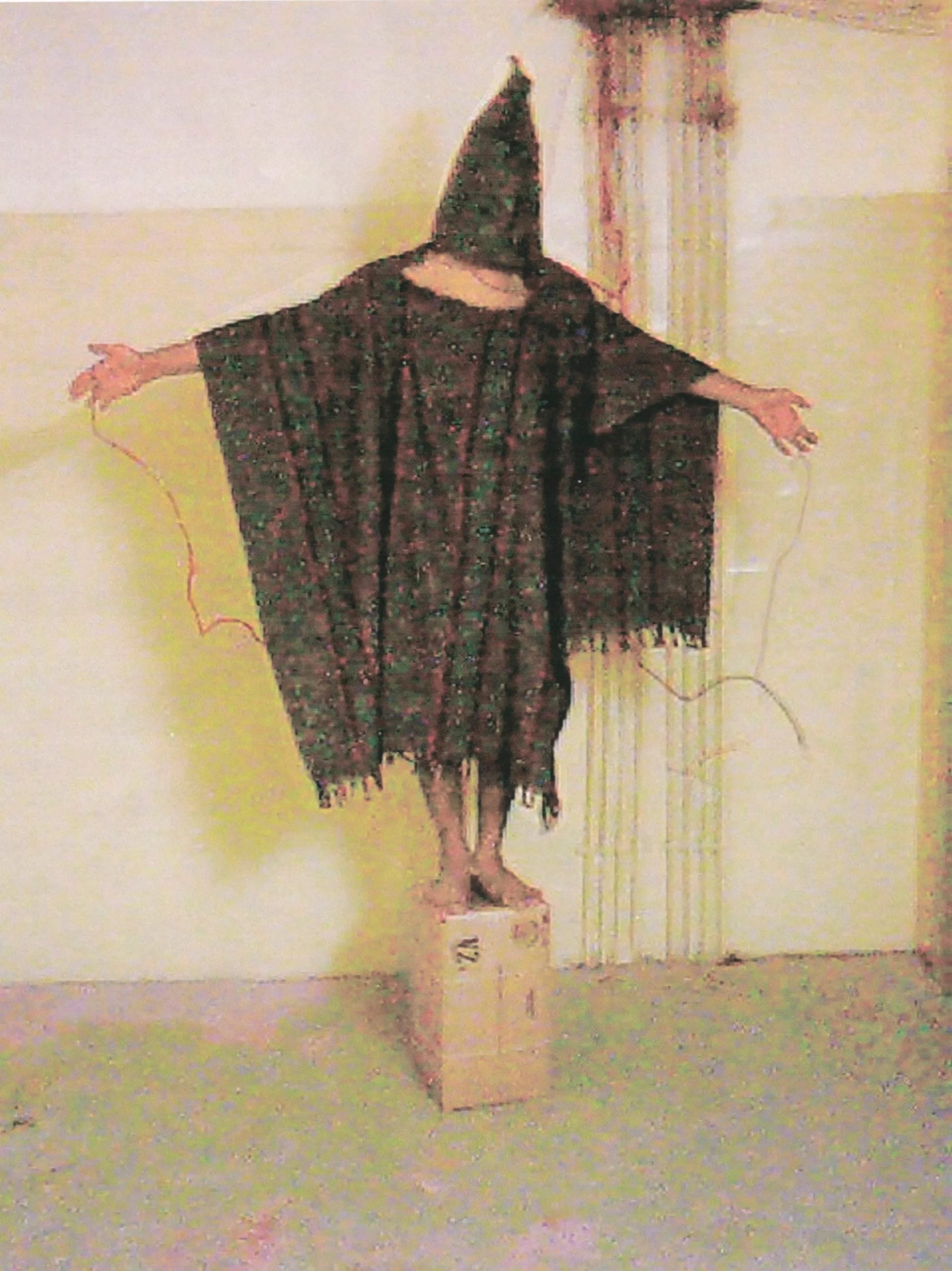
In Ibn Khaldūn’s terms, this moment signals advanced decline, in which truth becomes subordinate to power because legitimacy no longer depends on justice. The exposure of the WMD lie did not produce accountability; instead, it normalized war as a permanent condition of governance.
The persistence of Islamophobia in U.S. political culture cannot be understood without addressing the enduring influence of the “Clash of Civilizations” thesis, (Read my article, Islamophobia, “Clash of Civilizations”, and Forging a Post-Cold War Order! https://www.mdpi.com/2077-1444/9/9/282) which I have argued elsewhere functions less as an analytical framework and more as an imperial worldview masquerading as theory. The thesis reduces complex historical, political, and economic relations into essentialized civilizational antagonisms, positioning Islam as a perpetual external threat to Western order. From a Khaldunian perspective, this framing represents a fundamental misreading of history. Ibn Khaldūn did not view civilizations as locked in metaphysical conflict; rather, he understood political decline as internally generated through the erosion of justice (ʿadl), the breakdown of social cohesion (ʿasabiyyah), and elite moral corruption. The “clash” thesis reverses this logic by externalizing responsibility for imperial crisis, displacing internal contradictions onto an imagined civilizational enemy.
In doing so, it fuels Islamophobia by transforming Muslims into symbols of decline rather than subjects of governance, and it legitimizes endless war, surveillance, and repression as civilizational self-defense. In Khaldunian terms, this represents a classic late-imperial maneuver: when legitimacy collapses from within, ideology is deployed to obscure decay, convert fear into cohesion, and reframe injustice as necessity. The clash thesis thus functions not as a diagnosis, but as a symptom, a narrative produced by the empire at the moment it can no longer confront its own structural failures.
Islamophobia emerging from the Clash of Civilizations thesis does not operate solely abroad. Domestically, it intersects with racial governance to justify surveillance, policing, militarism and legal exceptionalism. Muslims are positioned as permanent suspects, rendering extraordinary measures ordinary. This mirrors the expansion of mass incarceration and militarized policing targeting Black and Brown communities. In Khaldunian terms, law ceases to function as a moral bond and becomes an instrument of domination. The state persists not through consent but through managed fear. Here, Islamophobia functions as infrastructure, not ideology alone, and gets embedded in policy, security doctrine, and institutional practice.
Recent events in Minnesota vividly illustrate how Islamophobia and racialized state violence operate as institutional technologies of rule in a late-imperial United States. In early January 2026, a Minneapolis woman, Renée Nicole Good, was fatally shot by an Immigration and Customs Enforcement (ICE) agent during a large-scale immigration enforcement operation—what federal authorities have called the largest in the state’s history. The operation itself, deploying roughly 2,000 ICE and Homeland Security agents into the Minneapolis–St. Paul area, is widely perceived by local civil-rights groups and community organizations as a coordinated federal escalation targeting immigrant populations, and in particular the city’s substantial Somali American community. Somali residents and advocates have reported ICE activity at homes, places of worship, and community centers, creating pervasive fear and insecurity among both documented residents and asylum seekers. These events have sparked widespread protests, official declarations of constitutional violations by state leaders (such as Minnesota’s lawsuit alleging unlawful federal conduct), and public outrage from figures including Congresswoman Ilhan Omar and civil rights organizations condemning the violent overreach and mischaracterization of civilians as threats.
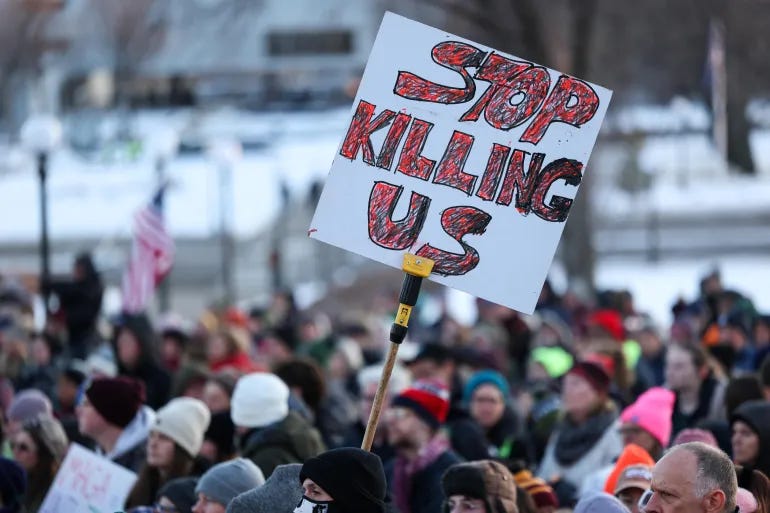
Viewed through Ibn Khaldūn’s framework, this federal violence operates as a late-stage imperial strategy that substitutes ʿasabiyyah—genuine social cohesion and justice—with racialized fear, spectacle, and coercion. As elite legitimacy erodes, the state increasingly externalizes internal failures onto racialized “others,” reinforcing a narrative that immigrant communities are inherently dangerous, burdensome, or disloyal and therefore justify militarized policing and extraordinary force. In this interpretation, Islamophobia is not incidental but structural: it provides the racial logic through which the Somali community is constructed as a legitimate object of heightened policing and lethal enforcement, even when residents are legally present and engaged in community life.
The Minnesota case thus exemplifies a Khaldunian dynamic in which the ruling order, detached from justice and popular consent, resorts to targeted violence against marginalized communities to mask its own loss of moral authority and to manufacture a semblance of cohesion through division by transforming fear of the “other” into a mechanism for governing decline rather than pursuing equitable inclusion. Such dynamics echo earlier patterns of state-sanctioned racial violence and Islamophobic policy that have disproportionately impacted Muslim communities, revealing how Islamophobia in the U.S. functions not just as prejudice, but as an integrated mode of power in a polity coping with institutional crisis.
Conspiracy, Disinformation, and the Epistemic Crisis of Empire
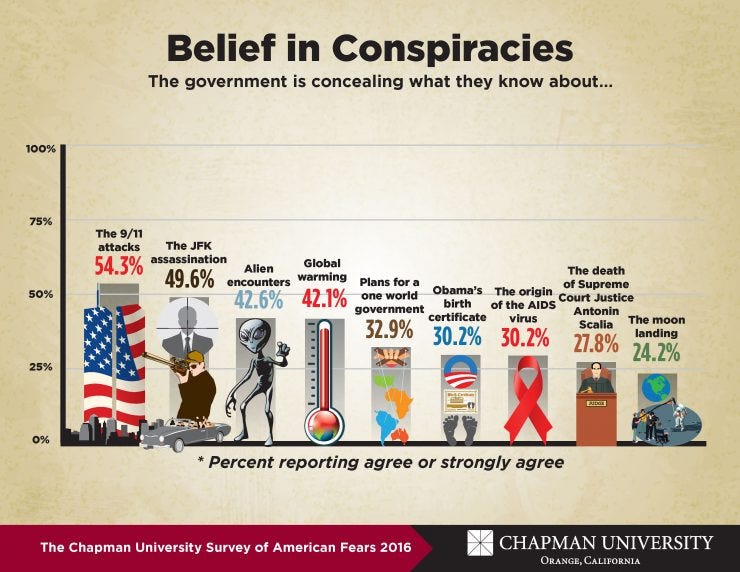
The proliferation of conspiracy theories in U.S. political life is often attributed to social media or foreign interference. A Khaldunian reading suggests a deeper diagnosis; an epistemic collapse accompanies moral and institutional decline. Ibn Khaldūn noted that in periods of decay, societies turn toward myth, prophecy, and fantastical explanation as rational institutions lose credibility. Trump-era conspiracism, including QAnon, reflects this condition. Importantly, such conspiracies do not challenge elite power; they redirect popular anger away from structural injustice toward imagined enemies. Social media accelerates this process by algorithmically rewarding outrage and fragmentation. Shared reality dissolves, making ʿasabiyyah impossible. Fragmentation itself becomes a mode of governance.
U.S. responses to Israel’s assault on Gaza expose the late-imperial condition with particular clarity. International law, human rights, and civilian protection are applied selectively, revealing justice as an instrument rather than principle. Domestically, opposition to genocide has been met with repression: surveillance, blacklisting, and the criminalization of dissent. Islamophobia once again bridges foreign violence and domestic control, framing Palestinians and their advocates as security threats rather than moral interlocutors. For Ibn Khaldūn, injustice does not merely provoke resistance; it dissolves loyalty and legitimacy. Gaza has accelerated this dissolution by making ethical inconsistency impossible to ignore.
Islamophobia must be seen and considered as a symptom of civilizational decline and not a simple debate about conflicting identities. Viewed through Ibn Khaldūn’s framework, Islamophobia emerges not as an aberration of American democracy but as a structural feature of late-imperial governance. As ʿasabiyyah erodes, the state substitutes justice with coercion, solidarity with fear, and truth with spectacle.
Islamophobia functions across foreign policy, domestic security, academic governance and mediated discourse to manage decline rather than resolve it. Ibn Khaldūn’s warning remains devastatingly relevant, whereby civilizations fall not when they are attacked, but when they abandon justice and mistake domination for cohesion.
The unresolved question for the United States is therefore not whether it is declining, but whether it can reconstitute a moral foundation capable of sustaining legitimacy or whether coercion has become its only remaining language.

