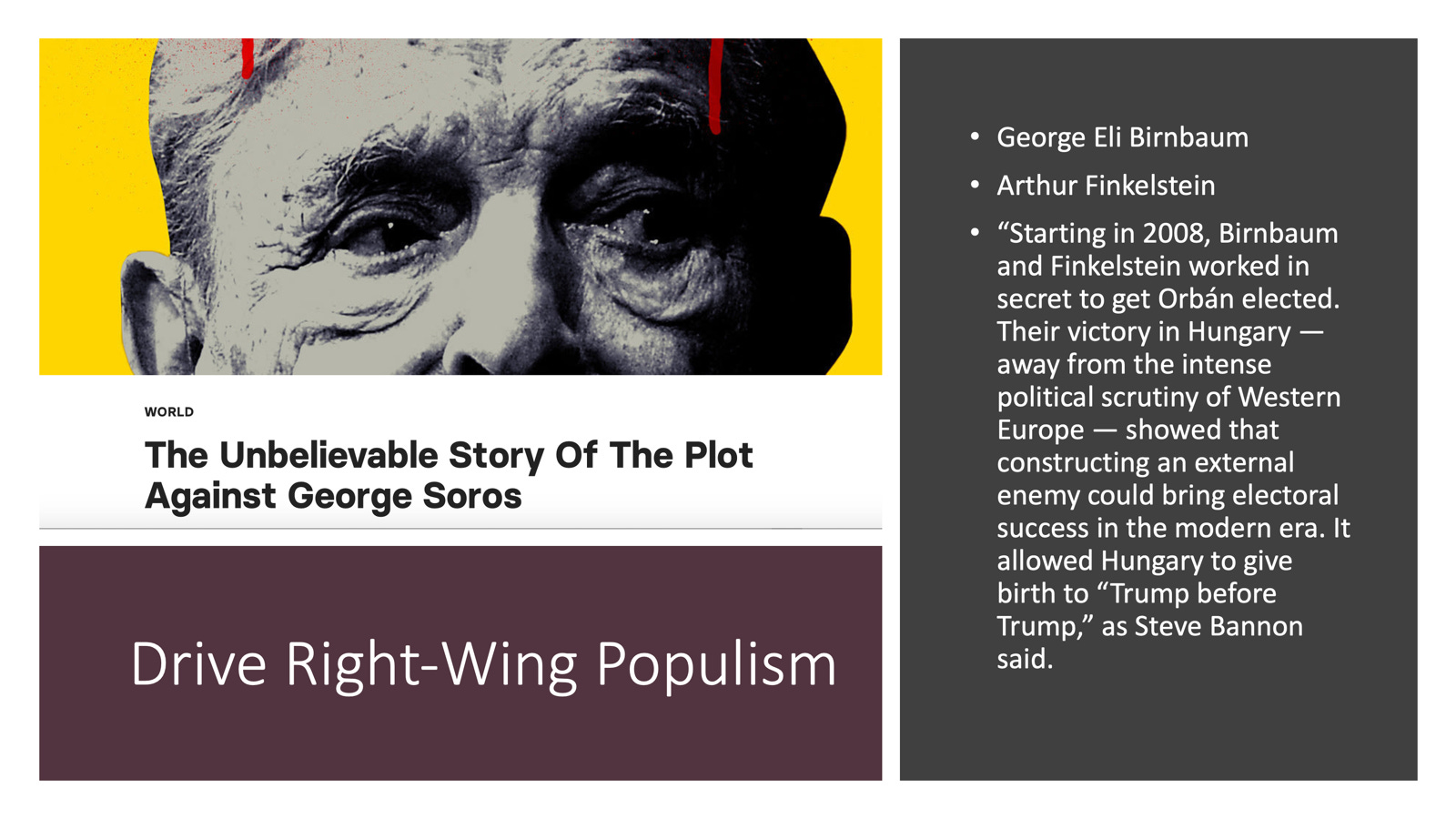
Viktor Orbán did not lose an election last night. Orbán lost an argument, one he had been making for sixteen years, in increasingly loud and ugly terms, to increasingly exhausted people. The argument was simple; that Hungary’s enemies were outside its borders, that Muslims and migrants were a civilizational threat, that the European Union was a new Soviet Union, and that only one man, armed with a supermajority and a rewritten constitution, stood between the Hungarian nation and its destruction. The Hungarian people, voting in record numbers, decided they had heard enough.
But let us be precise about what this moment is and what it is not. Orbán’s defeat is not a repudiation of anti-immigration politics; his successor, Péter Magyar, endorsed border restrictions throughout the campaign. It is not a liberal revolution, since Tisza is a conservative, pro-European party, not a progressive one. And it is not, by itself, the end of the global illiberal wave that Orbán did more than any other single figure to launch.
What it is, is a verdict on a specific and destructive political model, the model that says you can manufacture enemies indefinitely, hollow out every democratic institution in sight, hand the national wealth to your friends, and hold power forever on the strength of fear and propaganda. Hungary just showed the world that this model has a shelf life. That matters enormously beyond the borders of a Central European country of ten million people.
THE ORIGINAL LABORATORY
We need to be honest about what Orbán built and when. When he returned to power in 2010, riding the wreckage of the global financial crisis, the Western political establishment largely treated him as an eccentric, a Central European anomaly, a post-Communist country working through its contradictions. That complacency was one of the great political failures of the last two decades.
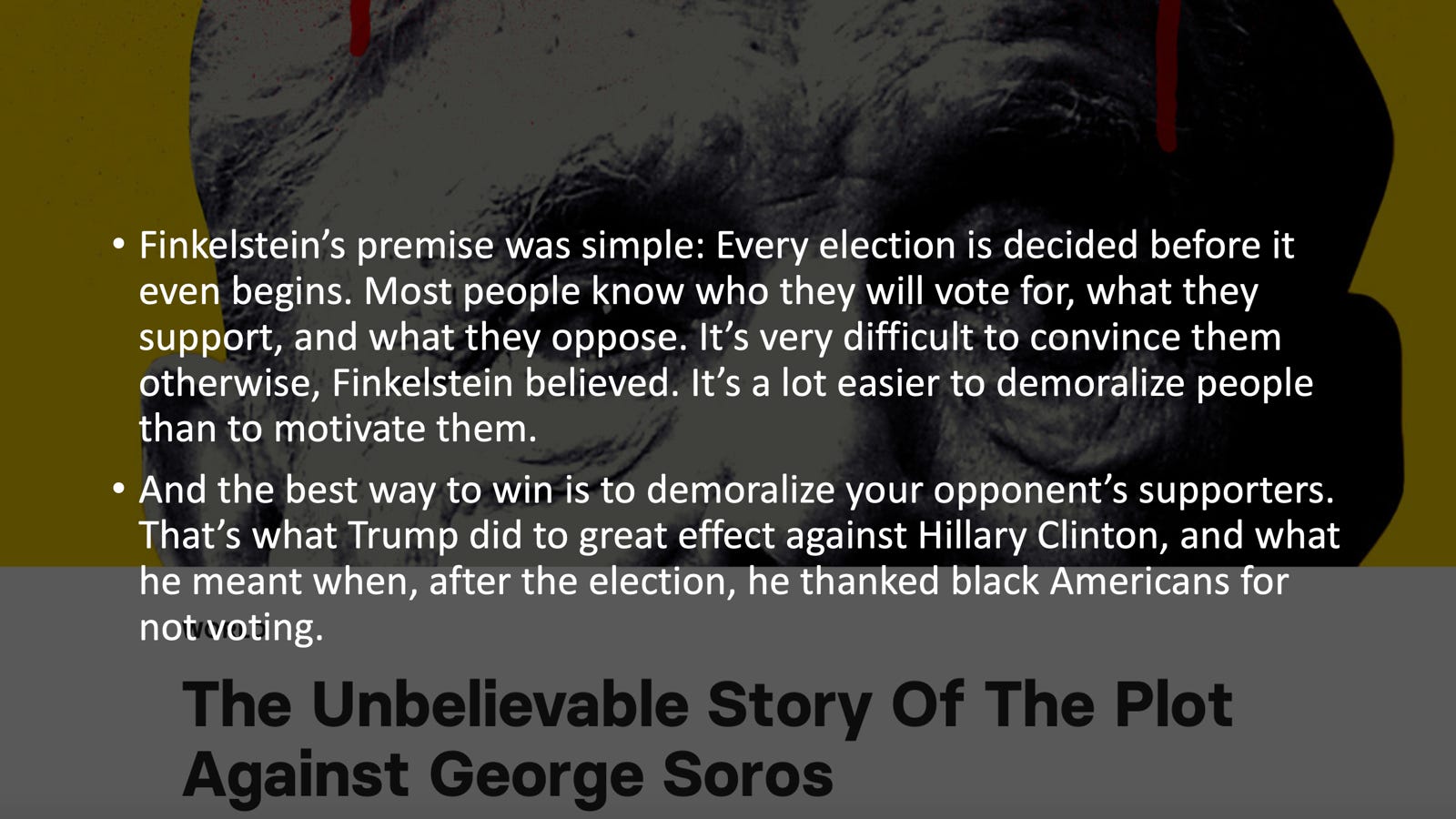
What Orbán was actually doing between 2010 and 2015 was building the first operational model of what we now call illiberal democracy, a system that keeps the formal architecture of elections while systematically destroying everything that makes elections meaningful. He rewrote the constitution within two years of taking power. He restructured the courts so that judicial independence became a fiction. He oversaw the acquisition by Fidesz-linked oligarchs of 80 percent of Hungary’s media. He gerrymandered constituencies, changed campaign finance rules, and redrew the electoral map. And then he held elections and won them, and pointed to the results as proof of legitimacy.
Steve Bannon called Orbán ‘Trump before Trump.’ That is not a compliment accidentally paid. It is an accurate description of intellectual lineage.
By 2014, he was no longer bothering to speak in democratic language at all. He told a gathering of students that he wanted to build an ‘illiberal state’ openly, proudly, as a program. He looked at Russia under Putin, and China under Xi, and said that is the direction. He said it out loud. Nobody who was paying attention should have been surprised by anything that followed.
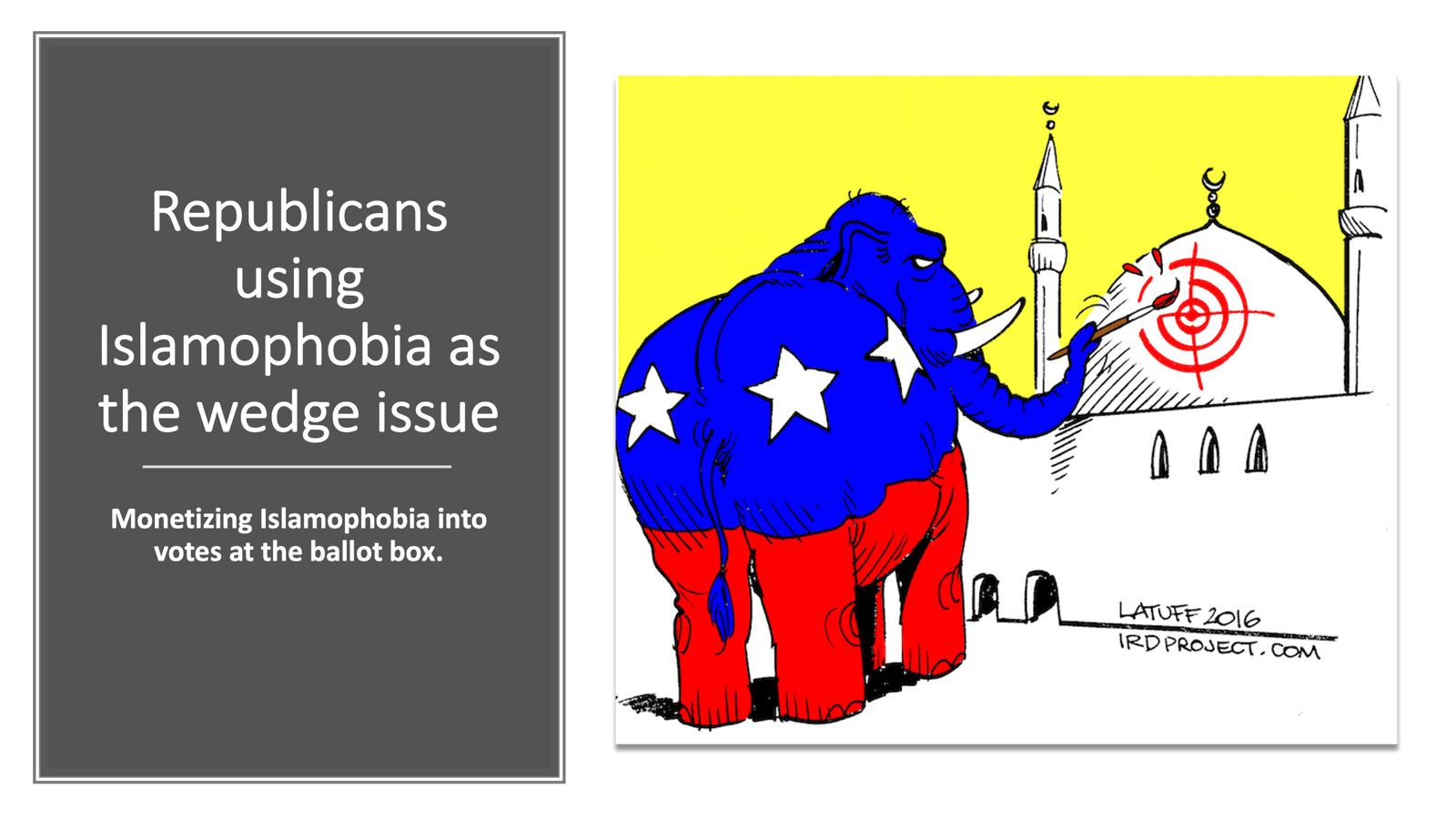
What followed, specifically, was the weaponization of Islamophobia as state policy. The 2015 refugee crisis handed Orbán the instrument he had been waiting for. He built a border fence. He ran government billboard campaigns depicting migrants as dangerous invaders. He launched a national ‘consultation’, a propaganda exercise dressed as civic participation that asked Hungarians leading questions about whether they feared that immigration would increase terrorism. He introduced the language of ‘great replacement’ into mainstream European political discourse years before it became the common currency of the global far right. In 2022, he stood before a party gathering in Romania and told his supporters that Hungarians must not become ‘a people of mixed race.’ He said that too, out loud.
This is not the peripheral excess of a politician who went too far in a moment of heat. This was the deliberate, sustained, institutionalized use of anti-Muslim and anti-immigrant sentiment as the primary mechanism of political mobilization. Orbán did not stumble into Islamophobia. He chose it, refined it, and exported it.
The export happened in two directions simultaneously-into Europe and across the Atlantic.
In Europe, the Orbán model gave the continental far right something it had previously lacked; a proof of concept after WWII. Marine Le Pen in France, Giorgia Meloni in Italy, the AfD in Germany, the Sweden Democrats, the Law and Justice party in Poland: all of them were able to point to Budapest and say, it works. A nativist, anti-Muslim, anti-EU platform can win elections, hold power, and survive international criticism. Orbán did not create European right-wing nationalism that predates him by generations but he demonstrated that it could govern, and he gave its practitioners a detailed operational manual.
The manual had six chapters. First: take over your own party and eliminate internal dissent. Second: build your base on fear, specifically, fear of the foreign, the Muslim, the migrant, the ‘other’ threatening the Christian nation. Third: use disinformation so aggressively and continuously that the concept of shared factual reality erodes. Fourth: claim a sweeping mandate from even a narrow electoral victory. Fifth: dismantle the civil service and replace professional government with personal loyalty. Sixth: redefine the rule of law as the rule of your own executive decree. Every far-right government that has come to power in the West since 2015 has followed some version of this sequence.
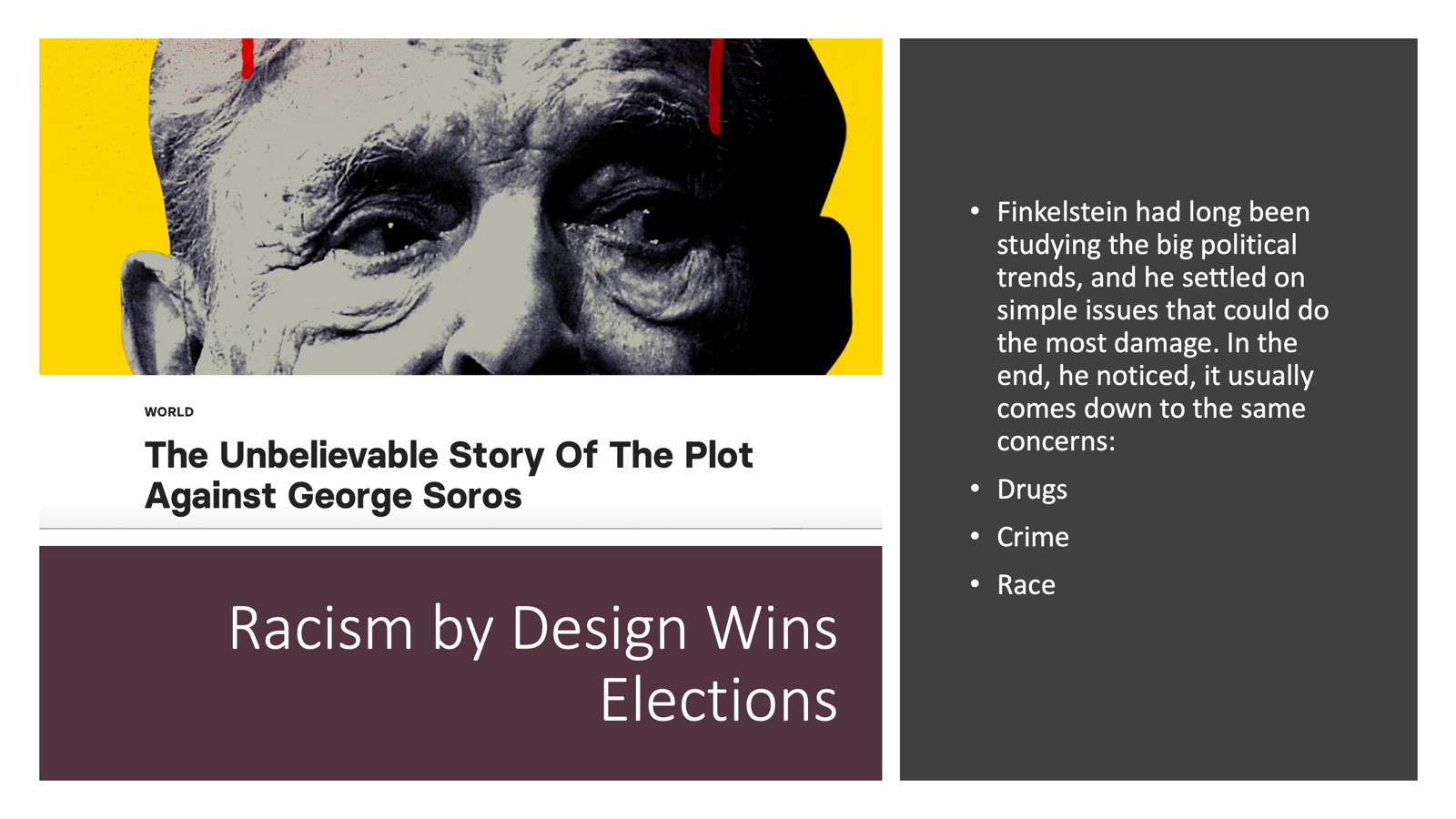
The Atlantic crossing of Orbánism deserves particular attention because it did not happen accidentally or covertly. It happened through open admiration, deliberate study, and direct political coordination. Tucker Carlson broadcast his prime-time show from Budapest in 2021 and told millions of American conservatives that this managed democracy, this Christian nationalist state, this country where the press had been captured, and the courts subordinated, was a model for America. The Conservative Political Action Conference held its 2022 meeting in Budapest. Steve Bannon articulated the intellectual lineage explicitly. And the policy document known as Project 2025, prepared for Trump’s second term, drew on the Hungarian governance model at multiple points.
Trump himself completed the circle last week. As Hungarian voters prepared to go to the polls, he called in to a Vance rally in Budapest on speakerphone, praised Orbán as ‘a fantastic man,’ and promised economic support for Hungary if Orbán won. His son posted on social media, urging Hungarians to vote for ‘my father’s friend and ally.’ The Vice President of the United States flew to a foreign capital to campaign for a foreign leader. And Orbán lost anyway by fifteen points.
WHAT THE DEFEAT ACTUALLY MEANS
Here is what Orbán’s fall does not mean. It does not mean that anti-immigration politics are finished in Europe or America. Magyar won in part because he did not frontally challenge Orbán’s border policies. The anxieties that Orbán spent sixteen years inflaming about demographic change, cultural identity, and Islam in Europe did not evaporate on election night. They were created and sustained by deliberate political effort, and they will require deliberate political effort to address. One election does not undo sixteen years of manufactured fear.

What the defeat does mean is something more specific and, in its own way, more important. It means that the Orbán model of governance, the specific combination of anti-Muslim demagoguery, institutional capture, media monopolization, and kleptocratic economics, does not produce a stable political equilibrium. It eventually produces its own opposition. Hungarians did not vote Orbán out because they suddenly became enthusiastic multiculturalists or embracing of diversity. They voted him out because wages stagnated, living costs became unbearable, the health system collapsed, and it became impossible not to see that the men closest to Fidesz were getting extraordinarily rich while everyone else was not.
This is the structural contradiction at the heart of every illiberal populist project; the politics of nationalist fear requires an external enemy to remain credible, but it cannot deliver economic dignity because its actual economic program is the enrichment of a connected elite at the expense of the base it is simultaneously manipulating.
The lesson for Europe is that the antidote to Orbánism is not a liberal lecture about democratic values. Magyar did not win by running a seminar on judicial independence. He won by talking about corruption, health care, wages, and public transport, by making the material failures of sixteen years of Fidesz government viscerally real to voters who experienced them every day. The European center and left have spent too many years ceding the emotional terrain of national identity and immigration to the far right while assuming that competent technocratic governance would speak for itself. It does not. Orbán’s defeat is an instruction in what does work: an economic discourse, a pro-European alternative that matches the right’s emotional intensity while offering an actual account of economic failure.
The lesson for the United States is harder to absorb because the American playbook is still in its early chapters. Trump is not Orbán; American institutions have so far shown more resilience than Hungarian ones did, in part because they were stronger to begin with and in part because the federal system creates multiple points of resistance. But the ideological program is the same: manufacture the Muslim threat, anti-Sharia campaigns, inflame anti-immigrant sentiment, capture the information environment, subordinate independent institutions, and enrich the connected few while the base watches the border. The question is not whether the playbook is being run. It is whether enough Americans, like enough Hungarians, will eventually look up from the manufactured emergency and see clearly what has been done to them.
Orbán told his supporters Sunday night that the result was ‘painful’ and ‘clear.’ He was right about both. What he did not say, what he cannot bring himself to say, is what the result actually means.
It means that a political model built on Islamophobia, on the demonization of migrants and Muslims, on the claim that Christian civilization requires an iron fist and a sealed border to survive, has been rejected by the people it claimed to protect. Not because those people became someone else. Because they became tired of being used.
Orbán was not defeated by his enemies. He was defeated by the gap between what he promised and what he delivered. He promised a strong Hungary, safe from foreign threats, governed by leaders who served the nation. He delivered a captured state, a looted economy, and a political class that served itself.
The man who wrote the playbook has been removed from office by the people he governed. The playbook still exists. Its students are still in power in Washington, Rome, and elsewhere. But the original field test has produced a final result, and the result is instructive: you can frighten people for a long time. You cannot govern on fear alone. Sooner or later, the people want something real. Hungary just told us that. The question is who else is listening.

