

Home
/
“Humanitarian” Ethnic Cleansing: From Herzl to Netanyahu, Zionist Views on “Transfer” in Historical Palestine
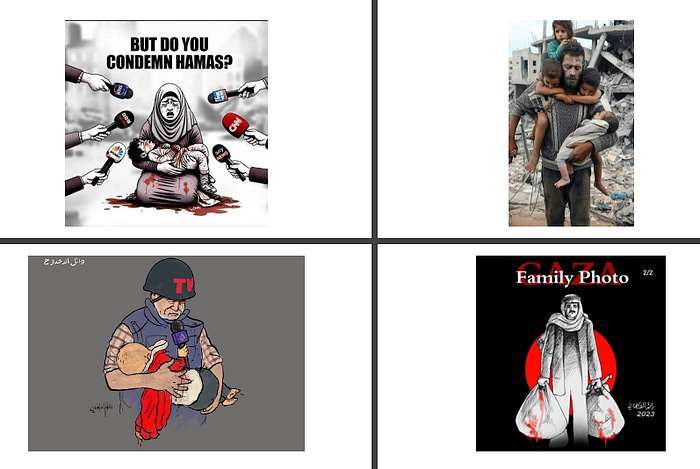
Do Palestinians have connections to Sudan, Libya, the Congo, Chad, or Rwanda? Not that I am planning a move to any of these beautiful countries, but the Israeli leadership is discussing, with full support of the Trump Administration, the intent of undertaking a “humanitarian” ethnic cleansing for Gaza’s Palestinian population. The current Gaza Humanitarian Foundation's death-by-design and turkey shoot food distribution scheme in Gaza is intended to facilitate Israeli ethnic cleansing. A settler colonial state that was born out of the dispossessing and ethnic cleansing of Palestinians in 1948 remains committed in 2024 and beyond to emptying Palestine of its indigenous population.
All settler colonial projects carry out genocide and ethnic cleansing or transfer, the soft euphemism deployed to distract from the real colonial intent. Zionism was/is committed to Ethnic Cleansing, and various strategies have been deployed to bring about the “transfer” of Palestine’s indigenous population out and facilitate the implantation of settlements to accommodate foreign Zionist settlers.
Recently, Israel’s finance minister, Bezalel Smotrich, called for the removal of around 90 percent of Gaza’s residents, which, in his view, is needed to bring about security in the post-war period. “If there are 100,000 or 200,000 Arabs in Gaza and not two million, the whole discourse about the day after will be different,” he said. Netanyahu, the Israeli Prime Minister, put forth similar ideas, but in his case, it is the “voluntary immigration” of Palestinians from the Gaza Strip.
Keep in mind, Netanyahu is using the cover of war to supposedly "Give them [the Palestinians in Gaza] the opportunity to leave, first of all, to leave combat zones and generally to leave the territory, if they want," he said in a televised interview. Further commenting that "we will allow this, first of all, within Gaza during the fighting, and we will certainly allow them to leave Gaza as well." The assault on Gaza City is to bring about the ethnic cleansing of the remaining population while making sure the genocide continues with total support from the US, major European powers and the silence of the Arab and Muslim world.

Transfer, ethnic cleansing, or emptying the land has been a central theme for Zionists from the earliest days of the movement. Here, the plan is being framed as a “humanitarian” effort to ease the “pain” and suffering of the Palestinians in Gaza. However, absent from this discourse is an introductory discussion of why the Palestinians in Gaza are suffering in the first place and Israel’s role in destroying over 70% of the homes and causing the humanitarian calamity.
Transfer or, more accurately, ethnic cleansing is a central theme in all Zionist debates dating back to the Theodor Herzl era. Transferring Palestinians out of historical Palestine, since they were and are framed by colonialism as a “demographic problem,” has been a foundational vision and aspiration for the Zionist movement at inception and part of Israeli political and strategic planning for well over a century. Present calls to ethnically cleanse Gaza, or the euphemism, transferring the Palestinians to Jordan, the Congo, Chad, or Rwanda, is not a new idea and is as old as Zionism itself. Well, we would not have a modern Israeli-Zionist state without the ethnic cleansing of 78% of historical Palestine of 750,000 Palestinians.
Zionists supported and called for the transfer of the Palestinians from Herzl, the founder of modern Zionism, through successive Zionist and Israeli leaders, including the contemporary era under Benjamin Netanyahu, and the push to empty Gaza of 2.3 million of its population. Indeed, settler colonialism always undertakes genocide and transfer to arrive at a decisive settler demographic majority in colonized regions, and Zionism is a modern settler colonial variety.
In his seminal work “The Jewish State” (1896), Theodor Herzl outlined his vision for a Jewish homeland in Palestine. Central to Herzl’s vision was the idea of transfer to create a decisive Jewish-majority national ethnostate, which initially was conceived to be secular but, in due time, became an ethno-religious one. In “The Jewish State,” Herzl wrote, “We shall try to spirit the penniless population across the border by procuring employment for it in the transit countries while denying it any employment in our own country.” Herzl understood from the inception that Palestine was already heavily populated but that a transfer of the Palestinian population would be essential to bring about and, in the long term, ensure the viability of the Zionist-Jewish state.
Herzl’s ideas on transfer were rooted in the European colonial logic of the period and driven by the desire for a Jewish homeland at all costs. Herzl also explored alternative solutions, such as the Uganda Plan, which proposed the establishment of a Jewish homeland outside of Palestine. At the core, Herzl's ideas and Zionism emerged within the European colonial epistemic, which viewed the indigenous populations as an impediment to be overcome, transferred, or committed to genocide, as many regions across Africa, the Americas, and Asia experienced. Modern world history is stained by European genocides and forced transfer, which Zionism, from its inception, sought to replicate in Palestine.
During the 1930s, the Mapai, the leading party for the Jewish population in Palestine at the time, held a congress of its supporters from Palestine and other countries from 29 July to 7 August 1937 in Zurich. Then, the “transfer” became policy, planned and supported by most of the highest-ranking leaders and opposed on moral grounds by none. The proceedings of this congress were subsequently edited by David Ben-Gurion and published in Tel Aviv in 1938.”
“Between ourselves it must be clear that there is no room for both peoples together in this country. We shall not achieve our goal if the Arabs are in this small country. There is no other way than to transfer the Arabs from here to neighboring countries — all of them. Not one village, not one tribe should be left.” Joseph Weitz, head of the Jewish Agency’s Colonization Department in 1940. From “A Solution to the Refugee Problem”
The establishment of the State of Israel in 1948 marked a significant turning point in the Zionist movement. However, even before the 1948 Nakba, the Zionist settlers continued to call for transfer or, as the British White Paper framed it, a “population exchange” after adopting the idea of dividing Palestine into two states. The concept of dividing Palestine into two states was put forth by the Zionists in their presentation to the British team investigating the conditions in Palestine after the 1936 Palestinian Arab Revolt. Adopting the idea of transferring some 250,000 to possibly 300,000 Palestinian Arabs gave legitimacy to one Zionist settler colonial ideological bedrock idea that was implemented in 1948.
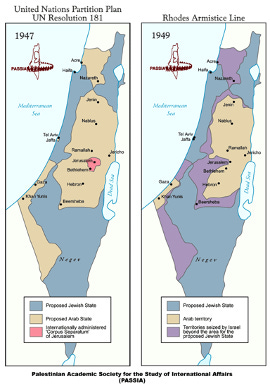
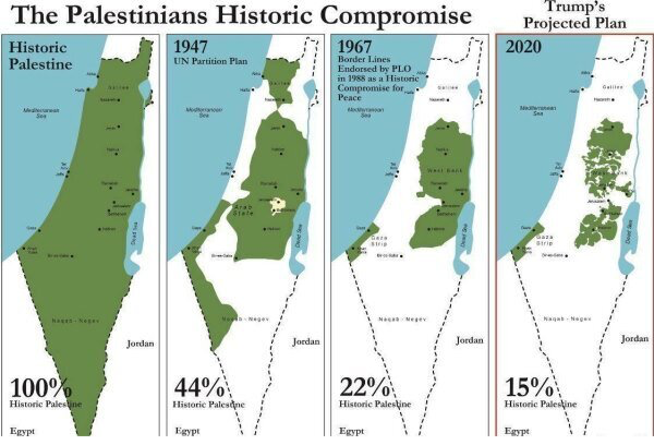
In the lead-up to the war, the Zionist Movement and the Zionist terrorist groups operating in Palestine created the Village Files, which were critical for carrying out attacks to cause fear and flight among the Palestinian rural populations. David Ben-Gurion, Israel’s first Prime Minister, understood the challenge of consolidating Israel’s territory while having to contend with a Palestinian Arab population that remained within its borders. The state that was given to the Zionists per UN Resolution 181 had almost equal percentages of Palestinian and Zionist-Jewish populations, which makes a decisive Zionist demographic majority untenable. Transfer policies were implemented during the 1948 Arab-Israeli war, leading to the ethnic cleansing of 750,000 Palestinian Arabs, the destruction of 531 villages, and the emptying of 11 urban centers. Ben-Gurion and other Zionist leaders justified these actions as necessary to secure a Jewish majority in the new state.
“We walked outside, Ben Gurion accompanying us. Allon repeated his question: ‘What is to be done with the population?’ Ben Gurion waved his hand in a gesture which said, ‘Drive them out.’ The population of Lod (Lydda) did not leave willingly. There was no way of avoiding the use of force and warning shots in order to make the inhabitants march the ten or fifteen miles to the point where they met up with the Legion.” — Yitzhak Rabin.
In the aftermath of the 1967 Six-Day War, during which Israel occupied the West Bank, Gaza Strip, and the Golan Heights, the debate over transfer continued. After the war, the plans to settle the newly occupied areas took the shape of building settlements while also pressuring the Palestinians out. “We must use terror, assassination, intimidation, land confiscation, and the cutting of all social services to rid the Galilee of its Arab population.” — Israel Koenig, “The Koenig Memorandum, 1976.” Settlement activities in the West Bank and the Gaza Strip intensified after the Likud Party came to power in a landslide in the 1977 elections. Settling the West Bank became an ideological and political litmus test for every government since the 1977 elections; both Likud and Labor supported the building of settlements and “transferring” the Palestinians out.
Israeli politics began to shift toward diplomacy and negotiations after the 1987 Intifada, the US war on Iraq, and the collapse of the Soviet Union. The 1993 Oslo Accords, after the US war on Iraq, marked a significant departure from earlier “transfer-oriented” policies and had briefly given false hope of a possible Palestinian state. The Oslo agreements aimed to establish a framework for peaceful coexistence between Israelis and Palestinians, leading to the recognition of the Palestinian Authority as an autonomous governing body but not a sovereign one.
Benjamin Netanyahu, a dominant figure in Israeli politics for the past 30 years who served multiple terms as Prime Minister, has constantly supported the transfer of the Palestinians. Netanyahu has emphasized the importance of maintaining a Jewish majority in Israel throughout his political career, which often referenced the need to transfer Palestinians to Jordan or stated that Jordan is the Palestinian state.
As a matter of fact, the Israeli daily newspaper Yediot Aharonot reported in November 1989 that Netanyahu said the following: “Israel should have taken advantage of the suppression of the demonstrations in China, while the world’s attention was focused on these events, and should have carried out mass deportations of Arabs from the territories. Unfortunately, this plan I proposed did not gain support, yet I still suggest putting it into action.” On his part, Netanyahu attempted to deny the statement, but the newspaper had a recording of his exact wording. Netanyahu's speech was at Bar-Ilan University and focused on the failure of the Israeli government at the time to take advantage of an international crisis, to carry out “large-scale” expulsions at a time when “the damage would have been relatively small…” Netanyahu further said, “I still believe that there are opportunities to expel many people.”
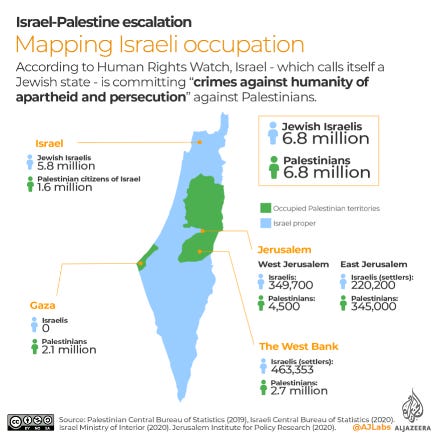
Netanyahu’s government, over his long tenure, continued to pursue “transfer” or silent ethnic cleansing policies in the West Bank, which included massive settlement expansion and the construction of the Apartheid Wall. Since the signing of the 1993 Oslo Accords, the number of settlers has multiplied almost sixfold from 130,000 to upward of 730,000 by the end of 2023. Netanyahu’s government actions contributed to a de facto Palestinian population transfer or ethnic cleansing. The Israeli government imposed movement restrictions, access to permits for building, and made everyday life impossible while expanding settlements, protecting settlers, and allowing for unrestrained violence against the Palestinians.
“The Jewish people have an exclusive and unquestionable right to all areas of the Land of Israel,” the policy statement partly reads. With this absence of distinction, the new government pledged to “develop” Area C of the occupied West Bank and to strengthen Israel’s colonial occupation of Jerusalem under the pretext of “preserving and developing a united Jerusalem.” “The nation of Israel has a natural right to the Land of Israel.” With such a sweeping statement that eliminates Israel’s colonial history, the document also pledges that “In light of the belief in that right above, the prime minister will formulate and promote policies within whose framework sovereignty will be applied to Judea and Samaria.”
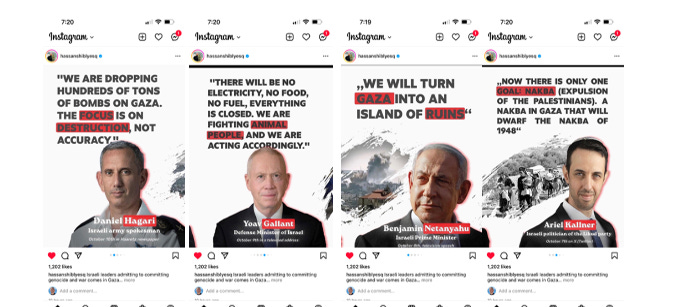
The concept of “transferring” or ethnic cleansing of the Palestinians out of historical Palestine has been foundational to the Zionist movement and Israeli politics from Herzl to Netanyahu. Immediately after the October 7th attacks, the calls for a “humanitarian” corridor or pressuring Egypt and Jordan to accept the “transfer” of Gaza’s Palestinian population came from top Israeli and Western leaders. Here, the clear violation of international law is worth mentioning, not that it will stop Israel or Western Governments who are quick to embrace “ethnic cleansing” and genocide; instead, the intent is to point to the hypocrisy of all those participating in it.
Herzl’s initial support for “transfer” or ethnic cleansing was supposedly rooted in his belief that it was necessary for the establishment of a Zionist Jewish homeland with a decisive Jewish majority. Israel implemented “transfer” or, more accurately, ethnic cleansing policies, particularly during and post the 1948 Nakba, with Ben-Gurion and others justifying these actions as essential for securing a Zionist Jewish-majority state. For the Zionists, the critical question was and remains: How can we achieve a decisive Zionist-Jewish majority in a geographical region, Palestine, that had a Palestinian majority in 1917 and continues to have almost 50% of the population in historical Palestine in 2025?
Ethnic cleansing and genocide are Netanyahu’s favored options to continue the long settler-colonial journey to empty Palestine of its indigenous Palestinian population. The current genocidal war on Gaza must be viewed through the lens of settler colonialism and the Zionist vision and dream to empty Palestine of its inhabitants, which any logical person will realize is not achievable, no matter the violence or political machination employed for it.