In the digital age, the tools of colonialism have evolved with the IT industry itself. The new modes of imperial production include the emergence of colonial algorithms. Empire today is no longer confined to the brute force of occupying armies or the overt policies of imperial rule; contemporary colonialism is increasingly mediated through algorithms, data surveillance, and digital infrastructures. These “colonial algorithms” are deployed to maintain power asymmetries, enable structural violence, and monitor or repress resistance movements. Nowhere is this more evident than in the intensifying genocide against Palestinians in Gaza and the coordinated suppression of pro-Palestinian narrative and activism in Western universities, mainstream media and societies.
Here, the concept of Colonial algorithms refers to data-driven technologies and computational systems that replicate, automate, and perpetuate colonial logics. Any new technology in the modern advanced capitalist system reflects the epistemic, priorities, and needs of economic and ruling elites. The colonial algorithms include racial profiling, direct targeting, dispossession, population control, and epistemic erasure. Algorithms, often presented as neutral or objective, encode historical and structural inequalities, as well as an embedded bias toward empire and military power. When embedded in surveillance, policing, and decision-making systems, they extend colonial governance and total control by other means.
In the context of Israel’s genocide in Gaza, military occupation and apartheid regime, colonial algorithms have become a key part of the digital infrastructure of violence and total control. They are not incidental tools or an oversight but integral components of a broader settler-colonial strategy that seeks to dominate land, suppress dissent, and erase and ethnically cleanse Palestinian life, both physically and digitally.
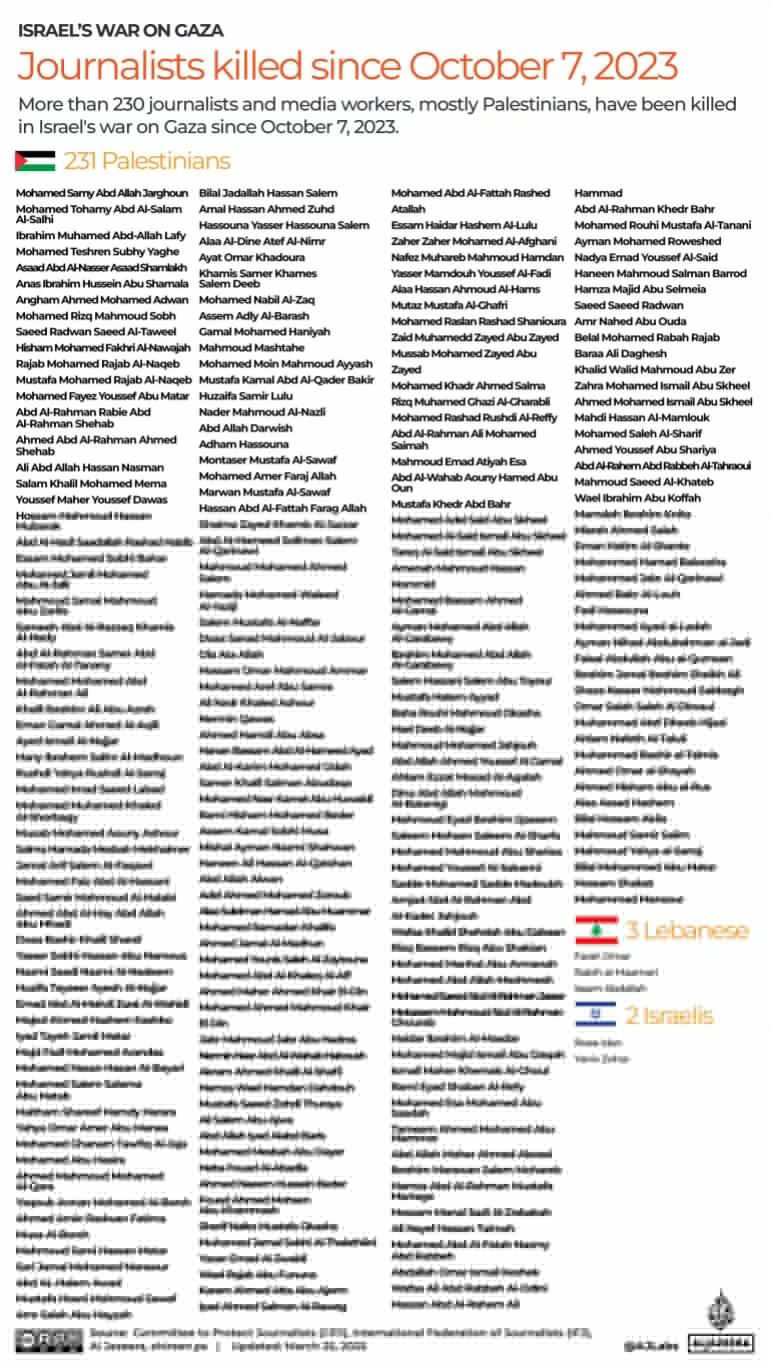
In Gaza, where Israel’s military operations have escalated into what human rights organizations and scholars widely identify as genocidal violence, algorithmic technologies play a critical role in facilitating large-scale human rights violations. What is unique is that the colonial algorithms have made it possible to live stream the genocide fully and to become the first such documented mass killing with the complicity of every segment of the IT industry, media outlets, political and academic elites.
AI-Assisted Targeting Systems
Reports from whistleblowers within the Israeli military, corroborated by journalists and NGOs, have revealed the increasing reliance on AI-powered targeting systems such as “Lavender” and “Gospel.” These systems purportedly automate the identification of targets, often relying on vast databases of digital profiles built from intercepted communications, surveillance footage, social media, and metadata.
These algorithms, with minimal human oversight, are reported to classify individuals as legitimate targets for assassination based on patterns of behavior, association, or even proximity to “suspected” figures. As a result, homes, schools, mosques, hospitals, and entire residential blocks are algorithmically deemed “high-value” targets. In Israel’s genocide in Gaza, this automation enables rapid, mass-scale bombings with a chilling detachment from the human consequences. The AI doesn’t see children, families, or medics — only “data points” and allows Israeli “decision makers” to offer plausible deniability of responsibility
.
Far from absurd claims of minimizing Palestinian civilian harm, such systems contribute to dehumanization, normalizing the high ratio of civilian casualties, and make genocide possible. Algorithms allow the Israeli military to claim precision while systematically targeting critical infrastructure and the social fabric of Palestinian society, key indicators of genocidal intent.
Surveillance and Population Management
Israel’s surveillance apparatus in Gaza and the West Bank — often built in partnership with tech firms — mirrors Foucault’s panopticon if not taken to a different level. If Foucault was around during the Israeli genocide, I would expect for him to reframe the conceptualization of the panopticon since everyday normal life is transformed into an a genocidal entry point. High-resolution drones, facial recognition cameras (like those deployed at checkpoints), spyware (notably NSO Group’s Pegasus), and biometric databases are used to track and control the Palestinian population. All this is being done with the knowledge, facilitation, and co-testing by tech giants like Microsoft, Google, Meta, Amazon, and Apple, to name the well-known players
.
These technologies serve not only military ends but also help maintain a predictive policing model, where resistance—even the potential for dissent—is neutralized in advance. The technologies are deployed at universities, cities, and towns across the country. Here, algorithmic surveillance acts as a form of preemptive counterinsurgency in a settler colonial structure.
Techno-Colonialism and the Export Model
Israel markets its surveillance systems and AI targeting technologies as “battle-tested,” using Gaza as a real-time laboratory. This commodification of Palestinian suffering fuels the global surveillance industry and reinforces a techno-colonial economy where the occupation and the Gaza genocide become a source of profit and prestige. Tech companies’ depravity knows no limits as the colonial algorithms that facilitate the genocide get sold into a global market with a testing certificate written in Palestinian blood, the blood of nameless and faceless women, children, and regular people of all kinds.
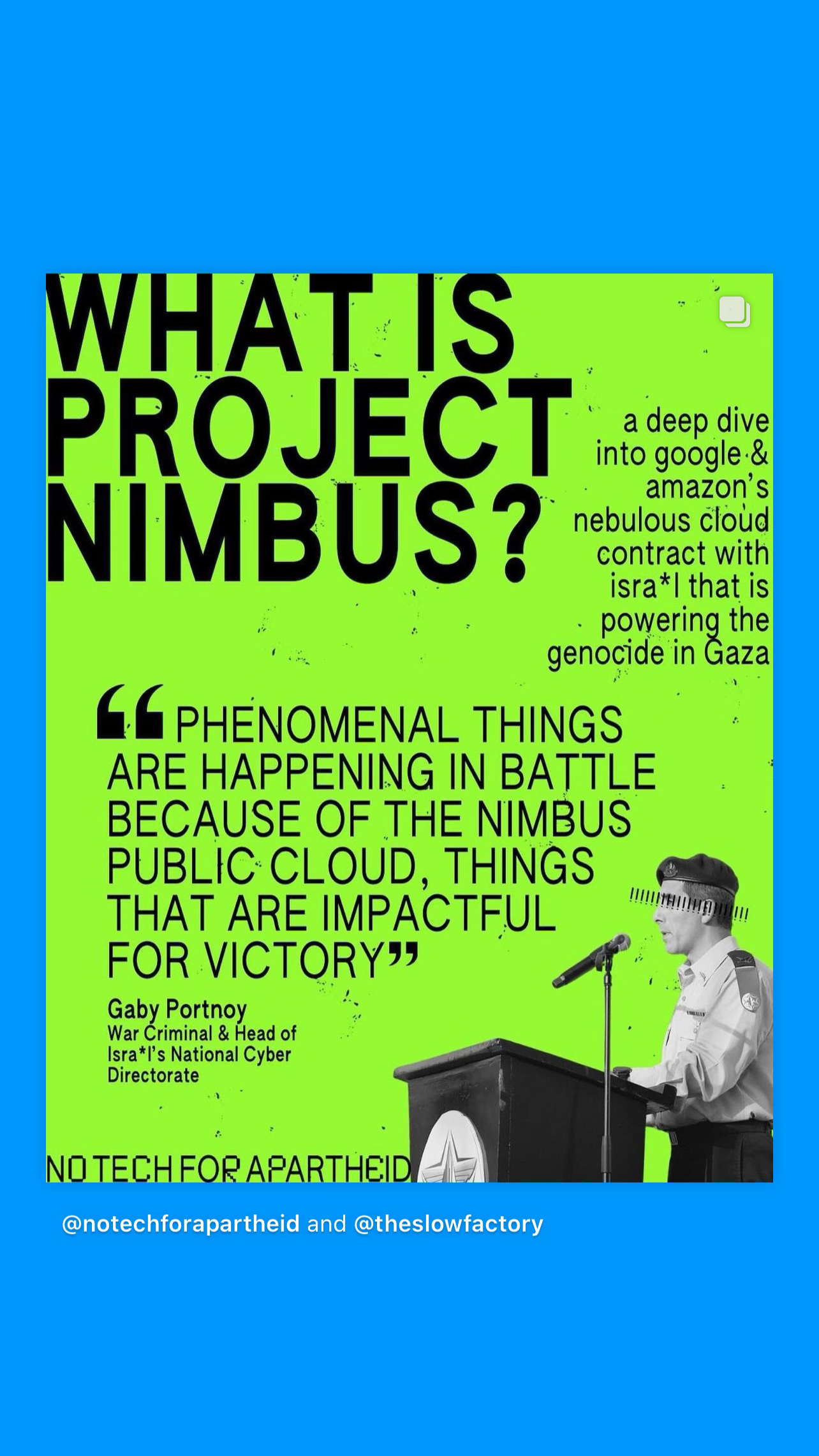
The very companies involved in building these infrastructures — from Elbit Systems to Cellebrite — are deeply embedded in the global tech supply chain. Big Tech firms, including Google and Amazon, have faced employee-led protests for their contracts with the Israeli government under projects like Project Nimbus, a cloud computing initiative critics say enables apartheid and digital occupation. The response of the tech giants was to fire the employees and censor Palestine within employees’ affinity groups. Adding insult to the documented complicity in the genocide is the tech industry bringing the ADL to train employees on issues of bigotry and antisemitism. The ADL is an organization that peddles in Islamophobia, anti-Black racism, and is committed to silencing any criticism of Israel. Furthermore, several tech companies hired former Israeli soldiers and intelligence officers to enforce community standards that made Palestine the most often censored term across social media platforms. While colonial algorithms operate on the ground in Gaza, they also function globally to suppress pro-Palestinian speech, especially in Western universities and digital spaces. Students, scholars, and activists advocating for Palestinian rights are increasingly targeted by algorithmic moderation, predictive policing, and surveillance.
Social Media Censorship
Social media platforms such as Instagram, Facebook, TikTok, and Twitter/X have faced repeated criticism for shadow-banning, removing, or down-ranking Palestinian content. Posts mentioning terms like “Free Palestine” or sharing images from Gaza are often flagged or deleted, while pro-Israeli narratives face far less scrutiny or even any serious monitoring.
These moderation algorithms are not neutral; they are trained on datasets and guided by policy frameworks that often reflect Western geopolitical biases and anti-Muslim/anti-Arab/anti-Palestinian stereotypes. Leaked internal documents from Meta and other platforms show how automated systems are more likely to flag Arabic content as incitement or hate speech, further marginalizing Palestinian voices. Anti-Palestinian racism is baked into the colonial algorithms and allowed to operate as a front line for the Israeli propaganda machine as the livestreamed genocide in Gaza continues.
Campus Surveillance and Blacklisting
In Western universities, digital tools rooted in colonial algorithms are being used to monitor and punish pro-Palestinian activism and shape the leadership’s responses. Students have reported being surveilled, doxxed, or blacklisted through colonial algorithmic tools that scrape social media and public records to create dossiers, which are shared with government agencies. Organizations like Canary Mission publish detailed profiles of activists, often ranking their “antisemitism risk” and circulating these files to employers, donors, governments, and institutions. These databases function as colonial digital blacklists, fostering fear and self-censorship.
In some cases, campus police and university administrations have worked with private security firms and local law enforcement to identify and discipline students involved in peaceful protests or boycott movements. Predictive analytics tools — increasingly used in campus security — allow universities to map “risk” areas and monitor organizing in real-time. The colonial algorithm is laser-focused on the Palestine activists, and official structures of society are oriented to pursue him/her at all costs.
In countries like the U.S., U.K., Germany, and France, legal tech is also weaponized to criminalize Palestinian solidarity. Automated systems assist in flagging visa applicants, immigration cases, or social benefits recipients based on their online affiliations or political expression. Predictive risk models used in policing and social services can label Muslim or Arab individuals as security threats, drawing from the same data sets used to surveil Palestinians abroad. Here, a dual citizen of Israel who spent time participating in the Gaza genocide is not flagged at ports of entry, social media databases are not examined for murder of kids and blowing up Palestinian homes for fun, and no questions are asked upon return. Colonial algorithm rewards genocide while targeting those who dare to document and speak about it!
Resistance in the Age of Colonial Code
Colonial algorithms represent a chilling evolution in the operation of power. Through digital systems, states and corporations can now enforce structural violence with efficiency, invisibility, and a false veneer of objectivity. In Gaza, these technologies underpin a genocide unfolding in full view of the world. In the West, they silence and punish those who dare speak against it.
Yet, awareness is growing. Palestinian digital rights organizations are rising to the challenge, global coalitions of tech workers and student-led movements are beginning to expose and resist this algorithmic colonial regime. Calls for algorithmic transparency, ethical AI, and divestment from digital occupation are gaining traction. Students are speaking and disrupting university engagements with companies that participate in the colonial algorithms that facilitate Israeli genocide. Ultimately, resisting colonial algorithms requires more than technical fixes. It demands a dismantling of the settler-colonial structures they serve, a decolonization of technology itself, and a radical reimagining of digital justice rooted in solidarity, liberation, and the defense of life — both online and off.
Start writing today. Use the button below to create a Substack of your own

