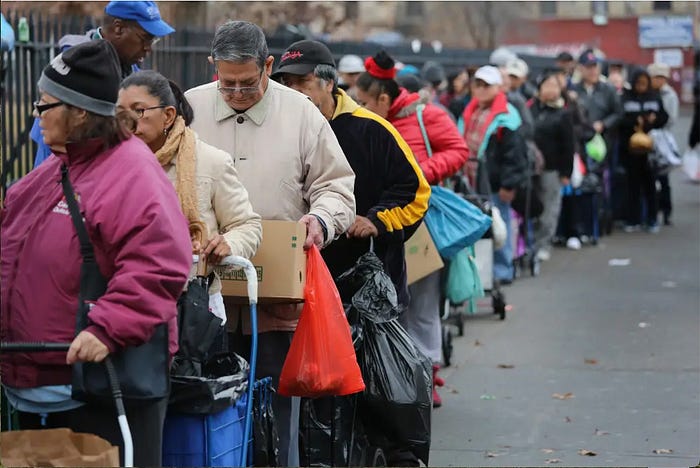
Recent public discourses on poverty have shamelessly and endlessly blamed the poor for the worsening conditions in the US’s inner cities. Poverty has worsened, and it is readily visible in cities and towns across the country, but the blame game is misguided, intended to obfuscate the causes and, more importantly, shift resources away from addressing the problem into the pockets of corporations and the rich. Media, political figures, and police forces focus on the visible symptoms with dramatic photos of tents on the streets and the ever-present drug use, crime, and prostitution, but no real or sustained coverage of how we got here in the first place.
Poverty, unhoused people, drug use, theft, and prostitution are the visible symptoms of changes in public policy, budgeting, increased corporate subsidies, wars abroad, and shifted priorities away from addressing causes of poverty to blaming the poor.
If the poor are poor, then it is their responsibility that they are poor goes the discourse, and the government and the rich are not responsible for it. For example, increased drug use and the crisis on the streets are blamed on the “unclean and irresponsible” poor; the “illegal immigrants”, Venezuelan and Laten-American drug cartels; rather than looking at the long history of big Pharma making billions pushing prescription drugs on people and the US military foriegn interventions that facilitated drug entry into the country to fund illegal wars.
“Individual responsibility”, “pulling oneself from the bootstraps,” “capitalism and entrepreneurship,” and “family values” are the contemporary media and public buzz PR response to poverty. Here, the deployed “logic” appeals to populist sentiments and is framed around political and economic elites’ priorities that have transformed and transfigured budgetary and social priorities over the past fifty years. Notice the basic fact that bailing out the banking, insurance, airlines, and other corporate entities after the 2008 collapse was not framed as a problem or blamed on the “irresponsible” rich who created the crisis in the first place.
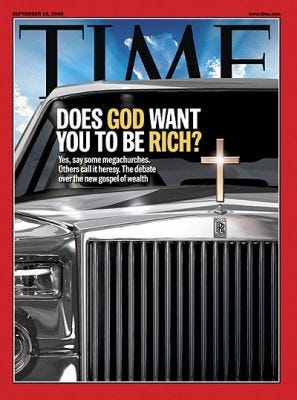
Even a segment of the “religious leadership”, who should know better, has adopted a prosperity theology that, at its core, blames the poor for their condition while making sure to rub elbows with the rich, famous, and politically connected to increase their weekly or annual donations. The problem is the poor, not poverty or public policy decisions that produce it! What we have is a War on the poor and not on poverty or those who produce it.
The phrases “War on the Poor” and “War on Poverty” represent two contrasting perspectives and reflect changes in government policies and societal approaches to addressing the poverty crisis. For a long time, the focus and societal discourse were on addressing poverty by ameliorating the causes that produce it in the first place. Poverty was caused by a set of economic and political policies that, if changed, could help reduce the number of people falling through the cracks.
War on Poverty: The term “War on Poverty” was coined by the United States government in the 1960s to describe a set of legislative and social programs aimed at reducing poverty and promoting economic opportunity. It refers to a proactive approach to addressing poverty through policies such as social welfare programs, education and job-training initiatives, healthcare access, and community development. The intent of the “War on Poverty” is to help individuals and families escape poverty by providing them with resources, support, and opportunities. While a number of social programs were put in place in the post-depression period, the bulk of the initiatives to address poverty emerged in the 1960s, during and after the Civil Rights Movement. Ending or reducing poverty was a core value for the Civil Rights Movement by calling for greater economic opportunities, access, and political and social equality. Remind you that MLK’s last campaign was to lead a march on Washington to call for an end to poverty in the country.
“The contemporary tendency in our society is to base our distribution on scarcity, which has vanished, and to compress our abundance into the overfed mouths of the middle and upper classes until they gag with superfluity. If democracy is to have breadth of meaning, it is necessary to adjust this inequity. It is not only moral, but it is also intelligent. We are wasting and degrading human life by clinging to archaic thinking.
The curse of poverty has no justification in our age. It is socially as cruel and blind as the practice of cannibalism at the dawn of civilization, when men ate each other because they had not yet learned to take food from the soil or to consume the abundant animal life around them. The time has come for us to civilize ourselves by the total, direct and immediate abolition of poverty.”MLK’s Solution to Poverty
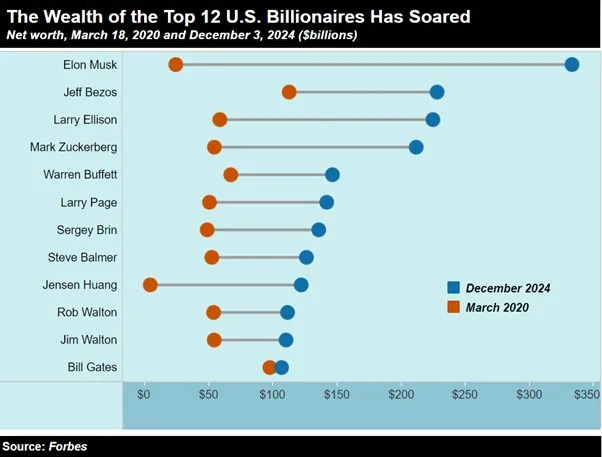
War on the Poor: The phrase, War on the Poor, is used by social justice activists in critiquing the shift in government policy toward privatization and neoliberal economic modalities. We don’t see the term used in policy discourse, since the government adopted policies and practices since the early 1980s, which have disproportionately harmed and targeted disadvantaged individuals and communities while reducing taxes and social investment in education, healthcare, and welfare programs. Reducing the tax base meant fewer resources to invest in people, while at the same time increasing expenditure on the military and corporate subsidies. The shift away from poverty, as a focus of policy formation, points to a systemic or deliberate effort to blame the poor for their condition while rapidly adopting a trickle-down economic model. The term is an accurate description of the policies that perpetuate poverty, exacerbate inequality, blame the poor, and celebrate the obscenely rich. You are poor because “you are an irresponsible person” is the current framing, while the rich are rich because “they are innovative, create jobs, and are responsible”-don’t laugh out loud as you might be called irresponsible as well!
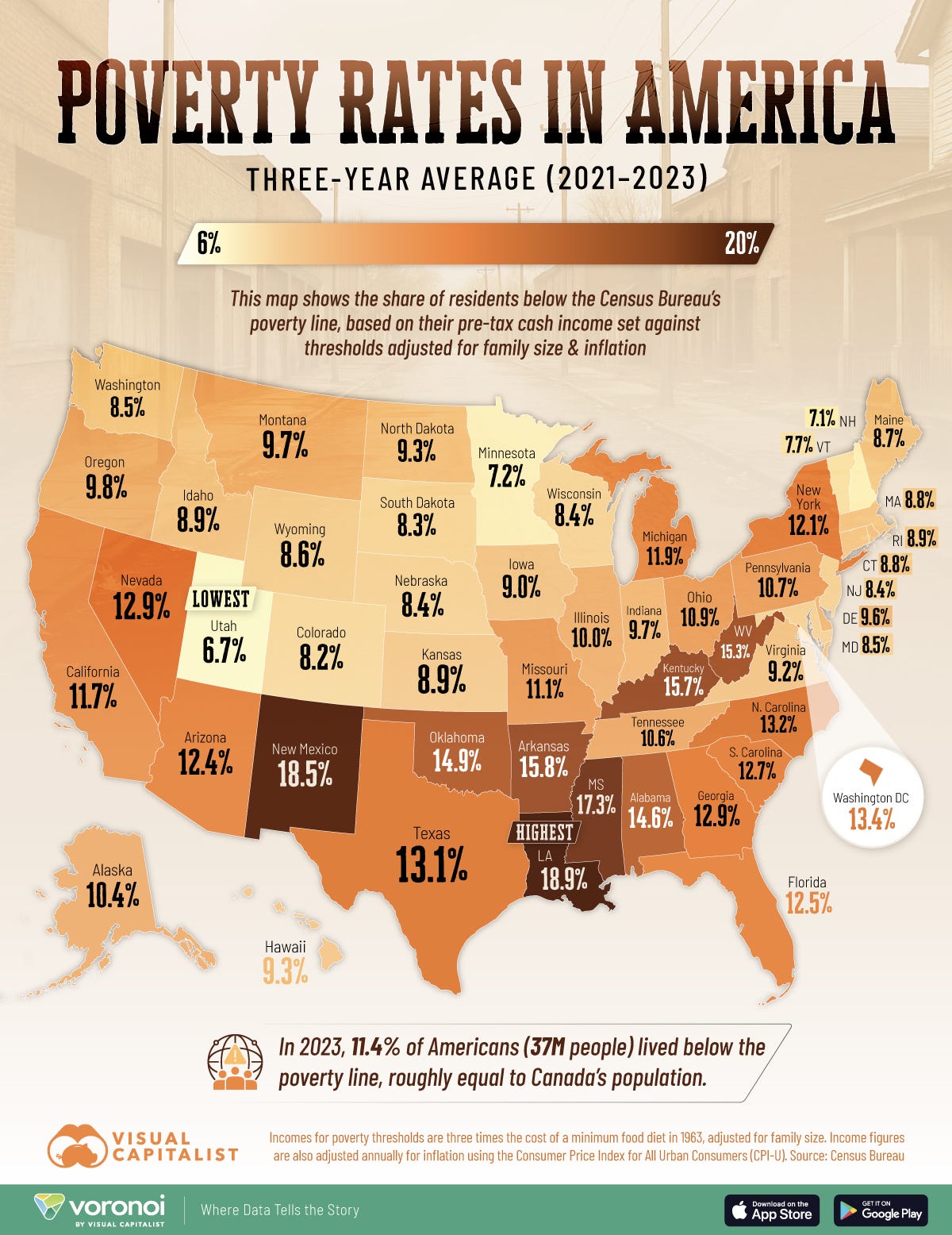
Here, while the term “War on Poverty” is generally associated with efforts to combat poverty and promote social welfare, “War on the Poor” reflects a critical perspective on policies and practices implemented since the early 1980s that perpetuate and exacerbate poverty. The use of War on the Poor, as a framing is needed for a call to systemic change and a focus on addressing the root causes of poverty rather than blaming and targeting those who are already marginalized.

