

Home
/
From Public Good to Commodification: The Western University System, Palestine, Zionism, and Empire
In the liberal imagination, the university is often narrated as the last remaining sanctuary of critical thought—a space ostensibly insulated from the brute demands of market rationality, political coercion, and imperial discipline. Yet this mythology collapses under even the most cursory historical scrutiny. The contemporary Western university is not a neutral site of knowledge production; it is a deeply politicized institutional formation, embedded within the logics of empire, capital accumulation, and racial governance. What we are witnessing today—in the repression of Palestine solidarity across campuses, the silencing and disciplining of faculty and students, and the weaponization of Zionist institutional power—is not an aberration. It is the culmination of a decades-long transformation: the conversion of higher education from a public good into a commodified enterprise aligned with imperial power.
This transformation begins in earnest in the 1980s, with the neoliberal counter-revolution inaugurated by Ronald Reagan in the United States and Margaret Thatcher in the United Kingdom. Their project was not simply economic; it was epistemic and civilizational. Education was redefined from a collective social investment into an individual consumer choice. The university was reconceptualized from a public institution oriented toward social reproduction, democratic formation, and critical inquiry into a marketized site of credential production, debt extraction, and corporate servicing. What followed was the systematic withdrawal of public funding, the normalization of tuition hikes, the explosion of student loan regimes, and the disciplining of knowledge itself into profitable and politically compliant forms.
I witnessed the systematic dismantling of the university system in California from the early 1980s, during my undergraduate years at San Francisco State University, my graduate studies at the University of California, Berkeley, and my subsequent appointment as a professor at Berkeley. The State of California was the envy of the world with a 1960s Master Plan for Higher Education that viewed access to education as a public good and abandoned the notion of student tuition altogether. This marked one of the most significant transformations, enabling marginalized communities of color and the middle class to access higher education and upward mobility across all sectors of society. No one graduated with debt, and all aspired to their rightful positions in society. The 1980s shift mirrored the transformation of the political and economic landscapes. Education is no longer a public good but a commodity on bar with any raw material brought to a factory.
The neoliberal university does not merely sell degrees; it sells futures. It converts students into indebted subjects whose political horizon is narrowed by precarity, and it transforms faculty into managed labor disciplined by metrics, audits, donor pressures, and administrative surveillance. The language of “excellence,” “innovation,” and “impact” functions as a soft ideological apparatus that masks the deeper restructuring of the institution into a corporate-style enterprise. Universities increasingly resemble multinational firms that are governed by boards populated by financiers, real estate investors, and defense contractors, reliant on endowments tied to speculative capital, and oriented toward partnerships that render knowledge a commodity in service of profit-making enterprises.
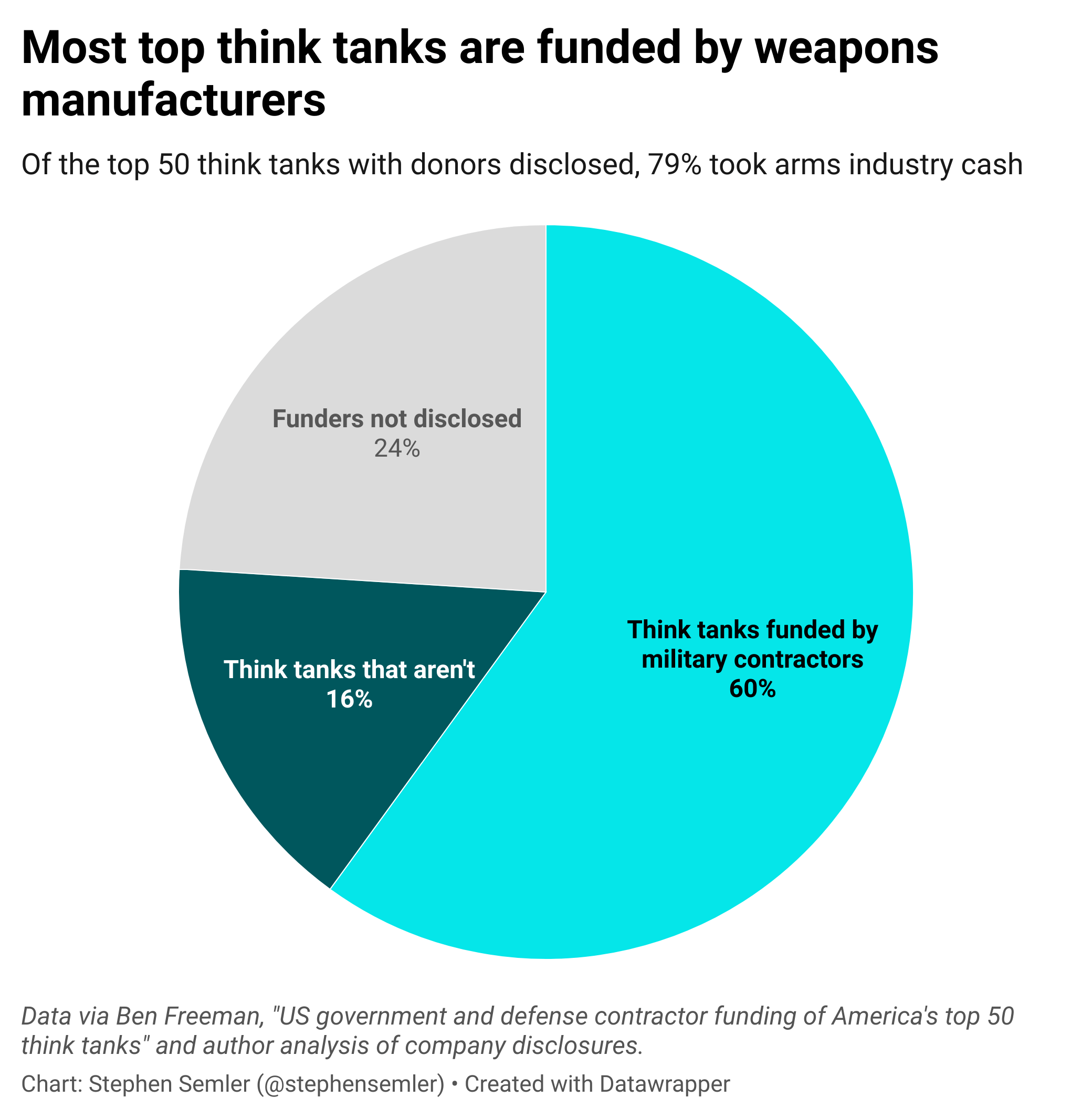
This shift has profound consequences for what can be researched, taught, and spoken within the academy. The corporatized university is structurally hostile to scholarship that names empire as empire, colonialism as colonialism, and genocide as genocide. The closer the university moves toward the circuits of capital and state power, the less tolerance it has for critique that threatens those circuits.
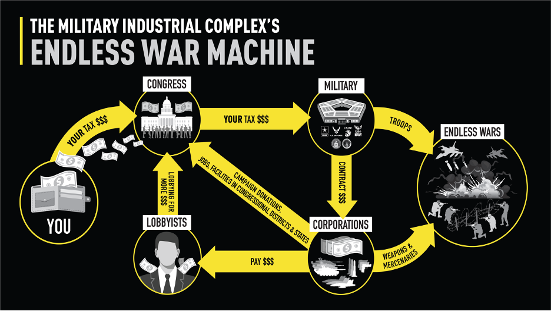
Nowhere is this more visible than in the deep entanglement between Western universities and the military-industrial complex. Long before the post-9/11 “war on terror,” American universities were already deeply embedded in defense research, surveillance technologies, counterinsurgency studies, and geopolitical knowledge production. The lead-up to the U.S. invasion of Iraq in 2003 laid bare how orientalist academic expertise was mobilized to launder imperial war through the language of “democracy promotion,” “security studies,” and “Middle East expertise.” Entire disciplines—political science, international relations, security studies—were conscripted into producing policy-useful knowledge that legitimized invasion, occupation, and mass death.
Confusing spaces like Ethnic Studies, Women and Gender Studies, or Labor Studies with the university, as an institution vested in empire and the Eurocentric canons that produce power, is intended to obfuscate and shield the university’s complicity in settler colonialism and empire. Anti-Palestinian racism on campuses is not incidental but constitutive and foundational, woven into the neoliberal carapace of an institution that polices dissent, launders American exceptionalism, promotes, invests, and partners with Zionist and Israeli institutions, and reduces Palestinian life to a fungible commodity in the marketplace of racial capitalism.
Recently, the Edward Said Endowed Lecture at Cal State San Bernardino was cancelled after the Provost unilaterally vetoed the program in a single sentence, stating that it would not proceed, without providing any reason or justification. The endowed lecture was established at CSUSB through a generous donation to the university, intended to fund an annual invited lecture that highlights Palestinians’ history, culture, and contributions. The CSUSB Provost’s audacity to censor and cancel a lecture sponsored by Palestinians at a time of genocide points to the structural complicity and outright cowardice of the university, as an institution and leadership. The faculty and Students for Justice in Palestine responded to this censorship and violation of academic freedom by organizing a lecture on May 6th, 2025, entitled: Not Edward Said Endowed Lecture: Neo-Orientalism, Empire’s Embedded Practitioners, and Censoring Gaza’s Genocide, and I agreed to deliver.
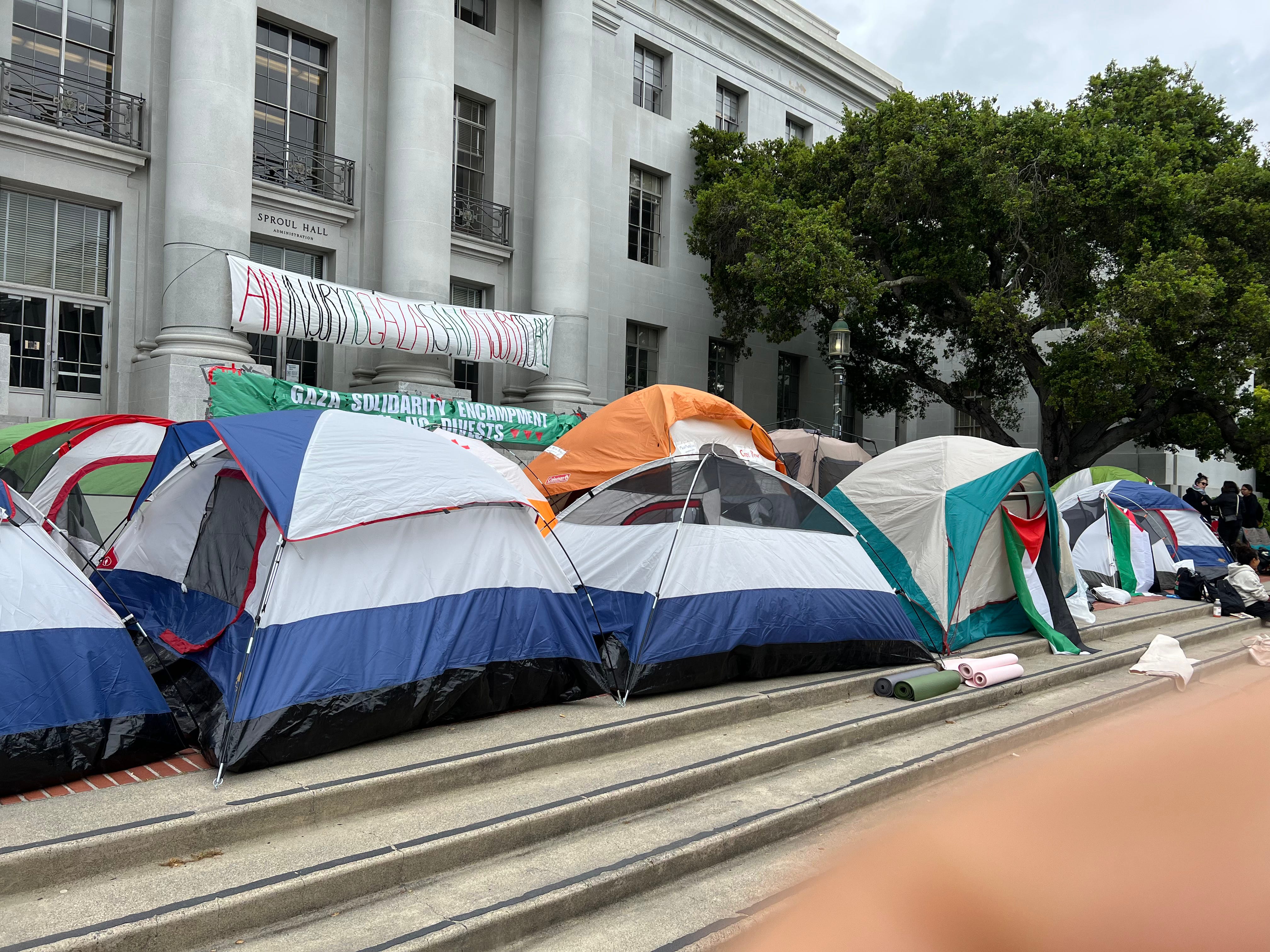
Indeed, the current genocide in Gaza represents the most naked expression of this imperial embeddedness of the university. As Israel conducts a genocide, a campaign of mass killing, starvation, and infrastructural annihilation, Western universities have not merely failed to stand on the side of life and justice; they have actively functioned as sites of repression. Students encamped in solidarity with Palestine got criminalized, violently repressed, and put under total surveillance. Faculty who name genocide faced investigation, suspension, and termination. Administrative offices coordinate with police forces, donors, and political actors to suppress dissent. Some university presidents and chancellors took direct phone calls from Netanyahu and his government officials, urging them to suppress the protests and labeling the protests anti-Semitic. The university, once rhetorically celebrated as a bastion of free inquiry, reveals itself as an apparatus of governance tasked with managing the limits of permissible speech at a time of genocide.
This repression is not accidental. It is the outcome of a Zionist institutional architecture painstakingly constructed in the post-Cold War period and intensified after 9/11. Zionist organizations, lobbying networks, donor coalitions, and think-tank infrastructures have invested heavily in university spaces, endowed chairs, research centers, study-abroad programs, and “anti-antisemitism” initiatives that systematically conflate critique of Israel with hatred of Jews. This conflation is not merely rhetorical; it is operationalized through policies, donor pressure, and administrative enforcement mechanisms that weaponize antisemitism discourse to silence Palestinian narratives and anti-Zionist critique. This is being done while all along coordinating, communicating, and sharing intelligence with local Zionist groups and “private” Mossad and Israeli assets in the US.
The result is an epistemic closure: Palestine becomes unspeakable except through the narrow grammar of “conflict,” “security,” and “both sides.” Genocide is rendered unsayable. Resistance is criminalized. Zionism is normalized as a civilizational project while Palestinian existence is framed as a demographic problem. The university, in this configuration, does not merely fail to challenge empire; it reproduces empire at the level of knowledge, discourse, and institutional governance.
No wonder that the university leadership often acts as if it is an information desk in the Israeli Defense Force and coordinates, responds to, or reports directly to the local Israeli consulate, ADL, AJC, ZOA, Stand With US, JCRC; rather than protecting and defending academic freedom, and the 1st amendment rights of their students, faculty and staff! Adding insult to injury is the rush by university leadership and states to adopt the IHRA definition of antisemitism. The conflation of anti-Zionism with antisemitism, codified through the IHRA definition now adopted by over 30 states, exemplifies this structural racism and making the university explicitly an arm of the Israeli propaganda machine. To critique Israeli apartheid and livestreamed genocide is to be branded a “bigot,” a rhetorical sleight-of-hand that weaponizes real Jewish trauma to shield a state-supported settler-colonial violence against an indigenous population. As I argued in Islamophobia Studies Journal (2018), this is not about protecting Jewish students; it is about weaponizing, laundering oppression and complicity in genocide through the language of campus safety and “campus climate”. Neutral “campus safety” and “campus climate” discourses are weaponized to silence and target pro-Palestine activists and position their activism for human rights and call to stop complicity in genocide as antithetical to “community standards,” and is a health and well-being hazard to the “campus community.” Notice that the “campus community” is excluding the Palestinian Arabs, Muslims, Progressive Jews and their allies who are actually wounded by witnessing a livestreamed genocide that the university, as an institution, campus investments, leadership, and some faculty are complicit on so many levels, including some serving directly in the Israeli army.
The modern Western university operates as a carceral node within the settler state, its budgets bloated by defense contracts, the corporate landscape, and local Zionist networks, its administrators complicit in the surveillance of dissent. Title VI of the Civil Rights Act, ostensibly designed to combat discrimination, has been perverted into a tool to target Arab and Muslim students on campus, with many investigations carried out to silence their collective voices in the face of the Gaza genocide and Israeli Apartheid.
The exposure of elite networks in the Epstein files offers yet another window into the moral and institutional decay of the Western university system. The entanglement of wealthy donors, powerful institutions, and compromised elites is not peripheral to the crisis of higher education; it is constitutive of it. Universities that increasingly rely on billionaire philanthropy and elite patronage become structurally vulnerable to capture. Endowments grow while public funding shrinks, and with this shift comes an implicit bargain: institutional silence in exchange for financial stability. The Epstein scandal does not merely reveal individual moral corruption; it exposes a system in which universities court power and capital at the expense of ethical coherence, accountability, and public trust.
This elite capture intersects with a Zionist political economy of influence that shields Israel from accountability even amid overwhelming evidence of genocidal violence. Faculty and administrators who move seamlessly between university posts, think tanks, state institutions, and pro-Israel lobby networks constitute a revolving door of epistemic power. The result is a university sector that increasingly polices its own boundaries of critique, disciplining those who threaten the ideological and financial alignments upon which the institution now depends.
What we are confronting, then, is not merely censorship; it is a civilizational crisis of the university as an institution. The commodification of education hollowed out the university’s public mandate. The corporatization of governance subordinated knowledge to profit. The militarization of research tethered scholarship to imperial violence. The Zionization of institutional politics has rendered Palestine a forbidden truth. And the elite capture of university leadership has eroded any residual claim to moral authority.
To speak of “academic freedom” in this context without naming the structural conditions that have eviscerated it is to engage in bad faith. Freedom of inquiry cannot survive in an institution structurally dependent on donors, defense contracts, foreign lobby group and political patronage. Nor can the university claim neutrality while functioning as a site of racial governance that polices Palestinian bodies, speech, and solidarity. The repression we see today is not a deviation from the university’s contemporary function; it is its logical outcome.
The academy’s claim to objectivity is a lie. From political science, journalism, and law professors’ insistence on a pro-Israel outlook (few exceptions) to syllabi that reduce Palestine to a “conflict” or the ever-present “terrorism” rather than a century of genocide and ethnic cleansing, the university is a factory of erasure. Palestinian, Arab, and Muslim scholars are excluded, their research delegitimized as “biased,” and are under constant surveillance to deter any independent actions. At the same time, Zionist think tanks or groups like the AMCHA Initiative patrol classrooms for “anti-Israel bias,” and websites create pro-Palestine blacklists to be targeted and cancelled from public events.
This epistemic violence extends to the curriculum. How many students graduate without encountering the Nakba, the 1948 genocide that birthed Israel? How many are taught that U.S. funds Israeli apartheid with $3.8 billion annually, before the current genocide? How many students know about all the university investments and coordination with Zionist institutions and companies?
Often, the courses and curriculum on Palestine are intentionally and by design taught by actual Israeli visiting scholars or committed campus Zionists who frame Palestinians exclusively within the “terrorism” and “religious violence” neo-orientalist prism. The constant and possibly exclusive focus on Palestinian and Muslim violence and warfare is used to justify every Israeli and US violent action, with the implicit rationalization for settlement activities. Some journalism departments across the country have a relationship with Israel and Zionism that is more explicit, with programs that require the graduate students to participate in a fully paid trip to Israel to “learn” the skills needed to cover the Middle East. Students are pressured to participate since it will help them land positions in corporate media due to their readiness to undertake a structured approach to covering “news” while using Israel’s framing.
Even on rare occasions in some Western and US campuses, when a Palestinian professor or someone with research specialization on Palestine ends up teaching a course or a unit on the subject, they are harassed, monitored, and a constant stream of external letters of supposed “bias” in the content of the course. Department leadership and deans of schools prefer not to address problems, so they work quickly to resolve the issue or pressure the professor to change, imposing an implicit threat on future promotions or institutional rewards. The university’s system of rewards and punishments may include denial of tenure, delays in promotion, rejection of grant proposals, and refusal to appoint such faculty members to campus service committees, which can then be used against them to deny other campus benefits. All of these academic tools exist in what we call “scholasticide”: the deliberate destruction of Palestinian knowledge systems, from the bombing of Gaza’s universities to the blacklisting of critical scholars and institutional alignment with Zionism and Israel.
Look no further than Harvard University's actions and its response to demands from the Trump Administration. The supposed defense of American higher education, Harvard, the oldest, most prestigious, and richly endowed university, opted to throw out faculty members from its Middle Eastern Studies program and School of Divinity, even before Trump made any move against the university. Here, the lesson from Harvard is that Arab, Muslim, Palestinians, Progressive Jews, and their allies are disposable and can be offloaded so as to maintain the flow of funds from the federal or state governments. Palestine and genocide are not good for the neoliberal university, and actions are taken to make sure that the business of the university is business and nothing else.
Another tool deployed by the neoliberal and genocide denial leadership at the university is the ever-present dialogue festival with plenty of hummus and falafel to make it culturally authentic, but supplied from your local Israeli café. The response from the campus administrators and the “sophisticated” Zionist academics when Palestinian narratives surface is the sanitized project through the deployment of dialogue pathways. Time and resources are spent to bring Palestinians, Arabs and Muslims into the same room to dialogue with the Zionist, so as to get them to understand the centrality of Israel to Zionist students on campus and why they should not be critical or call Israel an Apartheid State or that it is now mention the genocide.

On the other hand, campus “dialogue” initiatives often demand that Palestinians perform their trauma for Zionist audiences, reducing liberation to a therapy session. Campus dialogue is intended to silence Palestinian voices and create doorkeepers for the Palestinian narrative and pain that must pass through the university censorship and the campus Zionist arbiter of “balance”. Here, the good Palestinian, Arab, and Muslim, the one that does not know the direction to Mecca or Palestine, is brought into the conversation to firm the university’s epistemology of campus “climate” that centers Zionist complaints while identifying the bad actors or the hot heads that make campus daily life difficult or threaten funding possibilities.
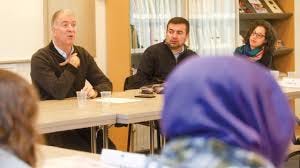
Another strategy deployed by the university’s DEI offices and leadership is to offer some goodies to the students on the condition that Palestine is kept outside. The university leadership engages in structured Islamophobia, whereby Muslim students’ needs and concerns are packaged as offers of support, but on the condition that you stay away from the Palestine cause and possibly accept to engage in “faith washing” events with campus Zionist groups or university-sponsored Zionist projects. Countering and challenging Islamophobia while silencing Palestine is Islamophobic! Halal food service at the cafeteria or a dorm space for Muslims is a normative demand that should not be allowed to be weaponized by university leadership to silence Muslim, Arab, and Palestinian students’ voices on Palestine and the Gaza genocide.
While all the above is the current state of affairs, yet history also reminds us that universities have always been contested spaces. They have never been pure, but neither have they been irredeemable. The current moment forces a reckoning: will the university continue its descent into imperial service, or can it be reclaimed as a genuinely public institution accountable to society rather than to power? This question cannot be resolved through administrative reform alone. It demands a re-politicization of the university itself, a recognition that the struggle for Palestine is inseparable from the struggle to decolonize knowledge, dismantle imperial epistemologies, and resist the commodification of the very conditions of thinking.
Palestine, in this sense, functions as a moral and political litmus test. An institution that cannot name genocide, cannot protect its students from repression, and cannot defend the basic principle that knowledge must confront power has already surrendered its soul. The Western university system stands exposed, not as a victim of external pressure, but as a willing participant and “coordinator” in the reproduction of empire. The question before us is not whether the university has been compromised. It is whether we are prepared to confront the depth of that compromise and organize for a different institutional future—one in which education is reclaimed as a public good, tuition-free, knowledge is liberated from imperial capture, and the university is re-anchored in the ethical demand to stand with the oppressed rather than with power.